


1. Limewash and Venetian Plaster Walls
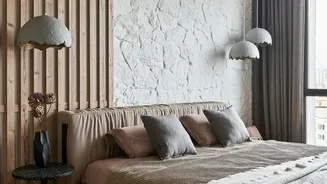
Mineral-based finishes like limewash and Venetian plaster have made a major comeback for their ability to create walls with soft, cloud-like movement. Unlike flat paint, these finishes have a chalky, suede-like texture that interacts beautifully with light.
A single overhead light can flatten this effect, but warm, directional light makes the texture come alive. Try using a wall-mounted sconce or an uplight placed on the floor to 'graze' the surface. This technique casts light at a shallow angle, creating subtle highlights and shadows that emphasize the hand-brushed variations and make the wall feel deeper and more organic. The colour of the light matters, too; warm-toned bulbs around 2700K will enhance earthy, beige, and sand-coloured plasters, giving the room an inviting, intimate glow.
2. Fluted and Reeded Wood Panelling
Fluted wood panels, with their clean vertical grooves, are a popular choice for creating sophisticated feature walls behind beds, sofas, or media consoles. While elegant on their own, their true potential is unlocked with strategic lighting. The entire point of fluting is the rhythm created by its ribs and grooves, and flat, direct lighting can erase this effect. To make the texture pop, use lighting that skims across the surface from the top, bottom, or side. Concealed LED strips installed at the top or bottom of the wall are a fantastic option, casting a warm glow that catches the edge of each rib and throws the grooves into soft shadow. This interplay of light and shadow turns a simple wall into a dramatic architectural statement. For a less built-in approach, placing recessed ceiling spotlights close to the wall can create a similar 'grazing' light that highlights the panel's three-dimensional quality.
3. Bouclé and High-Texture Fabrics
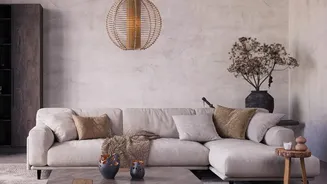
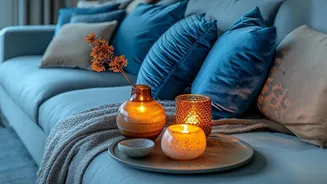
Bouclé, a fabric defined by its looped, nubby yarn, is a dominant trend in furniture for a reason: it’s incredibly soft and visually inviting. This texture is highly responsive to light. Under a generic central ceiling light, the fabric can look flat. But when you introduce warm, layered lighting, its sculptural quality is revealed. An arc floor lamp positioned to cast light across a boucle sofa highlights the individual loops, creating a landscape of tiny shadows that gives the piece depth and dimension. Pairing this with a table lamp at a different height adds another layer of warmth, making the seating area feel like a cozy, glowing nook. The same principle applies to other high-pile fabrics like velvet or chunky knits on throws and pillows; side light is always more effective than overhead light for showing off their rich textures.
4. Natural and Woven Fibres
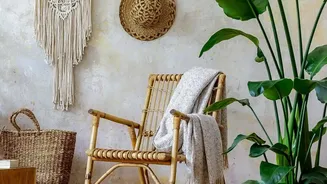
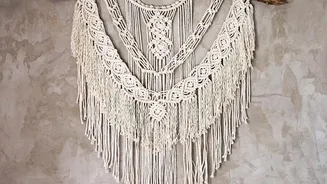
Materials like rattan, jute, and woven seagrass bring an organic, airy feel to interiors. When used in lighting fixtures like pendant lamps or sconces, their texture becomes the star of the show. An open-weave rattan shade doesn't just deliver light; it filters it, casting intricate patterns of light and shadow on nearby walls and ceilings. This effect adds movement and a layer of visual interest that a solid shade cannot. Beyond the fixtures themselves, warm light enhances the natural colour of these materials. A simple woven basket used for storage or a large jute rug can be transformed by a nearby floor lamp. The warm light enriches their golden, earthy tones and highlights their fibrous texture, reinforcing a room's cozy, natural aesthetic.
5. Honed and Textured Natural Stone
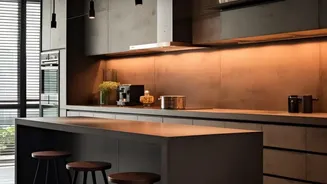
While polished stone is all about shine, honed and textured stone—like travertine, certain marbles, or slate—offers a softer, more tactile appeal. Warm lighting is particularly effective at enhancing these materials. A warm bulb with a colour temperature around 2700K can bring out the golden, beige, and amber undertones in travertine or limestone, making the stone feel more inviting. Angled light, such as from under-cabinet LED strips in a kitchen or a picture light over a stone feature wall, can graze the surface to reveal its subtle pitting, veining, and texture. This technique adds a sense of drama and luxury, turning a functional surface into a dynamic focal point. The right light can make the stone's natural character—details often missed in flat daylight—a celebrated feature of the room.