




A Mission of Firsts
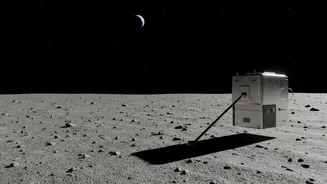
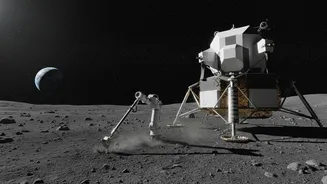
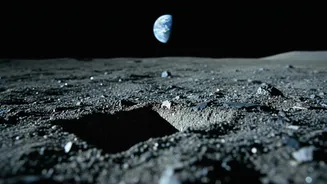
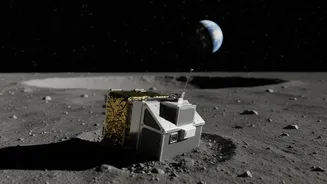
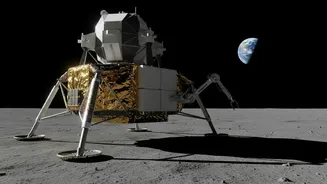
When ISRO's Chandrayaan-3 successfully touched down near the lunar south pole in August 2023, it marked a monumental achievement for India, making it the first nation to land in this largely unexplored and treacherous region. The primary goal was to demonstrate
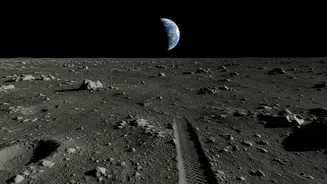
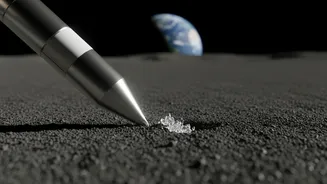
a safe and soft landing, rover mobility, and to conduct on-site scientific experiments. Among the instruments deployed was the Alpha Particle X-ray Spectrometer (APXS) on the Pragyan rover, tasked with analysing the elemental makeup of the lunar regolith, or soil. Scientists were eager to get the first-ever ground-truth data from this polar region, which was expected to offer clues about the Moon's history and resource potential. The landing site, named Shiv Shakti Point, was chosen for its scientific value, located in a highland area believed to be covered in ejecta from ancient, massive impacts.
The Surprising Discovery
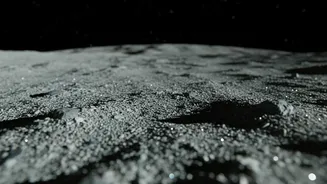
The surprise came when scientists at the Physical Research Laboratory (PRL) in Ahmedabad began poring over the APXS data. Their analysis, published recently, revealed that the soil at Shiv Shakti Point contains material from the Moon's primitive mantle. The soil showed a distinct enrichment in elements like magnesium and sulfur, but a notable depletion in others like sodium and potassium. This specific chemical signature was starkly different from the compositions found at the equatorial landing sites of the Apollo and Luna missions decades ago. Those sites were rich in a component known as KREEP (Potassium, Rare Earth Elements, and Phosphorus), which was thought to be a more common feature of the lunar crust. The Pragyan rover's findings indicate the south polar region is geologically distinct and represents a much older, more primitive state of the Moon.
Upending a Foundational Theory
This discovery is surprising because it challenges the long-held Lunar Magma Ocean hypothesis in its simplest form. This theory posits that the early Moon was covered by a global ocean of molten rock. As it cooled, lighter minerals floated to the top to form the crust, while heavier minerals sank to form the mantle. The final residual liquid, rich in elements like potassium (KREEP), was sandwiched between the crust and mantle and was expected to have been widely distributed by later impacts. However, the soil at the Chandrayaan-3 site is notably lacking these KREEP components. This suggests the material was excavated from a deeper part of the mantle from a period before KREEP was fully formed and distributed. It implies the Moon's formation and cooling process was far more complex and less uniform than previously modelled. The material likely reached the surface during the cataclysmic impact that formed the giant South Pole-Aitken basin billions of years ago.
Implications for the Future
These findings have profound implications for both science and future exploration. Scientifically, it provides a direct link to the Moon's primordial mantle, offering a rare window into the early stages of planetary formation. The Chandrayaan-3 landing site is now considered a prime location for future sample-return missions, like the planned Chandrayaan-4, which aims to bring lunar soil back to Earth for more detailed study. For future explorers, this compositional data is critical. Understanding the mineral and elemental makeup of the lunar south pole is vital for In-Situ Resource Utilisation (ISRU) — the idea of living off the land. Resources like the detected sulfur could be used in construction or chemical processes. Furthermore, confirming the unique geology of the south pole makes it an even more compelling target for establishing a permanent human presence, as its resources are clearly different and potentially complementary to what is known from the equatorial regions.