

From Niche Sector to Economic Powerhouse
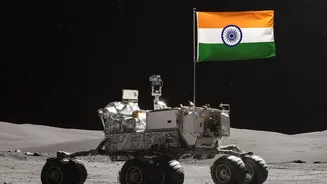
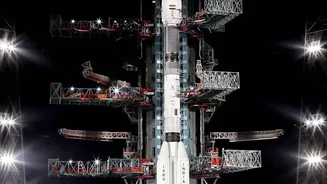
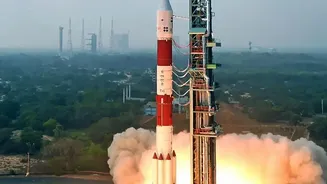
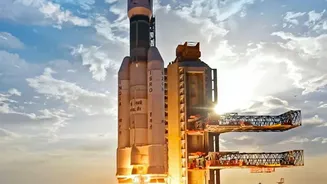
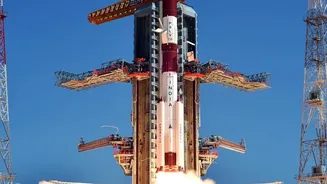
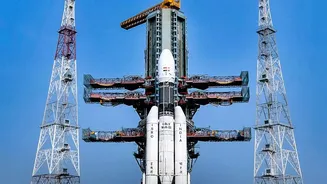
For decades, an Indian space career was synonymous with the Indian Space Research Organisation (ISRO). Today, the landscape is transforming at light speed. Following the government's decision to open the sector to private players in 2020, India's space economy
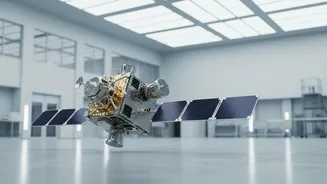
is rapidly expanding. Valued at around $9 billion and employing over 45,000 people in 2023, the industry is projected to reach $44 billion by 2033. This growth is fueled by nearly 400 private startups like Skyroot Aerospace, Agnikul Cosmos, and Pixxel, which are building everything from launch vehicles to satellite constellations. This commercial boom means the industry needs more than just engineers; it requires a diverse workforce to build, manage, and regulate this new frontier.
The Data Decoders: Satellite and Geospatial Analysts
One of the fastest-growing fields in space-tech has little to do with building rockets and everything to do with interpreting the data they send back. Every day, Earth observation satellites capture immense volumes of imagery and signals. Satellite Data Analysts and GIS experts are the professionals who turn this raw data into actionable intelligence. Their work is crucial for industries like agriculture (monitoring crop health), disaster management (assessing flood damage), urban planning, and defence. Companies like SatSure are actively hiring professionals with skills in remote sensing, geospatial analysis, and programming languages like Python to make sense of this data. A background in geography, environmental science, or computer science can be a perfect launchpad for this data-driven career.
The Rule Makers: Space Law and Policy Experts
As space becomes more commercialized, it also becomes more crowded. This creates a pressing need for legal and policy frameworks. Who is liable if a private satellite collides with another? What are the regulations for space debris or asteroid mining? Space lawyers and policy analysts tackle these complex questions. They work for government bodies like ISRO and IN-SPACe, advise private startups on regulatory compliance and international treaties, or work in specialized law firms. With India's space policy evolving, there is a growing demand for professionals who can navigate the legal intricacies of space activities, creating opportunities for law graduates to shape the rules of this new domain.
The System Builders: Software and AI Engineers
Modern space missions are powered by sophisticated software. From the flight control systems on a rocket to the ground station software that manages satellites, code is critical. Aerospace software engineers develop mission-planning algorithms, autonomous navigation systems, and AI/ML tools for processing satellite imagery. This field is one of the fastest-growing tracks because it merges the digital and aerospace worlds. Strong skills in languages like C++ and Python, along with expertise in embedded systems, are highly sought after by both ISRO and private companies. As missions become more complex and autonomous, the demand for software and AI specialists will only intensify.
The Deal Makers: Business Development and Finance
A thriving private industry needs people who can build the business. Roles in business development, sales, finance, and marketing are essential for space startups to secure funding, find customers, and grow. Professionals in these roles might develop strategic partnerships, manage contracts for satellite launches, or create marketing campaigns to attract investment. Companies like Dhruva Space, for instance, actively hire for roles like Bid Manager alongside their engineering positions. An MBA or a background in finance or sales, combined with a passion for technology, can open doors to the commercial side of the space industry, helping propel innovative ideas from the drawing board to the marketplace.
The Storytellers and Designers: Communications and Visuals
As the space sector grows, so does the need to communicate its importance to the public, investors, and policymakers. Space journalists, technical writers, and communication specialists play a vital role in telling the stories behind the missions. Furthermore, companies need visual designers and content creators to build their brand and explain complex technology in an accessible way. A look at the career pages of startups reveals openings for visual designers, photographers, and content writers. These roles prove that you don't need a STEM degree to be part of India's space journey; creativity and strong communication skills are also valuable assets.