









The Automation Wave Is Here
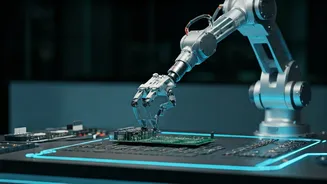
For years, automation was a futuristic concept. Today, it’s a business reality across India. In the IT and Business Process Outsourcing (BPO) sectors, Robotic Process Automation (RPA) bots now handle routine tasks like data entry, customer service queries,
and report generation. In manufacturing, advanced robotics and IoT sensors are making factory floors smarter and more efficient. A NASSCOM report highlighted that nearly half of the workforce in the IT sector would need reskilling over the next few years to cope with emerging technologies. This isn't about robots taking every job overnight. Instead, it's a fundamental shift where machines handle repetitive, rule-based tasks, freeing up human workers to focus on more complex, creative, and strategic work. The change isn't uniform, but it’s undeniable, and it requires a new career playbook.
From Job Titles to Skill Sets
The most significant change in career planning is the shift away from stable, lifelong job titles toward a portfolio of adaptable skills. The old model was simple: get a degree, land a job as a ‘Software Engineer’ or ‘Accountant,’ and climb a predictable corporate ladder. Automation disrupts this by deconstructing jobs into individual tasks. Some of these tasks can be automated, while others require human ingenuity. For example, an accountant’s role might see routine data reconciliation automated, but their expertise in financial strategy, risk analysis, and client advisory becomes even more valuable. This means your career security no longer comes from your job title, but from the unique, hard-to-automate skills you possess. The question is no longer “What job do you have?” but “What problems can you solve?”
The New Hierarchy of Skills
In this new landscape, two types of skills are emerging as critical. First are the hard-tech skills directly related to building and managing automated systems. Expertise in Artificial Intelligence (AI), Machine Learning (ML), data science, cloud computing, and cybersecurity is in soaring demand. Professionals who can design, implement, and oversee these technologies are becoming indispensable. But technical prowess alone is not enough. The second, and arguably more important, category is ‘uniquely human’ skills. These include critical thinking, complex problem-solving, creativity, emotional intelligence, and collaboration. Machines can process data, but they can't yet negotiate a complex business deal, inspire a team, or devise an innovative marketing campaign from scratch. These are the abilities that will increasingly differentiate human workers and provide long-term career resilience.
Reskilling Is the New Normal
The rapid pace of technological change means that the skills you have today may not be sufficient in five years. This makes continuous learning, or ‘reskilling,’ a non-negotiable part of modern career management. Waiting for your employer to train you is no longer a viable strategy. Individuals must take ownership of their professional development. Fortunately, the resources for learning have never been more accessible. Online platforms like Coursera, upGrad, and LinkedIn Learning offer courses and certifications in high-demand fields. The government's Skill India Mission and corporate-led training initiatives are also part of this ecosystem. The goal is to cultivate a mindset of lifelong learning, where you are constantly updating your skill set through short courses, workshops, and on-the-job projects. This approach, known as micro-learning, is key to staying relevant.
How to Plan Your Future-Proof Career
So, how do you adapt? Start with a personal skill audit. Honestly assess your current role: which parts are repetitive and could be automated? Which parts require creativity, strategy, or empathy? Focus on strengthening the latter. Next, identify a few adjacent skills that could complement your existing expertise. A marketing professional might learn data analytics to better understand campaign performance. An HR manager might take a course on AI ethics to prepare for automated hiring tools. Finally, embrace roles that involve ambiguity and human interaction. Jobs centred on management, strategy, care, and creativity are the most insulated from automation. By actively seeking out projects that challenge you to think critically and collaborate, you are building the very muscles that will define the future of work.