



A Cosmic Data Deluge
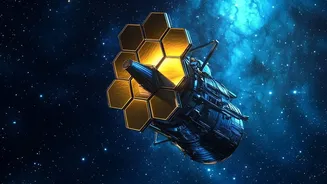
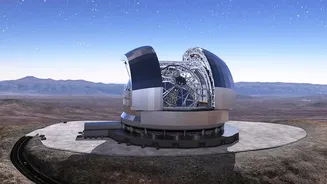
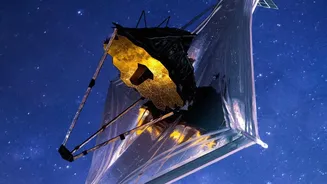
Modern astronomy is facing a challenge that is both unprecedented and exciting: a data explosion. New-generation observatories are capturing the cosmos in astonishing detail, but the sheer volume of information is staggering. The Vera C. Rubin Observatory
in Chile, for instance, is expected to generate up to 20 terabytes of data every single night. To put that in perspective, you would need to stream high-definition video continuously for years to match that amount of data. Similarly, the international Square Kilometre Array (SKA) project will eventually produce data at a rate exceeding the entire globe's internet traffic. This is not just more data; it's a fundamental shift in the scale of astronomical observation, creating a treasure trove of images and signals far too vast for scientists to ever analyze manually.
The Human Bottleneck
Historically, astronomers could visually inspect photographs or manually analyze data sets to make discoveries. This hands-on approach, however, has become impractical. With projects like the Rubin Observatory expected to issue around 10 million alerts for transient (or changing) celestial events each night, there simply aren't enough astronomers—or enough hours in the day—to keep up. The manual process is not only slow and labor-intensive but also prone to human error and bias. In a sea of data, a faint but crucial signal, like the subtle dimming of a star that indicates a passing exoplanet, could easily be missed by the human eye. The grand ambition of modern surveys requires a new kind of partner, one that can work tirelessly and with superhuman precision.
Machine Learning to the Rescue
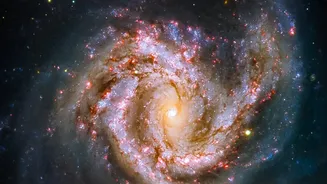
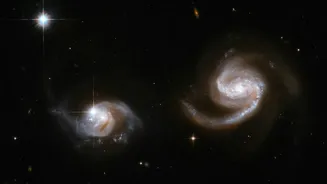
This is where machine learning (ML) enters the picture, acting as a tireless digital assistant for astronomers. At its core, machine learning involves training algorithms on vast datasets to recognize patterns, make predictions, and classify objects. Instead of being explicitly programmed for every task, these systems learn from examples. In astronomy, this means an ML model can be 'shown' thousands of confirmed images of spiral galaxies and elliptical galaxies, and it will learn to classify new ones on its own. Neural networks, a type of ML inspired by the human brain, are particularly adept at these tasks. They can sift through petabytes of data in seconds, flagging anomalies and categorizing objects with a speed and accuracy that humans cannot match, allowing scientists to focus their expertise on the most promising leads.
Finding Needles in Cosmic Haystacks
The applications of machine learning in astronomy are already transforming the field. One of the most significant is the hunt for exoplanets. ML algorithms can scan the light curves from thousands of stars at once, identifying the faint, periodic dips that signify a transiting planet. NASA's ExoMiner AI, for example, has already helped validate hundreds of new exoplanets from data gathered by the Kepler and TESS missions. Another key area is galaxy classification. For decades, astronomers classified galaxies by visual inspection, a slow and subjective process. Now, ML models can automatically sort millions of galaxies by their shape and structure, helping scientists build massive catalogues to test theories of cosmic evolution. Furthermore, AI is crucial for detecting transient events like supernovae, spotting them in real-time so that other telescopes can be pointed for immediate follow-up observations.
The Future of Automated Discovery
The role of machine learning is set to expand even further. It is moving beyond simply processing data to actively participating in the discovery process. Some researchers are developing AI that can generate its own hypotheses or even predict where to look for new phenomena. As algorithms become more sophisticated, they will help tackle some of the biggest mysteries in astrophysics, from understanding the nature of dark matter and dark energy to mapping the structure of our own Milky Way galaxy. However, the technology is not without its challenges. Scientists are working to make these AI models more transparent and less of a "black box," ensuring they can trust and verify the results. Despite these hurdles, the integration of human intuition and artificial intelligence is poised to accelerate discovery at an unprecedented rate.