





A Telescope in Trouble
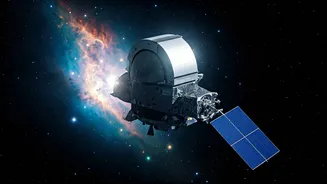
For two decades, NASA's Neil Gehrels Swift Observatory has been a cornerstone of high-energy astrophysics. Launched in 2004, its mission is to rapidly detect and observe gamma-ray bursts (GRBs)—the most powerful explosions in the universe. Swift has been wildly
successful, revolutionizing our understanding of these cosmic phenomena and making countless other discoveries. But time takes its toll, even in space. The satellite relies on a set of gyroscopes to orient itself with precision. Earlier this year, the performance of one of its three remaining gyros began to degrade significantly, threatening its ability to point accurately and conduct science. Without a fix, the celebrated mission was in jeopardy.
The Remote Rescue Operation
In the past, a critical hardware failure like this would often mean the end of a satellite's life. But this is where the "rescue" comes in. Instead of giving up on the aging observatory, engineers on the ground devised a clever solution. They developed and uploaded a software patch that allows Swift to operate effectively using just two gyroscopes. This remote-control repair, completed in early April 2024, successfully returned the spacecraft to full functionality. In fact, some scientists noted that the telescope's pointing accuracy after the fix was better than it had been in years. This software solution didn't just save a multi-million dollar asset; it underscored a growing philosophy in the space industry: our investments in orbit are too valuable to be disposable.
A Boost for a New Mission
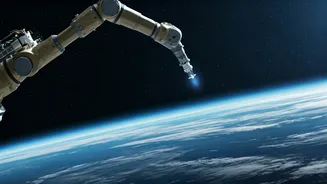
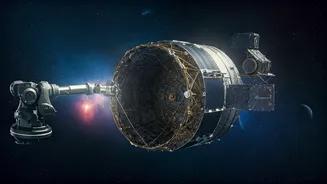
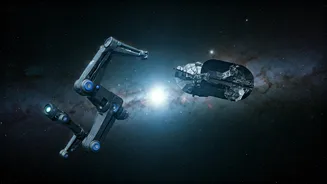
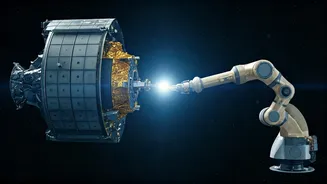
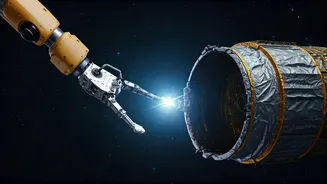
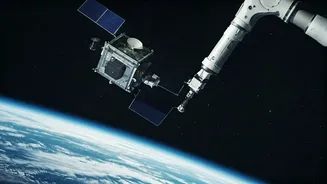
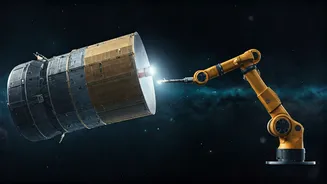
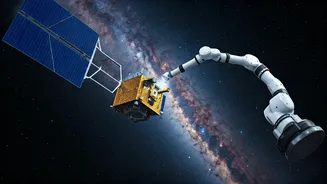
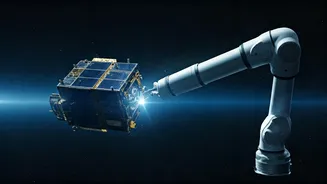
While the software patch solved the immediate pointing problem, Swift faced another threat: its orbit was decaying. To address this, NASA is partnering with Katalyst Space Technologies for a first-of-its-kind physical servicing mission. A robotic servicing spacecraft named LINK is scheduled to launch, rendezvous with Swift, and gently boost it into a higher, more stable orbit. This maneuver is expected to extend Swift's operational life by another decade. The mission is a clear example of the new economics of space, where extending the life of a proven, high-value satellite is more cost-effective than building and launching a replacement.
The Dawn of Space Mechanics
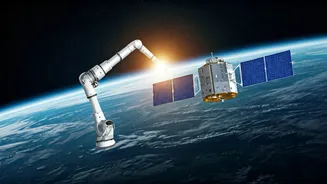
The creative efforts to save Swift are a powerful illustration of the burgeoning field of on-orbit servicing, assembly, and manufacturing (ISAM). For decades, the space industry operated on a launch-and-leave model. Satellites that ran out of fuel or suffered minor mechanical failures were simply abandoned, becoming space junk. Today, a new industry is emerging to change that. Companies like Northrop Grumman and its subsidiary, SpaceLogistics, have already demonstrated the ability to physically dock with aging satellites and take over their propulsion, effectively acting as a jetpack for spacecraft that have run out of fuel. Their Mission Extension Vehicle (MEV) has successfully serviced multiple commercial satellites, proving the business case for in-orbit life extension.
A Trillion-Dollar Opportunity
The implications of a robust satellite servicing industry are enormous. The on-orbit servicing market is projected to grow into a multi-billion dollar industry within the next decade. This shift is driven by simple economics: large communications and military satellites in geostationary orbit can cost hundreds of millions of dollars to build and launch. Spending a fraction of that cost on a servicing mission to refuel or repair the satellite extends its revenue-generating life for years. This creates a more sustainable and economically efficient model for space operations. It also opens the door to more complex future missions, including repairing damage, upgrading components, and even assembling large structures directly in space.