


The Allure of Another Earth
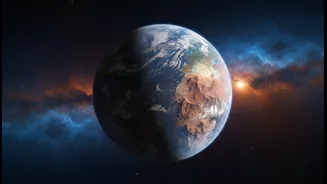
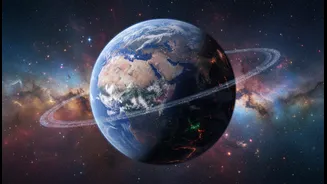
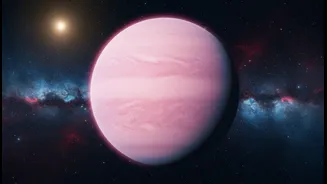
In the vast cosmic ocean, astronomers are hunting for worlds that feel familiar. Among the most tantalizing targets are 'super-Earths'—planets more massive than our own but smaller than gas giants like Neptune. By definition, this class of planet simply
refers to its size and mass; it tells us nothing about whether it's a water world, a lava planet, or a barren rock. Yet, because our own solar system curiously lacks a planet of this size, they represent a fascinating unknown. When one is found within its star’s “habitable zone”—the orbital distance where temperatures could allow for liquid water—headlines often light up with possibilities of life. But location, as it turns out, is only a tiny part of the story.
The Goldilocks Zone Is Not Enough
The term 'habitable zone', or 'Goldilocks zone', is a simple concept for a complex reality. It describes the region around a star where a planet receives just the right amount of energy to potentially support liquid water on its surface—not too hot that it boils away, and not too cold that it freezes solid. While liquid water is considered a key ingredient for life as we know it, simply being in this zone is no guarantee of habitability. Think of it as finding a parking spot in the right neighbourhood; it doesn’t tell you anything about the condition of the building. The actual habitability of a planet depends on a host of other factors, from its geological activity to the stability of its parent star. But the single most important factor is its atmosphere.
The Atmospheric Dealbreaker
An atmosphere is the ultimate make-or-break for a planet. It regulates temperature, shields the surface from harmful radiation, and creates the pressure needed for liquid water to exist. Without the right kind of atmosphere, a planet in the perfect location can be utterly inhospitable. Many super-Earths, for instance, are thought to be more like 'mini-Neptunes'—rocky cores shrouded in immensely thick, hydrogen-rich atmospheres left over from their formation. The surface pressure under such an envelope would be crushing, with temperatures far too high for life. On the other hand, a planet might have too little atmosphere. If it's not massive enough or lacks a protective magnetic field, its host star's radiation can strip its atmosphere away, leaving a dead, airless world like LHS 3844b, which the James Webb Space Telescope (JWST) found to be a bare, dark rock.
Reading the Skies from Light-Years Away
This is where modern astronomy gets truly incredible. Telescopes like the JWST can analyse the light from a distant star as a planet passes in front of it. By seeing which wavelengths of light are absorbed, scientists can deduce the chemical makeup of the planet’s atmosphere. These observations are revealing a gallery of strange and wonderful worlds that defy easy categorization. For example, JWST has found super-hot lava worlds like 55 Cancri e, which may have an atmosphere that is constantly being replenished by a molten rock ocean. In other cases, it has found evidence for surprising atmospheres on planets that were thought to be too hot to retain any gas at all. These findings are invaluable because they provide real-world data that challenges and refines our models of how planets form and evolve.