
The Problem with a Moving Target
Our solar system is a busy place, filled with millions of asteroids and comets, collectively known as Near-Earth Objects (NEOs). These are remnants from the formation of our solar system, and their orbits can sometimes bring them uncomfortably close to
Earth. An object is classified as an NEO if its orbit comes within about 48 million kilometres of our own. While most are harmless, objects larger than 140 meters could cause significant regional devastation if they were to strike. NASA has been tasked with finding the majority of these larger objects. The challenge is immense; these objects are often dark, small, and moving incredibly fast against the vast blackness of space, making them difficult to spot.
A 24/7 Celestial Security Guard
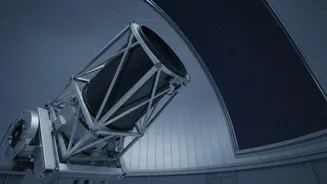
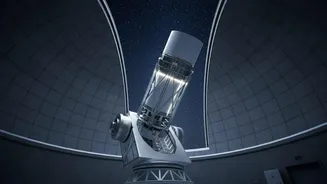
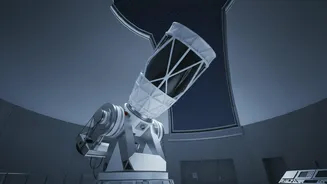
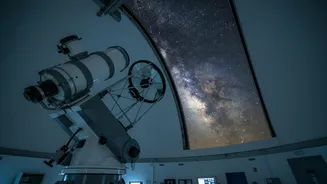
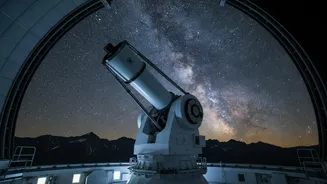
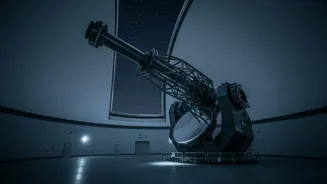
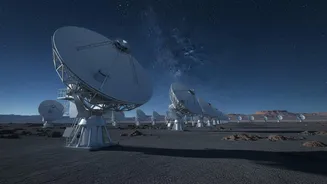
Why can't we just use one powerful telescope? The simple answer is that Earth is always rotating. A single observatory in one location can only see a fraction of the sky at any given time, and it's completely blind during the daytime. Weather, like cloud cover, can also block the view. To ensure there are no gaps in our watch, a globally distributed network of telescopes is essential. By placing observatories in different hemispheres and time zones—from Hawaii to Chile to South Africa—astronomers can hand off surveillance as the Earth turns. This creates a continuous, 24-hour watch over the sky, ensuring that an object approaching from any direction can be spotted with enough time to act.
The Eyes on the Sky
Several key survey projects form the backbone of our planetary defence. The Pan-STARRS telescopes in Hawaii have been a leading force in NEO discovery for years, systematically scanning the sky to find moving objects. Another critical system is the Asteroid Terrestrial-impact Last Alert System (ATLAS), which consists of telescopes in Hawaii, Chile, and South Africa. ATLAS is designed to scan the entire sky every 24 hours to find smaller asteroids days or weeks before a potential impact, providing valuable warning time. These ground-based surveys work by taking multiple images of the same patch of sky minutes apart and using software to detect any object that has moved against the background of fixed stars. This data is then sent to the Minor Planet Center, the global clearinghouse for all asteroid observations, for verification and orbit calculation.
Coordinating a Global Response
Finding a potentially hazardous object is only the first step. Once a detection is made, a global effort kicks in. Data is shared through the International Asteroid Warning Network (IAWN), which is endorsed by the United Nations, to coordinate follow-up observations from observatories worldwide. This allows scientists to precisely calculate an asteroid's orbit and determine its future path. Organizations like NASA's Planetary Defense Coordination Office (PDCO) and the Center for Near-Earth Object Studies (CNEOS) analyze this data to assess the impact risk. If a credible threat is identified, the PDCO is responsible for notifying government agencies to coordinate a response, which could range from civil defence evacuations to planning a mitigation mission, such as the one tested by the DART spacecraft.
The Future is Even More Vigilant
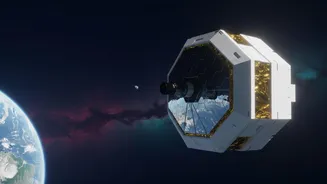
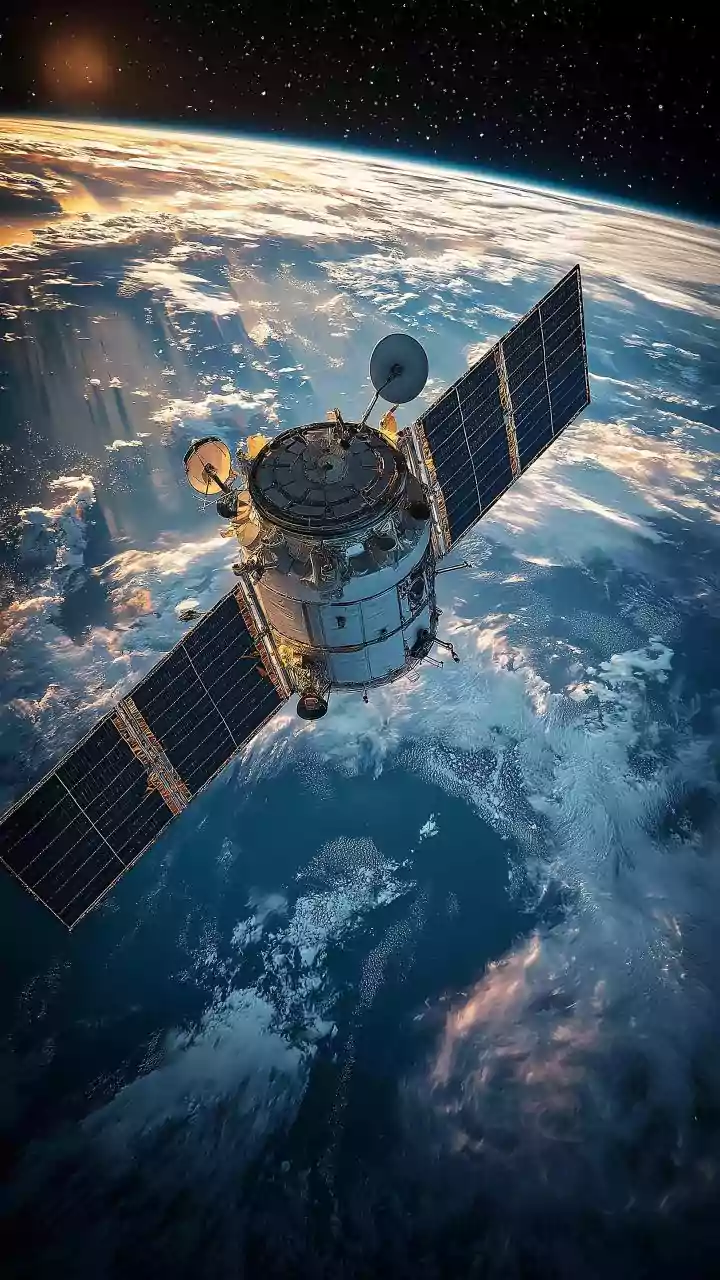
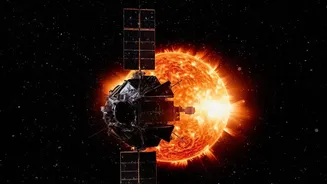
The system is constantly improving. The Vera C. Rubin Observatory, which began full operations in Chile in mid-2026, is a revolutionary tool for planetary defence. With its massive camera and wide field of view, it will create the most detailed census of our solar system ever, discovering thousands of new NEOs. Looking ahead, space-based telescopes will provide an even better vantage point. NASA's upcoming NEO Surveyor mission, planned for launch no earlier than 2027, will use an infrared telescope to find asteroids. By detecting their heat signatures, it will be especially effective at finding dark objects and those that approach from the direction of the sun, filling a critical blind spot for ground-based observatories.