




Understanding the Space Value Chain
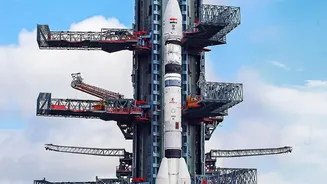
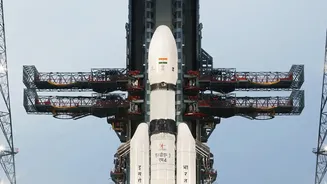
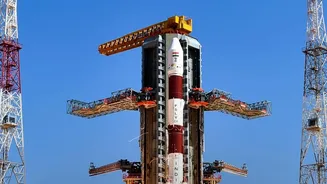
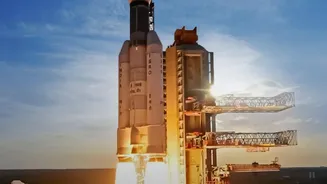
Think of the space industry in three main stages. First is 'upstream', which involves designing and manufacturing the hardware: rockets (launch vehicles) and satellites. The second is 'midstream', which covers the actual launch services and operating
the satellites in orbit. Finally, 'downstream' is where the real-world applications come in. This stage focuses on using the data and signals from satellites for services like Earth observation, communication, and navigation that serve industries from agriculture to disaster management. Indian startups are now active in all three areas, creating a self-reliant and commercially competitive national ecosystem.
Upstream: Forging Rockets and Satellites
In the upstream segment, Indian companies are making remarkable strides. Hyderabad-based Skyroot Aerospace became India's first private company to launch a rocket into orbit in July 2026 with its Vikram-1 vehicle. Chennai's Agnikul Cosmos is also a key player, pioneering the world's first single-piece 3D-printed rocket engine, which drastically simplifies manufacturing. On the satellite front, Dhruva Space, founded in 2012, provides full-stack space engineering, building satellite platforms and orbital deployers for both domestic and global clients. These companies are building the foundational hardware that powers the entire space economy.
Downstream: Turning Data into Actionable Insights
The downstream sector is where space technology directly impacts life on Earth. Pixxel, a Bengaluru-based startup, is a leader in this domain. It is building a constellation of hyperspectral imaging satellites. Unlike regular cameras, these satellites capture data across hundreds of light bands, making it possible to detect things invisible to the naked eye, such as early-stage crop diseases, mineral deposits, and sources of pollution. This detailed data serves critical sectors like agriculture, mining, and environmental monitoring. Other companies like SatSure focus on applying AI to satellite imagery, turning raw data into valuable intelligence for businesses and governments.
The Full-Stack Approach: Integrating the Chain
Some companies are not limiting themselves to just one part of the value chain. Dhruva Space, for example, offers an integrated solution that covers the space, launch, and ground segments. This 'full-stack' model allows a client to work with a single partner to design, build, launch, and operate a satellite mission. This simplifies a traditionally complex process, reduces costs, and improves efficiency, making space more accessible for a wider range of customers, from academic institutions to private enterprises. This integrated capability is crucial for building a robust and versatile space industry.
The Enabler: How IN-SPACe Fuels Growth
This boom in private space activity hasn't happened in a vacuum. The Indian government's establishment of the Indian National Space Promotion and Authorisation Centre (IN-SPACe) in 2020 has been a game-changer. IN-SPACe acts as a single-window agency, responsible for promoting, authorizing, and supervising the activities of private space companies. It facilitates access to ISRO's world-class facilities and expertise, which was previously unavailable to private entities. This supportive policy framework has been instrumental in reducing barriers to entry and fostering an environment where startups can innovate and grow.