





The Moon's Extreme Power Problem
Anyone who has seen a car struggle to start on a frosty morning understands that batteries and extreme cold do not mix. Now, imagine that problem on the Moon. During the long, two-week lunar night, temperatures at the South Pole—a target for future Artemis
missions—can plummet to a staggering minus 200 degrees Celsius (-328 F). Conventional lithium-ion batteries, like those in our phones and electric cars, contain a liquid electrolyte that would freeze solid and become useless, potentially suffering permanent damage. Conversely, daytime temperatures can reach 100°C (212°F), which can also prevent normal operation. This massive temperature swing means any lunar hardware, from rovers to astronaut life support, needs a power source that can survive the brutal conditions. Currently, this would require bulky and heavy heating systems just to keep the batteries alive, adding mass and cost to any mission.
A Solid Solution to a Liquid Problem
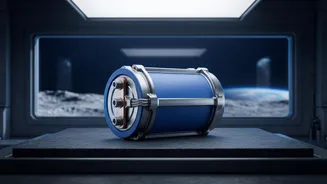
The solution NASA is developing is the solid-state battery. The core innovation is replacing the flammable, temperature-sensitive liquid electrolyte with a solid material, such as a special ceramic or polymer. This seemingly simple switch brings profound advantages for space exploration. First, with no liquid to freeze, boil away in a vacuum, or catch fire, these batteries are inherently safer and more resilient. They can survive the deep cold of the lunar night without the need for continuous, energy-draining heating systems. While even solid-state batteries will not operate at the most extreme cryogenic temperatures, they can be dormant and then warmed up for use when needed. This significantly reduces the energy overhead required just for survival, which is a game-changer for mission design.
Introducing NASA's SPEARS Program
This is where the SPEARS program comes in. SPEARS stands for 'Solid Power for Extreme Environment Adaptability and Resilience in Space', and it is NASA's dedicated project to mature this exact technology. Led by NASA's Glenn Research Center, the program aims to develop solid-state batteries that are reliable and safe enough to power humanity's return to the Moon under the Artemis campaign. The goal isn't just to create a single type of battery, but to develop a versatile platform. According to researchers, the chemistry of these solid-state cells can be tuned for different applications—some optimized for high power output for a rover, others for long-term, steady energy for scientific instruments.
Putting the Cells to the Test
Recent tests at NASA's Langley Research Center provided a major proof-of-concept for the SPEARS program. Small, coin-sized prototype cells were subjected to a thermal vacuum chamber that simulates lunar conditions. The results were highly encouraging. For the first time, the cells were proven to operate down to minus 80 degrees Celsius (-112 F), albeit with some reduced performance. They worked well in a range from 80°C down to -60°C. Perhaps more importantly, the cells survived exposure to temperatures as low as -170°C (-274°F) without damage. This demonstrates their ability to endure the deep freeze of a lunar night and be warmed back up to full operational status, a critical requirement for any long-term mission.
A Game-Changer for Future Missions
The success of these tests is significant because it validates a core assumption of future lunar exploration: that we can build lighter, more efficient systems. By reducing the need for heavy thermal management hardware, NASA can design rovers, habitats, and tools that are less costly to launch. This technology could enable rovers to explore permanently shadowed craters, where water ice is believed to exist, and keep emergency power packs for astronauts viable. Ultimately, having a reliable, resilient, and adaptable power source is a foundational requirement for establishing a permanent, sustainable human presence on the Moon and beyond.
Beyond the Moon to Earth
While SPEARS is focused on the Moon, the innovations it drives could have a major impact back on Earth. Solid-state batteries are considered the 'next big thing' for everything from electric vehicles to consumer electronics. They promise higher energy density (more range for cars, longer life for phones), enhanced safety, and longer lifespans. The rigorous demands of space exploration often accelerate technological development. By solving the power problem for the Moon, NASA's research could help overcome the remaining hurdles for commercializing solid-state batteries on Earth, leading to safer, more powerful, and more durable products for everyone.