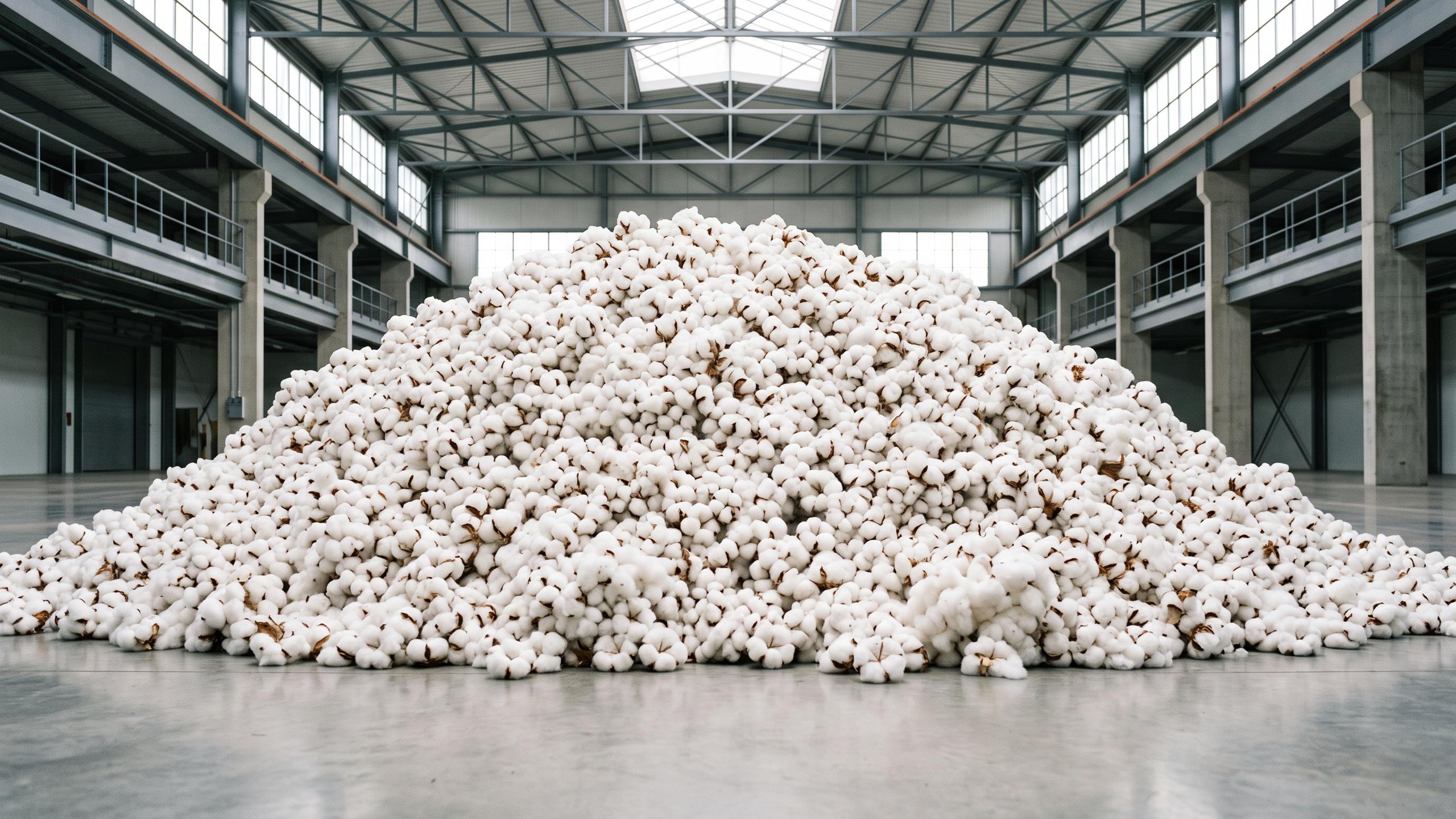








Cotton is more than just a crop in India; it’s the backbone of a colossal textile industry. But a strategic dilemma is intensifying: should India prioritise homegrown cotton or lean on imports? The choice is a complex balancing act.
A Widening Supply-Demand Gap
India stands as the
world's second-largest cotton producer, yet it faces a peculiar challenge: its domestic production is struggling to keep pace with the voracious appetite of its textile mills. For the 2026-27 season, production is projected to fall to around 29 million bales, while domestic demand could surge past 34 million bales. This mismatch is a result of several factors, including erratic weather, with deficient rainfall and high temperatures impacting yields in key growing states like Maharashtra and Karnataka. Consequently, India is turning to imports more than ever, with figures for 2025-26 reaching record levels to bridge the shortfall and keep the textile value chain running.
The Case for Boosting Domestic Production
Strengthening domestic cotton cultivation is a compelling argument rooted in economic self-reliance and farmer welfare. Expanding acreage and improving yield supports millions of farmers, many of whom are small and marginal landholders. A robust domestic supply chain insulates the Indian market from global price volatility and shipping uncertainties. The government's Minimum Support Price (MSP) mechanism is designed to provide a safety net for these farmers, but its effectiveness is strained when cheaper imports flood the market. Furthermore, long-term national initiatives like the Mission for Cotton Productivity aim to enhance domestic supply by promoting higher-yielding seeds, modernising processing facilities, and improving cultivation methods to reduce import dependency.
Why Imports Remain Essential
Despite having the world's largest area under cotton cultivation, India's reliance on imports is not just about quantity; it's critically about quality. Indian textile mills often require specific types of high-quality, contamination-free fibre, such as Extra Long Staple (ELS) cotton, which is not produced in sufficient quantities domestically. To produce premium yarns and fabrics for an increasingly competitive global market, manufacturers need access to this higher-grade cotton, often sourced from countries like the US, Brazil, and Australia. The temporary removal of the 11% import duty in 2026 has been a relief for these mills, helping manage raw material costs and maintain their export competitiveness against rivals like Vietnam and Bangladesh.
The Challenges Plaguing Indian Cotton Farms
The push to increase domestic supply faces significant hurdles on the ground. Indian cotton farmers are grappling with stagnant yields, which are considerably lower than those in other major producing nations like China and Brazil. This is compounded by recurrent pest attacks, soil degradation from monocropping, and a heavy dependence on outdated seed technology. Climate change adds another layer of risk, with erratic monsoons disrupting sowing and growth cycles. These persistent issues not only reduce the profitability of cotton farming, prompting some farmers to switch to other crops, but also impact the overall quality and consistency of the domestic lint, further fuelling the industry's demand for reliable imports.
The Policymaker's Tightrope Walk
For Indian policymakers, the situation is a delicate tightrope walk. On one side, there is an urgent need to protect farmer incomes and encourage domestic production. Extending duty-free imports into the main harvesting season risks depressing local prices, directly impacting farmers. On the other side, the textile industry, a massive employer and a key driver of exports, requires a steady and high-quality supply of raw material to remain globally competitive. Policies like temporarily waiving import duties reflect this balancing act—an attempt to support the industry during lean supply months without permanently undermining domestic growers. The strategic choice is not a simple binary of 'domestic vs. import' but about finding a hybrid policy that fosters domestic innovation while allowing for strategic imports.