

A New Window on the Cosmos
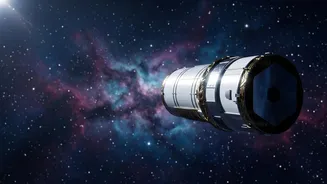
The Nancy Grace Roman Space Telescope is the next great observatory in NASA's fleet, designed to tackle some of the biggest questions in astrophysics. Named after NASA's first chief of astronomy, this powerful telescope will investigate the mysteries
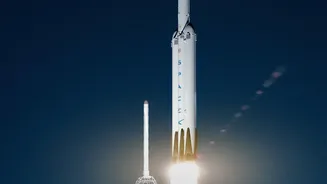
of dark energy and dark matter, discover new exoplanets, and provide breathtaking infrared views of the cosmos. Its key feature is a massive field of view, 100 times larger than that of the Hubble Space Telescope, allowing it to survey huge swathes of the sky with incredible speed and detail. Launched aboard a SpaceX Falcon Heavy rocket, its primary mission is planned for five years, with the potential for another five-year extension.
The Destination: What Is L2?
Roman's destination is a specific spot in space known as the second Lagrange point, or L2, located about 1.5 million kilometers (nearly a million miles) from Earth, directly away from the Sun. Lagrange points are unique positions where the gravitational pull of two large bodies—in this case, the Sun and Earth—balances the centripetal force of a smaller object. This creates a sort of cosmic parking spot, allowing a spacecraft like Roman to maintain a stable position with minimal fuel. L2 is ideal for astronomy because it offers a clear, unobstructed view of deep space. By keeping the Sun, Earth, and Moon all in the same direction, the telescope's sunshield can effectively block their light and heat, which is crucial for its sensitive infrared instruments.
The Launch and Long Coast
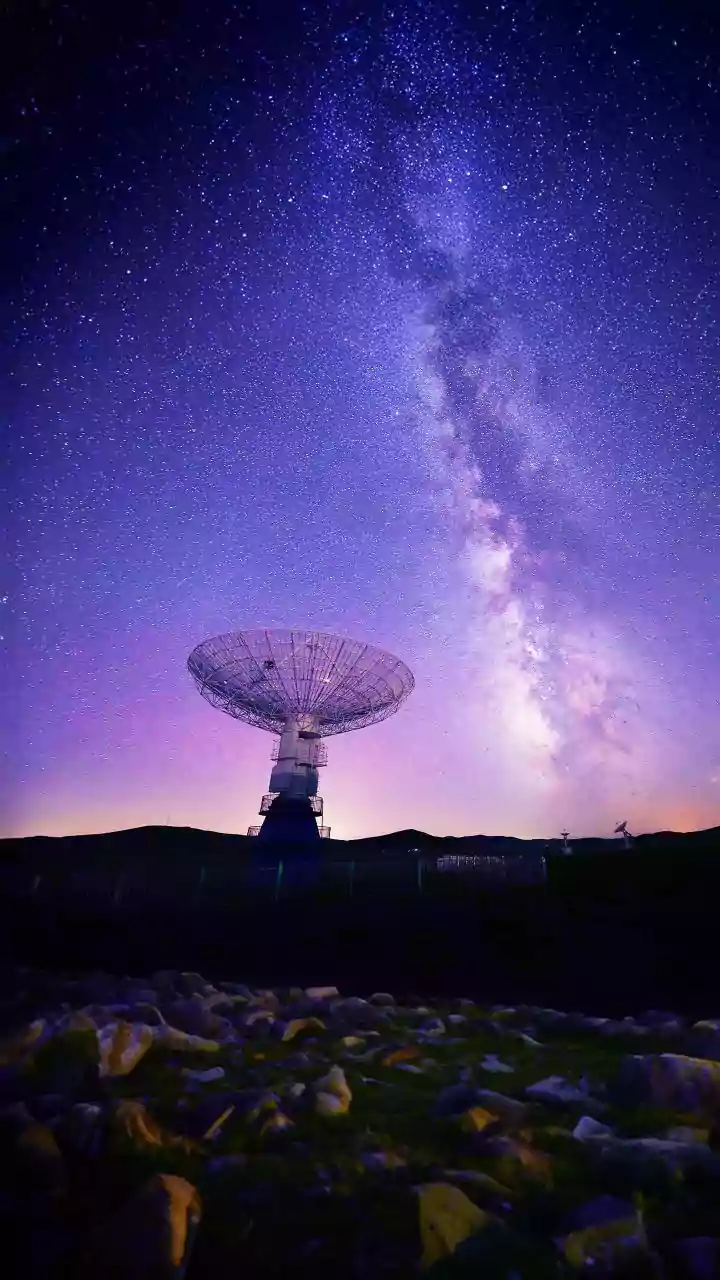
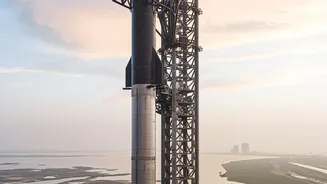
The journey began on August 30, 2026, from NASA's Kennedy Space Center in Florida. Unlike missions that first enter a temporary orbit around Earth, the Falcon Heavy rocket propelled Roman directly onto its trajectory toward L2. About seven minutes after liftoff, ground control teams established contact with the observatory. The entire voyage to L2 is expected to take approximately three to four months. During this coasting phase, the telescope is far from idle. Mission controllers on the ground use NASA’s Deep Space Network—a system of large radio antennas in Australia, Spain, and California—to maintain constant communication, guide the spacecraft, and perform crucial deployments.
Unfurling in the Void
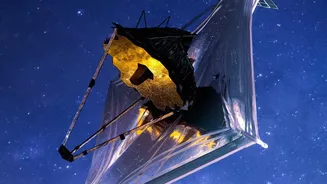
The trip to L2 is also a carefully choreographed dance of deployments. Shortly after launch, the observatory's solar panels were unfurled to provide power. Over the following days and weeks, other critical components come online. The high-gain antenna, necessary for sending vast amounts of scientific data back to Earth, is deployed. The large sunshield, vital for protecting Roman's instruments from heat, is also carefully extended. Each step is meticulously monitored from the ground to ensure every system is functioning perfectly in the harsh environment of space. Mid-course correction burns, small thruster firings, are performed to fine-tune the telescope's path and ensure it arrives precisely at its intended orbit around L2.
Arrival and Getting Ready for Science
Arriving at L2 isn't the end of the journey, but rather the beginning of the next phase: commissioning. This checkout period, which overlaps with the final weeks of its travel, lasts about three months in total. During this time, the science team puts the telescope through its paces. They power on and test the two main instruments: the Wide Field Instrument and the Coronagraph Instrument. Engineers take test images to check the telescope’s focus and sharpness, making tiny adjustments to ensure the optics are perfectly aligned. They also verify that the telescope's pointing is stable and precise. Only after this rigorous commissioning phase is complete will the Roman Space Telescope be ready to begin its primary mission. NASA expects to release the first stunning images to the public by early 2027, opening a new chapter in our exploration of the cosmos.