
The Golden Rules of Foraging
Before you even think about picking a wild mushroom, memorise these non-negotiable rules. They are the difference between a delightful meal and a medical emergency. First, never eat a mushroom unless you are 100% certain of its identity. There is a saying
among foragers: "There are old mushroom hunters and there are bold mushroom hunters, but there are no old, bold mushroom hunters". Second, do not rely on folklore. Myths like 'if an animal eats it, it's safe' or 'poisonous mushrooms will tarnish silver' are dangerously false. Many animals can digest toxins that are deadly to humans. Third, identification apps can be unreliable and should not be your sole source of truth. The best way to learn is by going with an experienced local forager who can teach you to identify species one by one.
Meet a Popular Edible: The Termite Mushroom
One of the most prized monsoon delicacies in India, especially in Goa and the Western Ghats, is the Termitomyces mushroom, locally known as 'Olmi' or 'Almi'. These mushrooms have a unique symbiotic relationship with termites. The termites cultivate the fungus underground, and the mushrooms only fruit above ground after heavy rains. This is why they cannot be commercially cultivated, making them a sought-after seasonal treat.
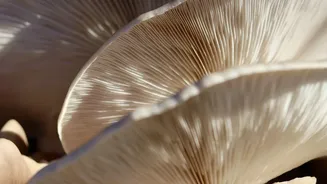
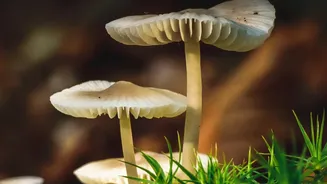
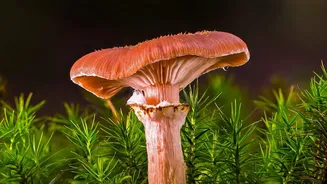
Key features for identification include a distinct pointed bump (umbo) in the centre of the cap, which helps it break through the soil. They almost exclusively grow directly on or near termite mounds. The gills underneath the cap are typically white, and the mushroom has a long, root-like structure called a pseudorhiza that connects deep into the termite nest. They have a firm, meaty texture and a nutty flavour, often used in curries and stir-fries.
The Deadly Imposter: Amanita phalloides
The 'Death Cap' mushroom, or Amanita phalloides, is responsible for the majority of fatal mushroom poisonings worldwide. It is dangerously common and has been found in various parts of India, causing fatalities. Its toxins, called amatoxins, are not destroyed by cooking, freezing, or drying. Ingesting even half a cap can be enough to kill an adult.
The great danger lies in its delayed symptoms. A person might experience stomach issues like vomiting and diarrhoea 6 to 24 hours after eating it, which may then subside. This apparent recovery is deceptive, as the toxins continue to cause severe liver and kidney damage, with fatal consequences often occurring days later.
Key features to watch for in Amanita species include a cup-like sac (volva) at the base of the stem, a ring (annulus) around the upper stem, and white gills. To the untrained eye, a white Termitomyces mushroom could be confused with a deadly white Amanita, such as the 'Destroying Angel'. A key difference is that Termitomyces mushrooms lack the volva, or cup, at the base.
General Tips to Avoid Danger
While individual identification is key, some general guidelines from experienced foragers can help novices avoid the most common toxic groups. A crucial tip is to avoid mushrooms with all three of these features combined: white gills, a ring on the stem, and a sack-like cup at the base. This combination is a hallmark of the deadly Amanita family. Also, be wary of any mushroom that has red on its cap or stem, as this can be a feature of some poisonous varieties.
Many old wives' tales about identification are simply not true. Poisonous mushrooms do not reliably have a bad smell or taste; the Death Cap is reportedly quite pleasant-tasting. Colour change when cut or bruised is also not a consistent indicator of toxicity. The only safe method is positive identification by an expert.
What to Do in Case of Suspected Poisoning
If you or someone you know might have eaten a poisonous mushroom, do not wait for symptoms to appear. Seek immediate medical attention at the nearest hospital emergency department. If possible, take a sample of the mushroom that was consumed. Place a whole, intact mushroom in a paper bag (not plastic) to help experts with identification. Taking clear photos of the mushroom from multiple angles—top, side, and underneath to show the gills—can also be extremely helpful for toxicologists. Remember, the delay in symptoms is a classic sign of some of the most dangerous poisonings, so acting fast is critical.