






The Magic of Buoyancy
The secret to swimming's joint-friendly power lies in a simple principle of physics: buoyancy. As the ancient Greek scientist Archimedes discovered, an object immersed in water is pushed upward by a force equal to the weight of the fluid it displaces.
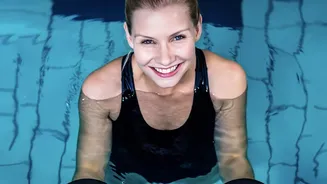
For you, this means the water is literally lifting you up, counteracting gravity's pull. When you're in water up to your waist, your body only bears about 50% of its weight. Submerge yourself to your chest, and that number drops to around 25-30%. If you're in neck-deep water, you’re only supporting about 10% of your body weight—roughly the weight of your head. This dramatic reduction in weight-bearing load gives your joints the break they deserve.
A Vacation for Your Joints
For individuals managing extra weight or conditions like arthritis, high-impact exercises like running or jumping can place significant stress on the knees, hips, and ankles. This can lead to pain, inflammation, and potential injury. Swimming removes that jarring impact. The water acts as a cushion, allowing you to move through a full range of motion without the pounding associated with land-based activities. This supported environment makes it easier and less painful to exercise, helping improve joint mobility and flexibility. Many people who find walking or standing for long periods uncomfortable can comfortably perform movements in the water they couldn't on land.
A Full-Body Workout, Not Just a Paddle
While swimming is gentle on the joints, it's a powerhouse workout for your entire body. Water provides about 12 times more resistance than air, meaning every movement you make is a form of strength training. Pulling your arms through the water works your shoulders, chest, and back, while kicking engages your legs, hips, and glutes. Your core muscles are constantly firing to keep you stable and streamlined. This combination of cardiovascular effort and muscle engagement makes swimming an incredibly efficient way to burn calories, improve heart health, and build lean muscle. Studies show that regular swimming can significantly reduce the risk of chronic conditions like heart disease and type 2 diabetes.
Getting Started With Confidence
Dipping your toes into swimming for the first time doesn't have to be intimidating. Start slowly. You don't need to be an Olympic swimmer to reap the benefits. Simply walking back and forth in the shallow end is a great way to get accustomed to the water's resistance. Water aerobics classes are another fantastic option, offering structured, low-impact routines in a fun group setting. When you're ready, you can try basic strokes like the breaststroke or backstroke, which are often less strenuous for beginners than freestyle. The most important thing is to find a movement that feels good for your body and to listen to its signals. Focus on consistency over intensity, especially at the beginning.
Beyond the Physical Benefits
The advantages of swimming extend beyond the purely physical. Many people find the rhythmic nature of swimming to be meditative, offering a mental escape from daily stressors. The feeling of weightlessness in the water can be incredibly relaxing and restorative. Furthermore, mastering a new skill and seeing your strength and endurance improve can provide a major boost to your self-confidence. Exercise becomes less of a chore and more of a joyful activity you look forward to. This positive shift in mindset is crucial for building a sustainable, long-term wellness routine.