


The Ultimate Souvenir
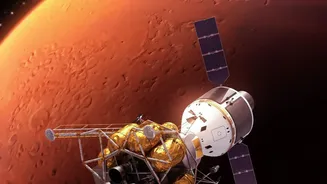
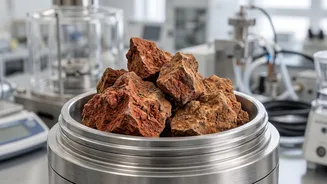
For decades, scientists have dreamed of studying pristine samples of Martian rock and soil in laboratories on Earth. The Mars Sample Return (MSR) mission, a joint effort with the European Space Agency (ESA), was designed to do just that. The goal is to retrieve
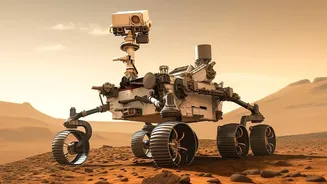
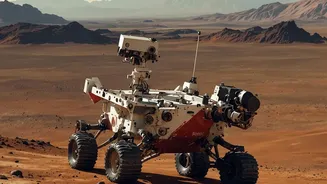
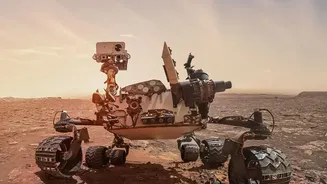
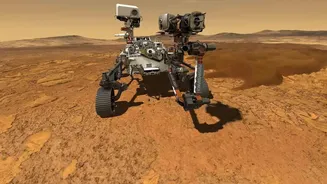
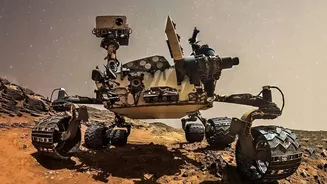
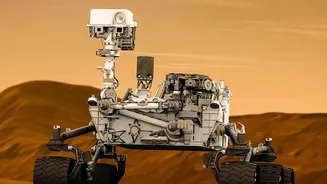
the precious rock and soil cores being collected by the Perseverance rover, which has been exploring Mars's Jezero Crater since 2021. These samples are humanity's best hope for answering a profound question: did life ever exist on Mars? Analysing them on Earth with advanced equipment, far beyond the capabilities of any rover, could revolutionize our understanding of the Red Planet and the formation of our solar system. The mission has long been the highest priority for the planetary science community.
An Overly Ambitious Plan
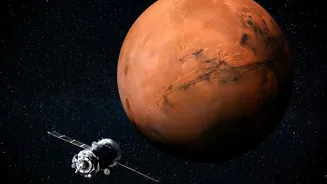
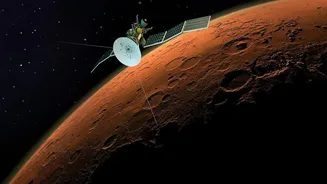
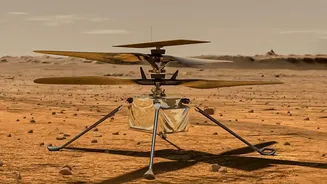
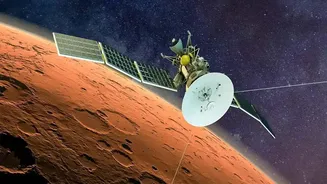
The original plan was a multi-stage, technologically dazzling feat. It involved sending a second lander to Mars, which would deploy either small helicopters or a rover to fetch the sample tubes left by Perseverance. A robotic arm would then load these samples into a small rocket, the Mars Ascent Vehicle, which would launch from the Martian surface—a first in history—to meet an ESA-built orbiter waiting to capture the capsule and fly it back to Earth. However, an independent review in 2023 delivered a sobering verdict: the mission, as designed, was plagued by unrealistic budget and schedule expectations from its inception. The reviewers found there was a 'near zero probability' of meeting the 2028 launch date. The projected cost had ballooned from around $5 billion to a staggering $11 billion, with a return date slipping as far as 2040.
Hitting the Reset Button
Faced with an unacceptable price tag and timeline, NASA Administrator Bill Nelson declared that the $11 billion plan would 'cannibalize' other critical science missions and was therefore unworkable. The agency effectively pulled the plug on the existing architecture and sent out a call for new, innovative ideas from NASA centers and private industry. The new targets are aggressive: bring the cost down to a range of $5 to $7 billion and get the samples back to Earth sometime in the 2030s. This major pivot acknowledges the original plan's complexity was its downfall and that a more streamlined approach is essential, especially within the current budget environment.
A New Path Forward
In November 2026, NASA announced a new initiative to formalize this reboot: the Perseverance Sample Retrieval Architecture, or PSRA. This new strategy team will kick off in January 2027 to develop fresh recommendations for a revised mission. The process involves evaluating new mission designs, reviewing lessons learned, and assessing all available options. While a final decision on the new mission profile is not expected until at least mid-2026, two main options are being weighed. One relies on proven NASA technology like the 'sky crane' landing system used for the Curiosity and Perseverance rovers, while the other would lean more heavily on commercial partners like SpaceX or Blue Origin to provide a heavy landing craft. This reset has also been influenced by external factors, as China is moving forward with its own Tianwen-3 sample return mission, aiming to launch by 2028 and return samples by 2031.