






A Demonstration of Capability
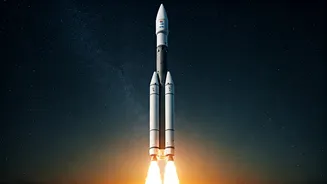
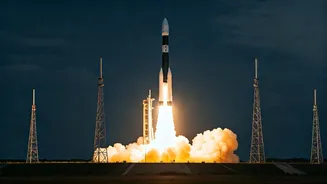
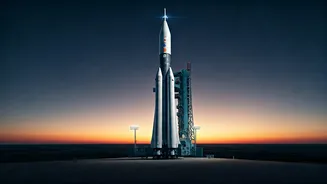
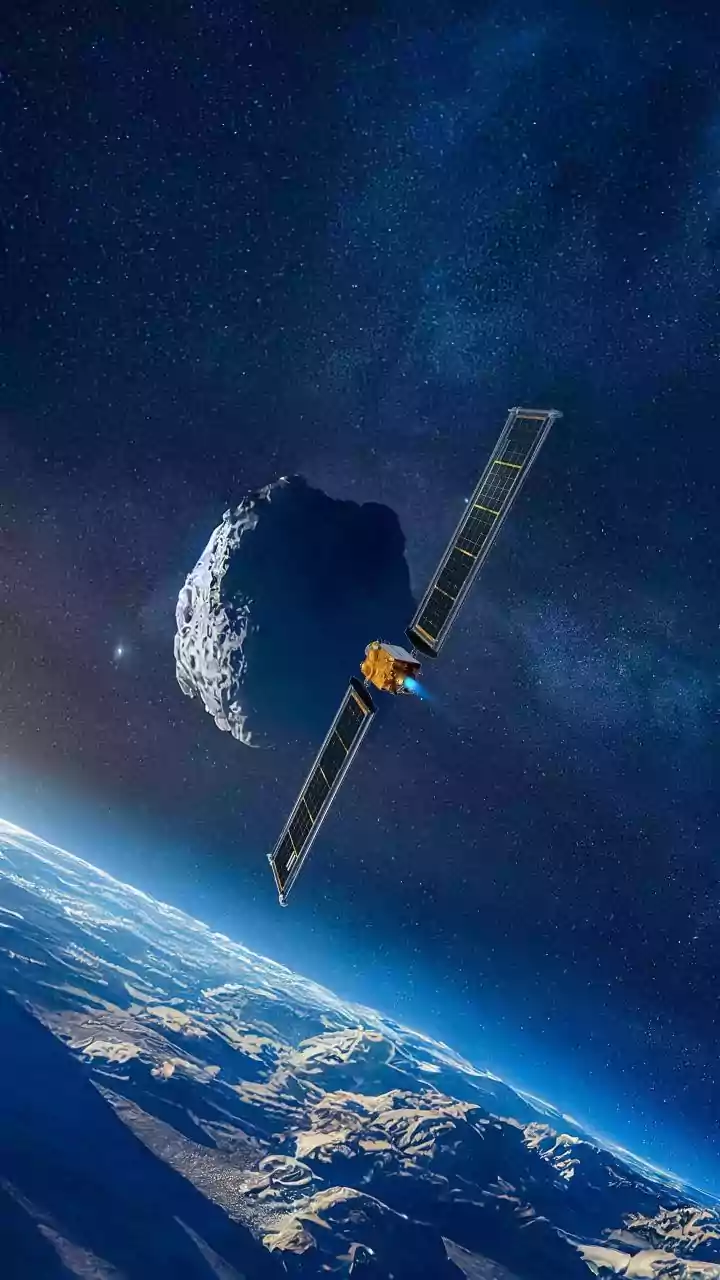
The initial Gaganyaan mission, which will send a crew of astronauts into a 400 km orbit for three days, is fundamentally a technology demonstrator. The primary objective is to prove India's capability for human spaceflight, from the human-rated LVM3 rocket
to the life support systems and safe re-entry and recovery at sea. Achieving this will make India only the fourth nation in history to have an indigenous human spaceflight program, a monumental achievement in itself. However, ISRO’s vision extends far beyond this single flight. The program is designed to master critical technologies like orbital rendezvous and docking, which are the essential building blocks for more complex and sustained operations in space. Think of this first launch not as the main event, but as the critical qualifying round for India's entry into a new league of space exploration.
India's Future Address in Orbit
The next major goal on the roadmap is the Bharatiya Antariksha Station (BAS), India’s very own modular space station. This isn't science fiction; the plan is concrete. The first module is targeted for launch by 2028, with the full five-module station expected to be operational by 2035. Once complete, the 52-tonne station will orbit at an altitude of around 400-450 km and host crews of three to four astronauts for months at a time. The BAS will serve multiple strategic purposes. It will be a world-class microgravity laboratory for scientific research in fields like biotechnology and materials science. It will also act as a crucial training ground for astronauts, preparing them for even longer-duration missions. As the International Space Station (ISS) approaches its planned retirement around 2030, the BAS will ensure India has sovereign access to low-Earth orbit.
Fueling a New Space Economy
The Gaganyaan program and its successors are about more than national pride; they are a powerful engine for economic growth. The Indian space economy, currently valued at around $9 billion, is projected to surge to $45 billion within the next decade. The mission is expected to create an estimated 15,000 new jobs, not just within ISRO but across a burgeoning ecosystem of private companies and startups. ISRO plans to source a significant portion of Gaganyaan's equipment from the Indian private sector, fostering industrial capabilities and high-tech manufacturing. This long-term vision stimulates innovation in robotics, advanced materials, and medicine, creating spinoff technologies that can benefit society back on Earth. It’s an investment in building a self-reliant, technology-driven economy for the 21st century.
To the Moon and Beyond
With a foothold in low-Earth orbit established, India is setting its sights back on the Moon, and this time, with human explorers. The roadmap includes an ambitious goal to land an Indian astronaut on the lunar surface by 2040. This places India in an elite group of nations planning for a sustained human presence on another celestial body. The journey there involves several key steps, including the Chandrayaan-4 mission, which aims to be India's first to return lunar samples to Earth, a highly complex undertaking targeted for 2028. These missions build upon each other, with the experience gained from Gaganyaan and the space station directly enabling the capabilities required for interplanetary travel. It signals a clear intent to move from being a participant in space to becoming a leader in deep space exploration.
A New Generation of Explorers
A long-term space program requires a sustainable pipeline of talent. While the first batch of Gaganyaan astronauts consists of elite Indian Air Force test pilots, ISRO is already planning for the future. The second batch of astronauts is expected to include civilian specialists from STEM fields, such as scientists and engineers. This shift is crucial for the scientific work planned for the Bharatiya Antariksha Station. As mission frequency increases, with plans for potentially two crewed flights a year, the astronaut corps will need to grow and diversify. This move signals a transition from the 'test pilot' era of spaceflight to one focused on long-term scientific research and habitation in orbit, opening the door for a wider range of Indians to journey into space.