

An Offering Fit for a God
The story of the peda is inseparable from Mathura's identity as the birthplace of Lord Krishna. The region, known as Braj Bhoomi, is steeped in tales of Krishna's childhood, which are filled with stories of milk, butter, and curd. He is famously called
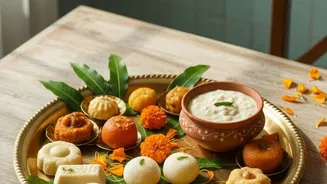
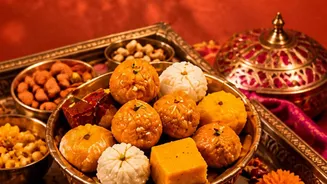
'Makhan Chor' or the butter thief. Consequently, milk-based sweets are central to religious life here. The peda is one of the most common and beloved offerings, or 'prasad', presented to the deity in temples. For millions of devotees, consuming a peda that has been blessed in a Mathura temple is a spiritual act, making the sweet a tangible piece of divine grace. This religious sanctity elevates the peda from a simple confection to a sacred symbol of devotion.
The Unique Taste of Braj
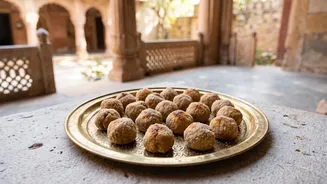
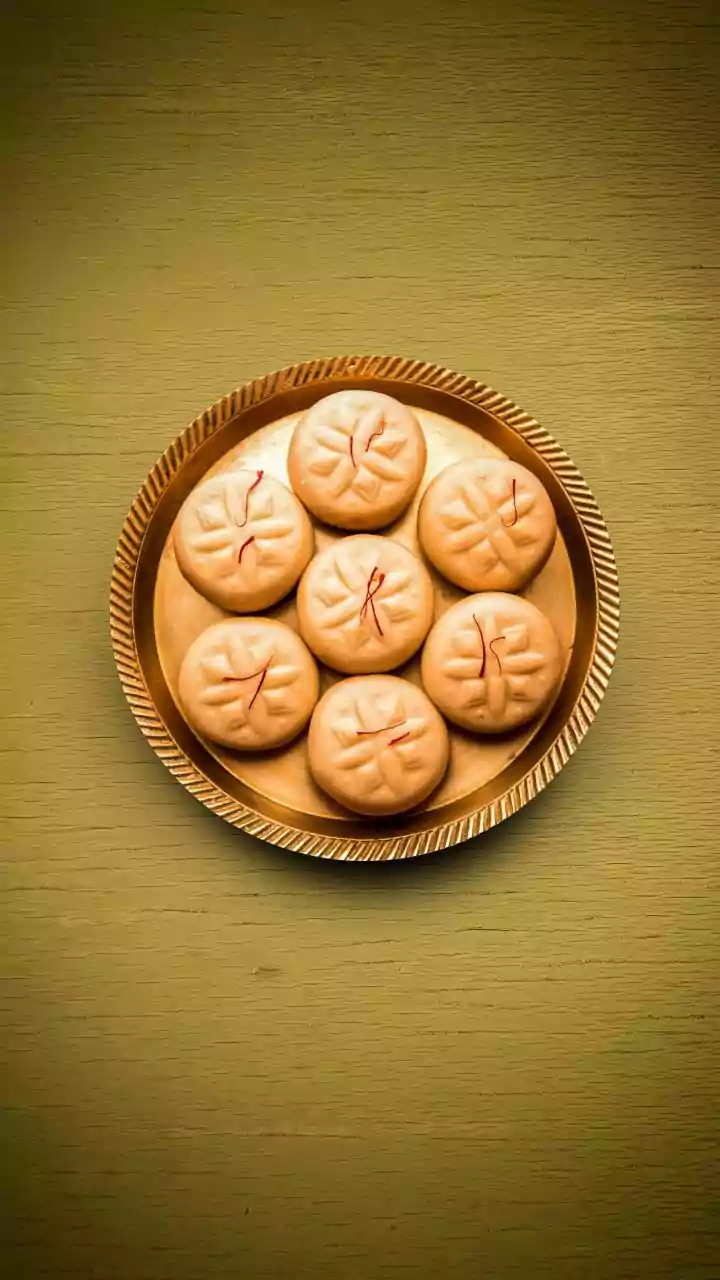
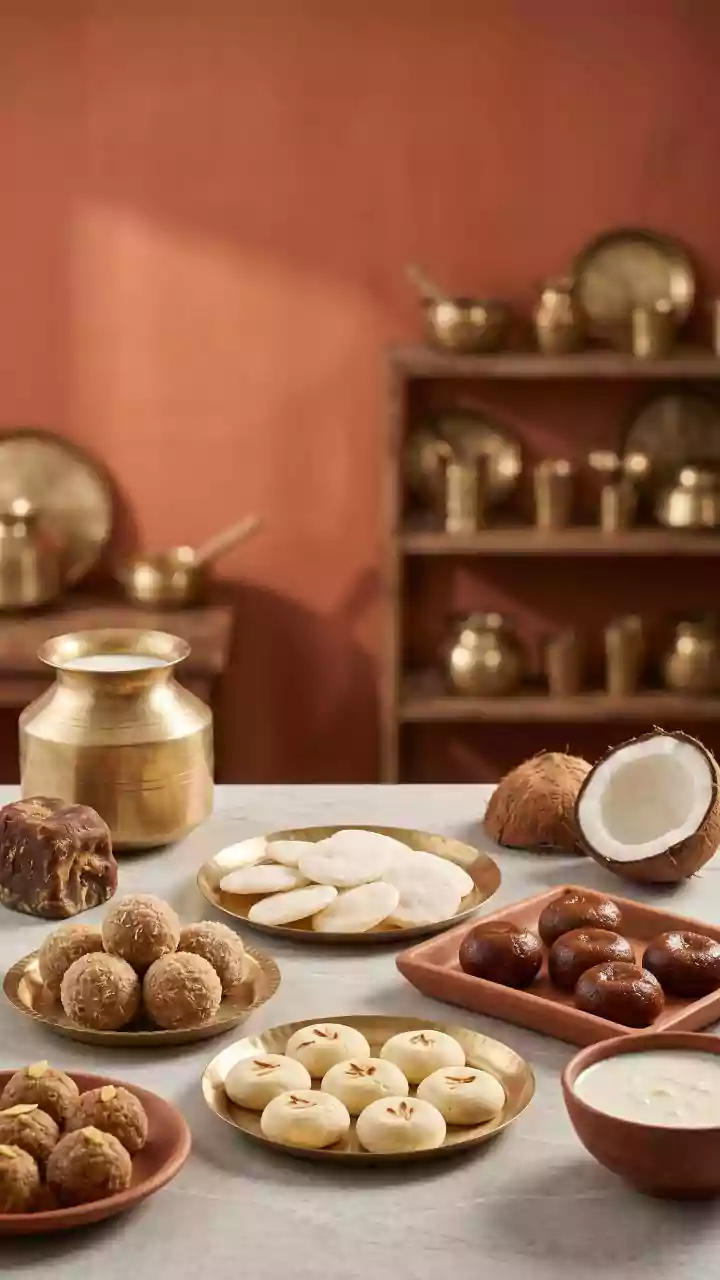
The secret to the Mathura peda's distinct flavour lies in its core ingredient: milk. The Braj region has always been a hub of dairy farming, providing an abundance of high-quality milk. Traditionally, pedas are made from 'khoya' or 'mawa', which are milk solids obtained by slowly simmering full-fat milk for hours until most of the water evaporates. What sets the Mathura peda apart from its paler, softer cousins found elsewhere in India is the preparation of this khoya. Artisans in Mathura roast the khoya in large pans, allowing the milk sugars to caramelize. This patient process gives the peda its signature golden-brown to dark-brown hue, a slightly grainy texture, and a deep, caramel-like flavour that is complex and unforgettable.
The Art of the Halwai
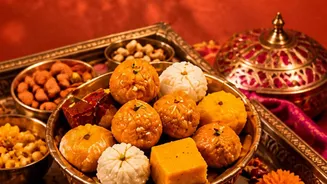
Crafting the perfect Mathura peda is an art form passed down through generations of sweet-makers, or 'halwais'. The process is a labour of love, requiring patience and skill. After roasting the khoya to the perfect shade of brown, it is cooled slightly before sugar is mixed in. Traditionally, a special type of powdered sugar called 'tagar' or 'boora' is used, which contributes to the peda's characteristic melt-in-the-mouth consistency. Finally, the mixture is often scented with cardamom and hand-shaped into small, dense discs. Many versions are then rolled in a light dusting of sugar, giving them a rustic finish. This hands-on approach, maintained by legacy shops, ensures an artisanal quality that machines cannot replicate.
An Economic and Cultural Souvenir
The fame of the Mathura peda has turned it into a significant economic driver for the city. Countless shops, from large establishments like Brijwasi to small, centuries-old counters, form the backbone of a thriving local industry. For the thousands of pilgrims and tourists who visit Mathura and nearby Vrindavan, taking home a box of pedas is an essential part of the experience. The sweet has become a cultural souvenir, a taste of Braj that can be shared with family and friends back home. Its name is so iconic that 'Mathura ka peda' is a fixed phrase in Indian culture, appearing in folk songs and proverbs as a benchmark for quality. This has cemented its reputation not just as a local delicacy, but as a brand synonymous with authenticity and tradition.