

The Foundation: Fasting and Feasting
For many devotees, Janmashtami begins with a fast, or 'vrat', observed throughout the day. This period of restraint is not just about abstaining from food; it's a way to focus the mind on devotion. Fasting rules vary, with some observing a strict waterless
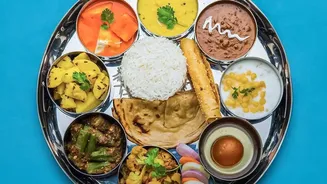
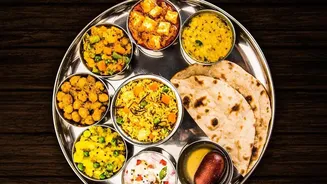
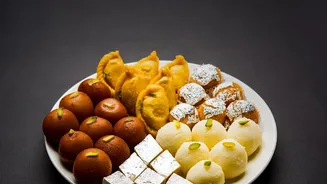
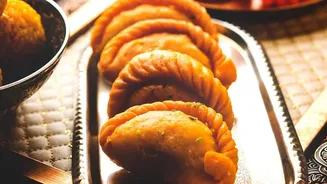
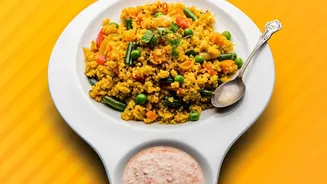
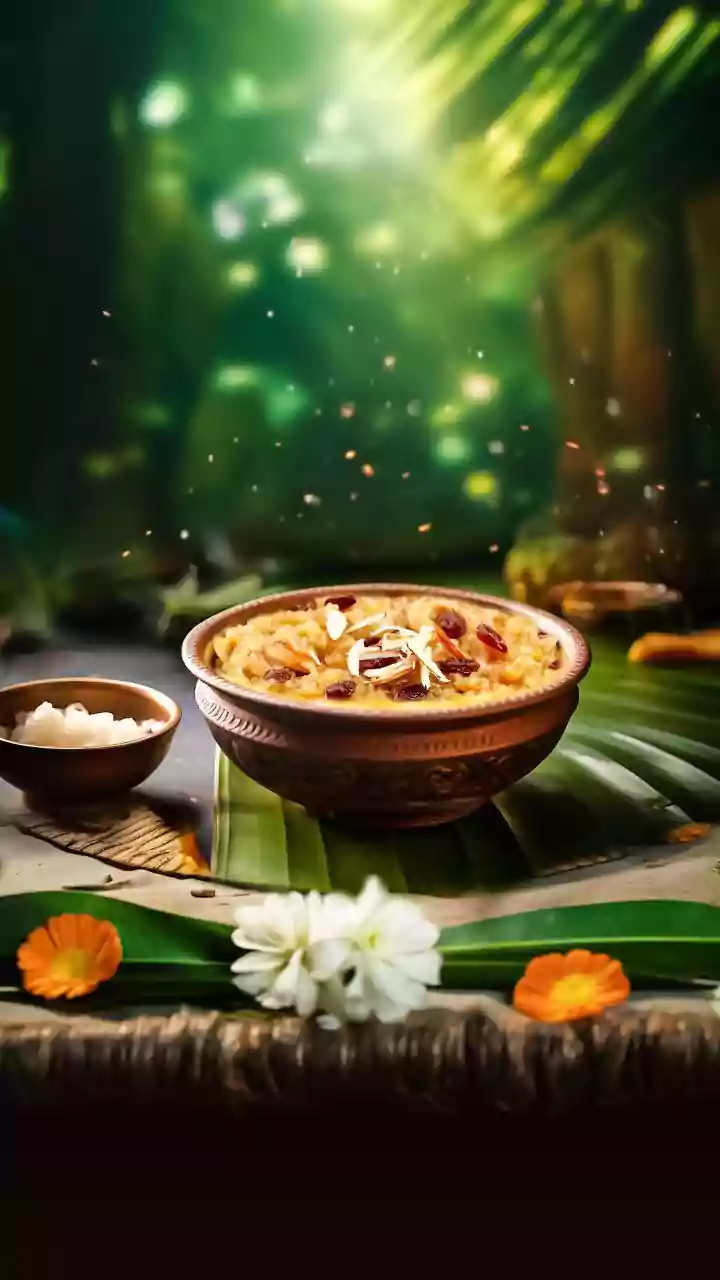
'nirjal' fast, while others follow a 'phalahar' diet, permitting fruits, milk, and specific non-grain foods like sabudana (tapioca pearls) and water chestnut flour. This day of discipline culminates in a celebratory feast at midnight after the birth of Krishna is marked. The most elaborate of these feasts is the 'Chappan Bhog', a grand offering of 56 distinct dishes. The legend behind this traces back to Krishna lifting the Govardhan Hill for seven days, missing his eight daily meals. To show their gratitude, the villagers prepared 56 dishes (7 days x 8 meals) for him.
Braj Bhoomi: The Heart of Devotion
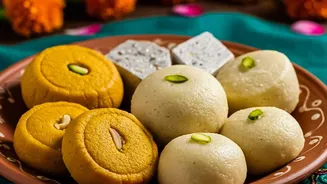
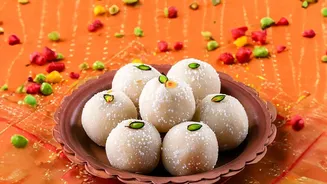
In Mathura and Vrindavan, the sacred land where Krishna spent his childhood, the celebrations are steeped in milk and butter. Makhan Mishri, a simple yet divine mix of fresh white butter and rock sugar, is a quintessential offering, symbolising Krishna's love for butter, which earned him the name 'Makhan Chor' or butter thief. Another specialty is the Mathura Peda, a rich sweet made by slowly caramelising milk solids (khoya) with sugar. Dhaniya Panjiri is also a unique prasad from this region, made with roasted coriander powder, ghee, sugar, and nuts, especially popular among those who avoid grains during their fast.
Western India: A Savoury Celebration
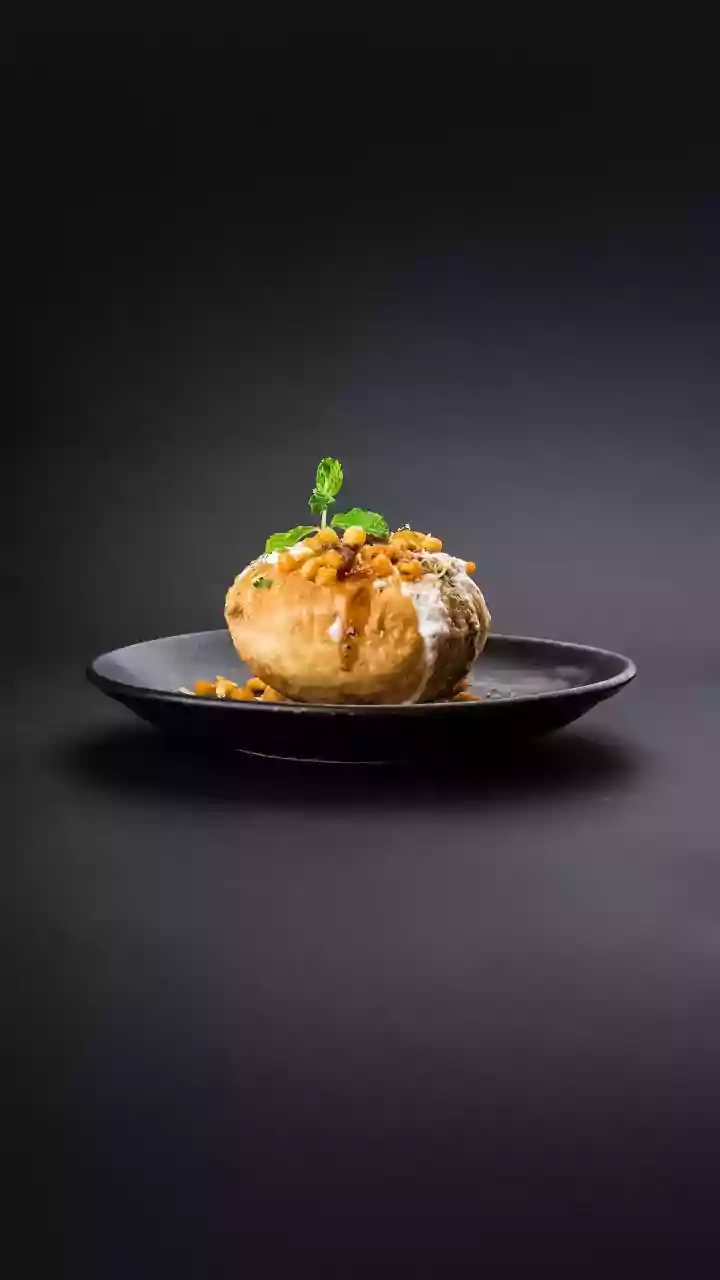
In Maharashtra and Gujarat, Janmashtami is synonymous with the energetic spectacle of Dahi Handi. The food reflects this spirit of community and playfulness. A key prasad in Maharashtra is Gopalkala or Dahikala. This savoury mixture contains flattened rice (poha) mixed with curd, cucumber, coconut, peanuts, and mild spices. It is symbolic of the meal Krishna shared with his friends, the cowherds. In Gujarat, delicacies like Shrikhand, a sweet strained yogurt, and various farsan (savoury snacks) are prepared. Fasting foods like Sabudana Khichdi are also very popular across the region.
Southern Spread: A Crunchy Counterpoint
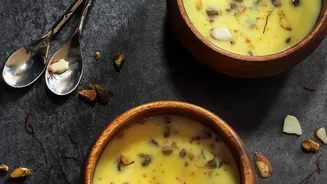
In South India, where the festival is known as Krishna Jayanthi or Gokulashtami, the culinary focus shifts from milk-based sweets to intricately prepared rice-flour snacks. The quintessential offerings are Seedai, tiny, deep-fried balls made from rice flour. They come in two varieties: a savoury 'Uppu' (salt) Seedai and a sweet 'Vella' (jaggery) Seedai. Alongside Seedai, various types of Murukku, a crunchy, spiral-shaped snack, are prepared, including the aptly named Butter Murukku. Sweet dishes often include Aval (poha or flattened rice) mixed with jaggery and coconut, and different kinds of payasam (kheer).
Eastern Flavours: Sweet Tributes
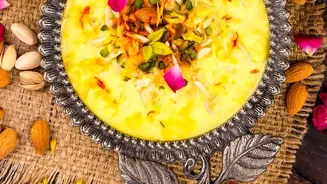
In Eastern India, particularly West Bengal and Odisha, the festival food is dominated by sweets. In Bengal, the celebration often features Taler Bora, sweet fritters made from ripe sugar palm fruit pulp, flour, and sugar, deep-fried to a golden brown. Other milk-based sweets like Sandesh and Rabdi are also common. In Odisha, which has a deep connection to Lord Jagannath (a form of Krishna), the Chappan Bhog tradition is central to temple life year-round. For Janmashtami, special sweets and pithas (rice cakes) are prepared, reflecting the state’s rich culinary heritage linked to the Jagannath Temple.