


The Pervasive Problem of Microplastics
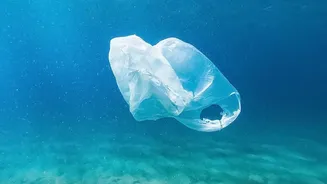
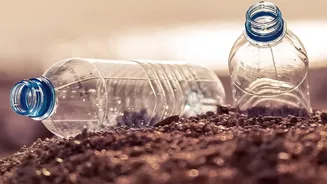
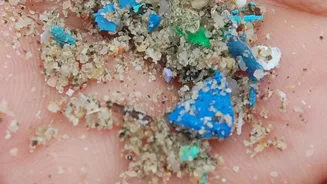
Microplastics are tiny plastic particles, less than five millimetres long, that have become a pervasive global pollutant. They originate from various sources, including the breakdown of larger plastic debris, runoff from synthetic clothing, and microbeads
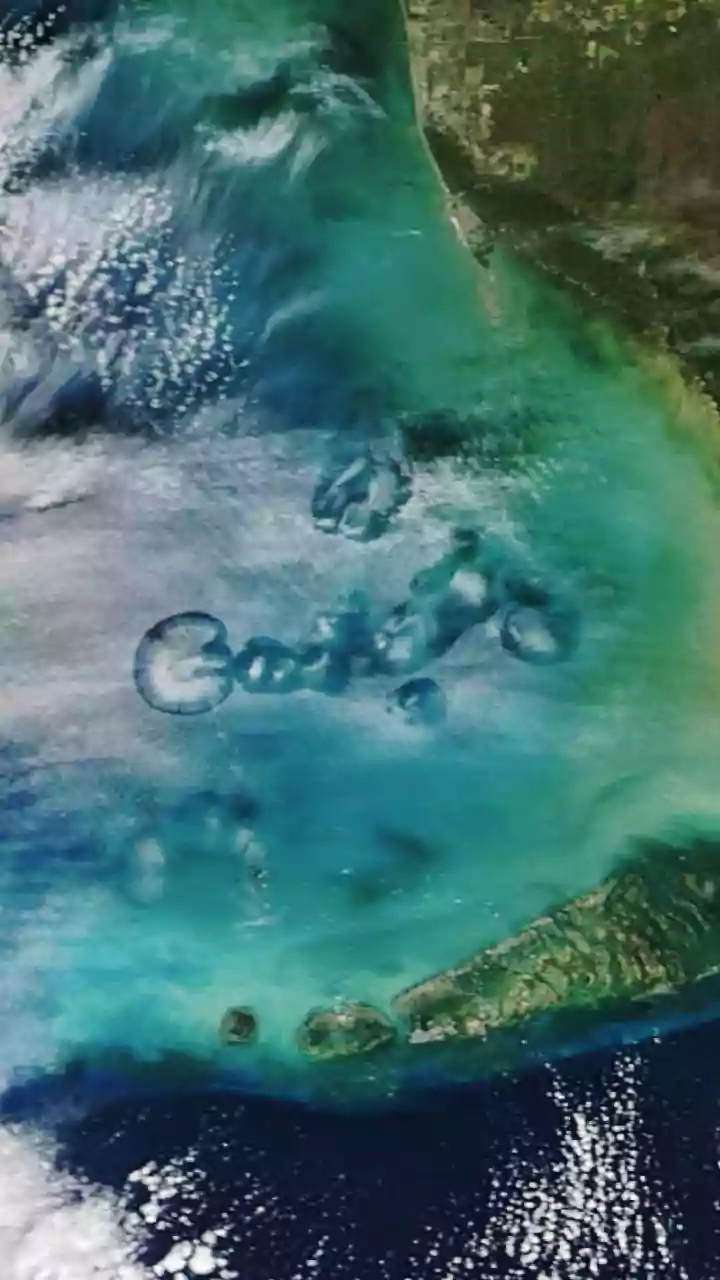
in personal care products. These minuscule fragments are now found everywhere, from the deepest oceans to our rivers, lakes, and even drinking water. In India, the combination of rapid urbanization and challenges in waste management has led to significant microplastic contamination in freshwater bodies. The danger lies not just in their presence, but in their ability to absorb other harmful contaminants and be ingested by wildlife, potentially moving up the food chain.
An Unexpected Hero: Bio-Char
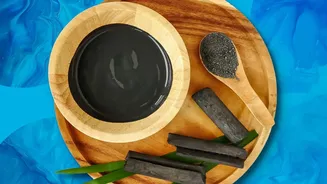
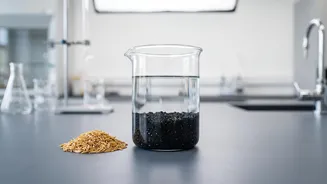
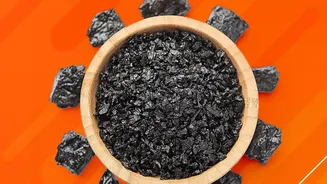
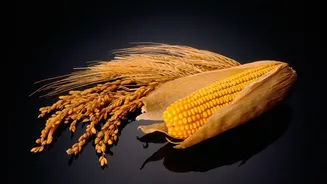
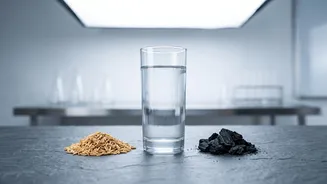
Enter bio-char, a black, carbon-rich material that looks like charcoal. It is produced by heating organic matter, known as biomass, in a low-oxygen environment through a process called pyrolysis. What makes this particularly promising for a country like India is the source of this biomass: agricultural waste. Husks from rice, corn, coconut shells, and sugarcane bagasse can all be converted into bio-char. This process, known as valorization, transforms low-value agricultural byproducts, which might otherwise be discarded, into a powerful tool for environmental cleanup. It represents a circular economy approach, tackling both waste management and water pollution simultaneously.
The Science of a Super-Sponge
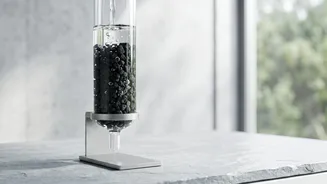
So, how exactly does this humble material clean water? The magic lies in its physical and chemical properties. The pyrolysis process gives bio-char an incredibly porous, honeycomb-like structure and a vast surface area. This network of tiny pores acts like a physical trap, a process called physical entrapment or pore-filling, capturing microplastic particles as water flows through it. But it is not just a simple sieve. Bio-char's surface also has chemical properties that attract and bind plastic particles. Mechanisms like hydrophobic interactions (where water-repelling plastics stick to the water-repelling carbon surface) and electrostatic forces (attraction between charged particles) cause microplastics to adhere firmly to the bio-char. Some studies also point to hydrogen bonds and other complex interactions that enhance its capturing ability.
More Than Just a Microplastic Filter
The effectiveness of bio-char is impressive, with some lab studies showing it can remove over 90% of microplastics from water. Its benefits, however, go beyond just trapping plastics. Bio-char is also effective at removing other pollutants like heavy metals, pesticides, and dyes. Furthermore, producing bio-char is a form of carbon sequestration. It locks carbon that was once in the atmosphere (and absorbed by plants) into a stable, solid form, preventing it from returning as CO2. This makes it a climate-friendly solution. For India, which produces vast quantities of agricultural residue like rice husks, this technology offers a low-cost, locally-sourced alternative to more expensive and energy-intensive water treatment methods.
Challenges and the Path Forward
Despite its immense potential, the widespread application of bio-char for water treatment is still in its early stages. Research is ongoing to optimize its performance. The effectiveness of bio-char can vary greatly depending on the feedstock used (e.g., wood vs. rice husks) and the temperature of the pyrolysis process. Higher temperatures, for instance, tend to create more porous bio-char, which is better at adsorption. Scientists are also developing 'engineered' or 'modified' bio-chars to enhance their ability to target specific pollutants. The main challenges now are to standardize production methods to ensure consistent quality and to scale up the technology from laboratory experiments to real-world applications in large-scale water treatment plants and agricultural runoff systems.