
The Art of the Banana Leaf
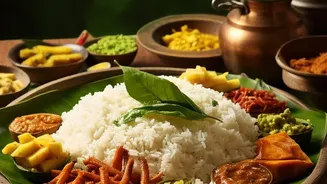
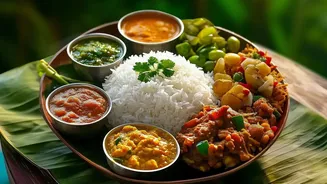
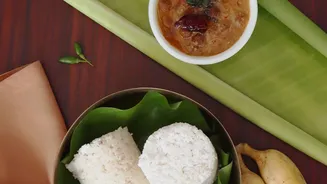
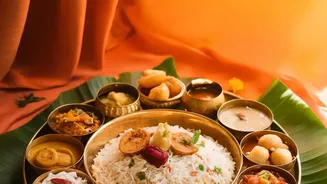
The Sadhya, which means 'banquet' in Malayalam, is always served on a fresh banana leaf. There's a specific way to place it: the tapered end of the leaf should always point to your left. This isn't just for aesthetics; the wider right side accommodates
the main rice course, which you'll eat with your right hand. The upper half of the leaf is for all the side dishes, while the bottom half is reserved for the rice and its successive curries. Before you begin, some may sprinkle a little water on the leaf and wipe it clean as a ritual. Serving food on a banana leaf is also believed to add a subtle flavour and antioxidants to the meal when warm food makes contact with it.
The Side Dishes Arrive First
The meal begins not with the main course, but with an array of pickles and side dishes served in a specific order. On the top left corner, you'll find small portions of pickles like inji puli (a sweet and sour ginger-tamarind chutney), mango pickle, and lime pickle. Alongside them, you'll get sharkara varatti (jaggery-coated banana chips) and upperi (classic salted banana chips). Then, servers will move along the top row, adding various vegetable preparations. You'll find thoran (a dry stir-fry of vegetables like cabbage or beans with coconut), olan (a delicate curry of ash gourd in coconut milk), and avial (a thick mixture of various vegetables in a coconut and yogurt gravy). You will also see pachadi and kichadi, which are yogurt-based dishes, often made with ingredients like pineapple, beetroot, or cucumber.
Rice, Parippu, and the Flow of Curries
Once the side dishes are in place, a generous helping of Kerala's signature matta red rice is served onto the bottom half of the leaf. The first course to be poured over the rice is parippu, a simple and comforting lentil curry, often topped with a spoonful of ghee. You are meant to mix this with a small portion of rice and a piece of the crispy pappadam served on the side. After you’re done with the parippu, the next course arrives: sambar. This is a robust vegetable and lentil stew, thicker and richer than its counterparts in neighbouring states. Following the sambar, a tangy and spicy broth called rasam is served. This course helps cleanse the palate and aids digestion.
The Sweet Finale and Digestive Aids
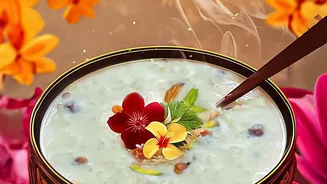
No Sadhya is complete without payasam, the dessert. There can be one, two, or even three types. Common varieties include palada pradhaman (made with rice flakes and milk) and parippu pradhaman (made with lentils and jaggery). Often, the payasam is served directly onto the banana leaf, and many enjoy mixing it with a small, mashed banana that is also provided. The meal traditionally concludes with a serving of spiced buttermilk (Sambaram) or a final pour of rasam to aid digestion after the grand feast. A final course of rice with pulissery, a tangy yogurt-based curry, might also be offered.
Essential Etiquette for First-Timers
The most important rule is to eat with your right hand only; using your left is traditionally considered unclean. Don't feel pressured to mix everything at once. The meal is designed to be eaten in courses, so mix small amounts of rice with the curry currently being served. It's considered polite to try a little bit of everything and to not waste food, especially the rice. When you are finished, the way you fold the leaf signals your satisfaction. Traditionally, you should fold the top half of the leaf down over the bottom half, folding it towards yourself. This indicates you enjoyed the meal and are content.