

Choose Fabrics Wisely
The foundation of a successful rainy-weather pack is your fabric selection. Leave cotton and denim at home; they absorb water and take ages to dry, leaving you damp and uncomfortable. Instead, build your wardrobe around quick-drying, moisture-wicking
materials. Merino wool is a top performer, offering warmth even when damp and resisting odours, which means you can re-wear items confidently. Synthetic fabrics like polyester and nylon are also excellent choices. They are lightweight, pack down small, and dry incredibly fast, making them perfect for travel tops, trousers, and base layers. Many travel-specific pants are made from synthetics with a durable water-repellent (DWR) coating, causing rain to bead up and roll off.
Master the Art of Layering
Instead of packing bulky sweaters, think in layers. A three-part layering system offers maximum versatility without sacrificing space. Start with a base layer, such as a quick-dry t-shirt or long-sleeved top. Add a warm mid-layer, like a thin fleece, a merino wool cardigan, or a lightweight packable down jacket for insulation when temperatures drop. Top it off with a weatherproof outer shell. This approach allows you to adapt to changing conditions throughout the day—from a cool, damp morning to a warmer, dry afternoon—by simply adding or removing a layer. Each piece is individually thin and easy to pack.
Be Strategic With Outerwear and Shoes
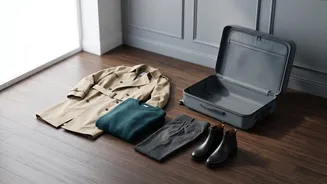
Your rain jacket and shoes will be the bulkiest items, so choose carefully and wear them during travel to save luggage space. Select a lightweight, packable, and truly waterproof rain shell with a hood. This is your primary defence against downpours. For shoes, which are often the trickiest part, pack one pair of comfortable, waterproof boots or shoes suitable for walking. Then, include a second, lighter pair of shoes, like loafers or flats, for evenings or dry moments indoors. To maximize every inch of space, stuff smaller items like socks or chargers inside the shoes you pack.
Embrace Packing Cubes and Rolling
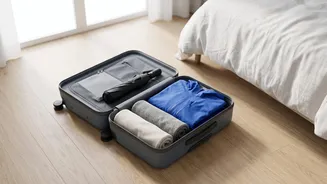
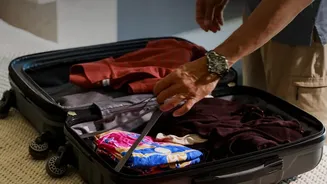
How you pack is as important as what you pack. Packing cubes are revolutionary for carry-on travel, allowing you to compartmentalize your clothing and compress items to save space. Use one cube for tops, another for bottoms and underwear, and consider a separate one for dirty laundry. For most clothing items like t-shirts, pants, and sweaters, rolling them tightly is more space-efficient than folding. Tightly rolled clothes can be arranged like a puzzle inside packing cubes, minimizing wasted space. For more structured items like a blazer, folding may be better to avoid wrinkles.
Curate a Minimalist Capsule Wardrobe
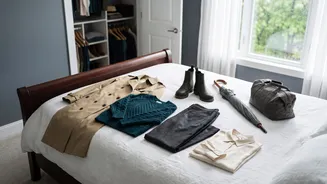
For a four-day trip, you don't need four distinct outfits. Instead, pack a capsule wardrobe where every top matches every bottom. Stick to a neutral colour palette with one or two accent colours. A good formula for four days is two pairs of bottoms (like one pair of quick-dry trousers and one pair of dark, coated jeans), four tops, one mid-layer sweater or cardigan, and your rain jacket. This allows you to create multiple combinations, ensuring you have something fresh to wear each day without overpacking. Remember, multifunctionality is key; a scarf can add warmth and style while taking up minimal space.
Don't Forget the Essentials
A few small items can make a huge difference in rainy weather. Pack a compact, wind-resistant travel umbrella for quick dashes through showers. Bring a few resealable waterproof pouches or dry bags. These are invaluable for separating wet items, like a damp umbrella or jacket, from the dry clothes in your bag. They also provide crucial protection for your passport and electronics. Finally, consider a packable tote or daypack. This allows you to carry your daily essentials—like your water bottle, umbrella, and an extra layer—while leaving your main carry-on at your accommodation.