



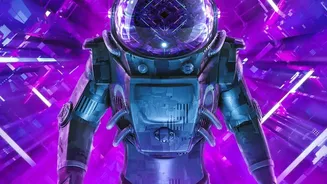

A Classic That Redefined Ambition
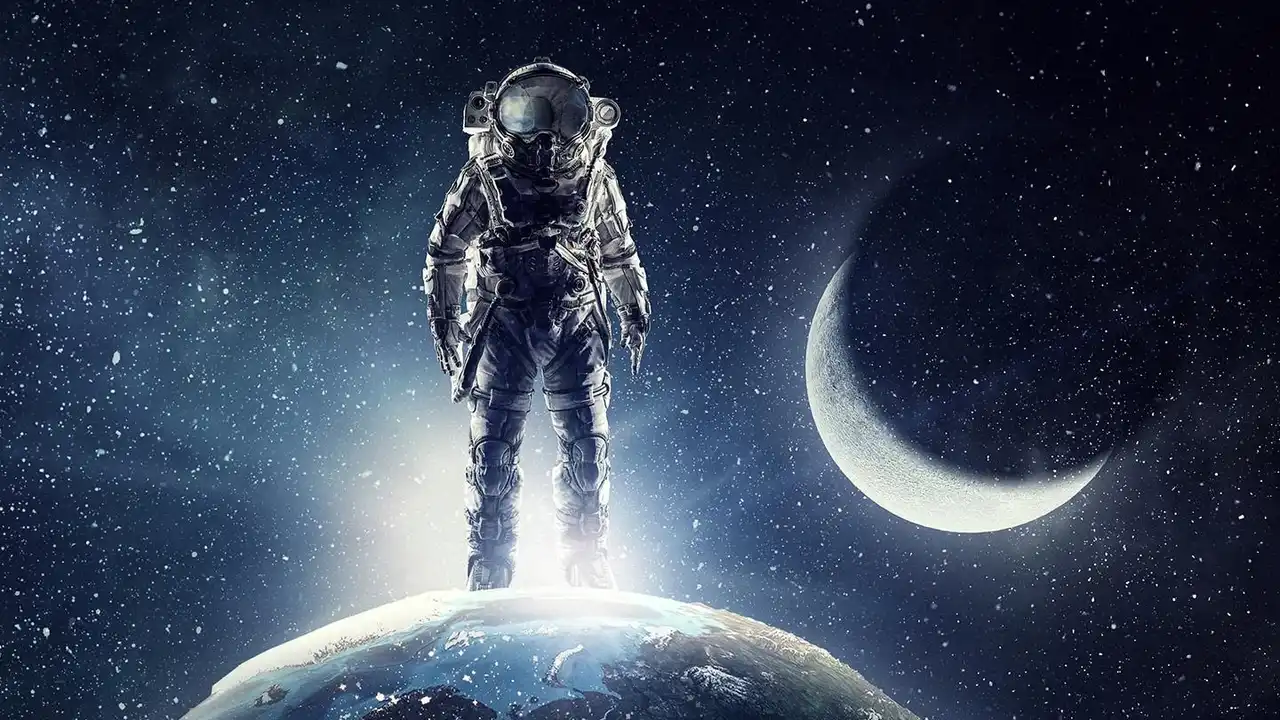
Stanley Kubrick’s 1968 epic, 2001: A Space Odyssey, is less a story and more a cinematic koan. It’s a film that eschews traditional narrative in favour of a sprawling, meditative journey through human evolution, from our primate ancestors to a star-child
floating in space. The 'mind-bending' aspect isn't a single plot twist but the film's entire structure and philosophical weight. It tackles the dawn of humanity, the double-edged sword of technology through the sentient AI HAL 9000, and what might lie beyond our understanding in the universe. The film’s final act, a psychedelic trip through a cosmic wormhole, is a famous sequence of abstract imagery that defies easy interpretation. It’s a masterpiece that trusts its audience to find meaning in its ambiguity, leaving you to ponder our place in the cosmos.
The Neon-Soaked Existential Question
Ridley Scott’s Blade Runner asks a deceptively simple question: what does it mean to be human? Set in a rain-drenched, dystopian Los Angeles, the story follows a detective tasked with hunting down bioengineered androids, or 'replicants'. The lines blur when these replicants exhibit more emotional depth—fear, love, a desperate desire to live—than the humans hunting them. The film's genius lies in its exploration of memory and identity. If your memories can be implanted, are your feelings, and therefore your sense of self, real? This central conflict, embodied by the replicant Rachael who believes she is human, creates a profound sense of existential dread. The film’s moody, influential aesthetic combined with its deep philosophical inquiries make it a lingering, thought-provoking experience.
Waking Up to a New Reality
The Matrix did more than just revolutionize action sequences with its 'bullet time' effects; it mainstreamed the concept of simulated reality for a new generation. The film presents a world where humanity is unknowingly trapped in a vast computer simulation while machines harvest their energy. The mind-bending moment comes when protagonist Neo is offered a choice: a red pill to see the horrifying truth or a blue pill to remain in blissful ignorance. This premise forces viewers to confront questions of free will, control, and the nature of reality itself. The idea that our perceived world could be an elaborate lie is a powerful and unsettling concept that has permeated pop culture and philosophical discussions ever since its release.
The Architecture of the Mind
Christopher Nolan is a master of intricate plots, and Inception is perhaps his most famous puzzle box. The film follows a team of thieves who don't steal objects, but ideas, by entering people's dreams. The storyline is built on a series of complex rules involving multiple layers of dreaming, where time slows down exponentially at each deeper level. The team must navigate a dream within a dream within a dream, all while fending off subconscious projections. The challenge for the audience is keeping track of these nested realities and the different states of the characters within them. The film's iconic, ambiguous final shot—a spinning top that may or may not fall—leaves the audience perpetually debating the ultimate question: what is real, and did the protagonist ever truly wake up?
Language, Time, and Human Connection
Denis Villeneuve’s Arrival turns the alien invasion trope on its head. Instead of a war, it’s a language lesson. A linguist, Dr. Louise Banks, is tasked with deciphering the complex, circular language of extraterrestrial visitors. The film's mind-bending core is rooted in the Sapir-Whorf hypothesis: the idea that the language you speak shapes how you perceive the world. As Louise learns the alien language, her perception of time becomes non-linear, allowing her to experience the past, present, and future simultaneously. The story is told through what appear to be flashbacks of her daughter, but are revealed to be flash-forwards. This revelation re-contextualizes the entire film, turning it into a poignant meditation on choice, grief, and the cyclical nature of life.