





The frustrating lag between asking an AI a question and getting an answer is about to shrink for users in India. OpenAI has officially launched local inference, a move that promises to make its powerful AI models faster and more accessible than ever.
What Did OpenAI Announce?
On November 12, 2026, OpenAI confirmed that it has enabled local processing for its API within India. This means that for eligible businesses and developers using its platform, the entire process of running an AI task—from receiving the request to the model generating a response—can now happen on servers located inside the country. Initially, this capability will support the company's GPT-6 Luna model. This is a significant expansion of OpenAI's previous offerings, which already allowed for data to be stored in India. Now, the computation itself will happen here, a crucial distinction that unlocks new possibilities for how AI can be used.
Explaining 'Local Inference'
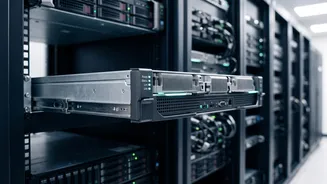
Think of using a cloud-based AI like ordering food delivery. In the past, every request from India was like placing an order with a restaurant in another continent. Your order had to travel thousands of kilometres, be prepared, and then the food (the AI's response) had to travel all the way back. This journey takes time, resulting in latency or 'wait time'. Local inference is like that restaurant opening a kitchen in your own city. Your order travels a much shorter distance, gets processed, and is delivered back to you far more quickly. By running the AI models on hardware within India, OpenAI is drastically cutting down the travel time for data, leading to faster, more responsive interactions for everything from chatbots to complex data analysis tools.
The Real-World Impact for Users and Developers
For the average user, this means AI-powered applications will feel snappier and more fluid. Customer service chatbots will reply faster, and tools that help draft emails or summarise documents will deliver results with less delay. For India's massive community of software developers, the change is even more profound. Lower latency allows them to build more sophisticated and real-time applications on top of OpenAI's platform. This could spur innovation in areas that depend on quick responses, such as interactive educational tools, dynamic content generation, and AI-assisted creative software. It gives Indian startups and developers greater scope to build solutions tailored specifically for the Indian market.
A Strategic Move for Business Adoption
Beyond speed, OpenAI's move is a strategic solution to a major hurdle for enterprise AI adoption in India: data localisation. Many Indian companies, especially those in highly regulated sectors like banking, financial services, and insurance (BFSI), are bound by rules that require customer data to be processed within the country's borders. According to Nitin Bawankule, OpenAI's Head of Enterprise in India, this has been a practical barrier preventing some businesses from fully deploying AI for important tasks. By ensuring that sensitive information is processed locally, OpenAI is unlocking a huge segment of the corporate market that was previously cautious about using its services, paving the way for wider AI integration in core business operations.
India's Growing Role in the Global AI Race
This announcement is not happening in a vacuum. It is part of a broader 'OpenAI for India' initiative, which includes a significant partnership with the Tata Group to develop domestic data centre capacity. With a rapidly growing user base that has reportedly become ChatGPT's largest market, India is a critical battleground for global AI supremacy. OpenAI's investment in local infrastructure is a clear signal of its commitment to the Indian market. It also reflects a larger trend, with tech giants like Google and Amazon also investing heavily in building out their local cloud and AI capabilities in the country. This competition ultimately benefits Indian consumers and businesses, who can look forward to more powerful, responsive, and compliant AI tools.