



The Universe as a Time Machine
It sounds like science fiction, but the concept is surprisingly simple: light takes time to travel. The light from our own Moon is 1.3 seconds old when it reaches us. The light from the Sun is over eight minutes old. Extend that across the cosmos, and
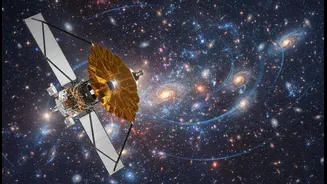
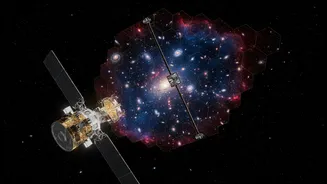
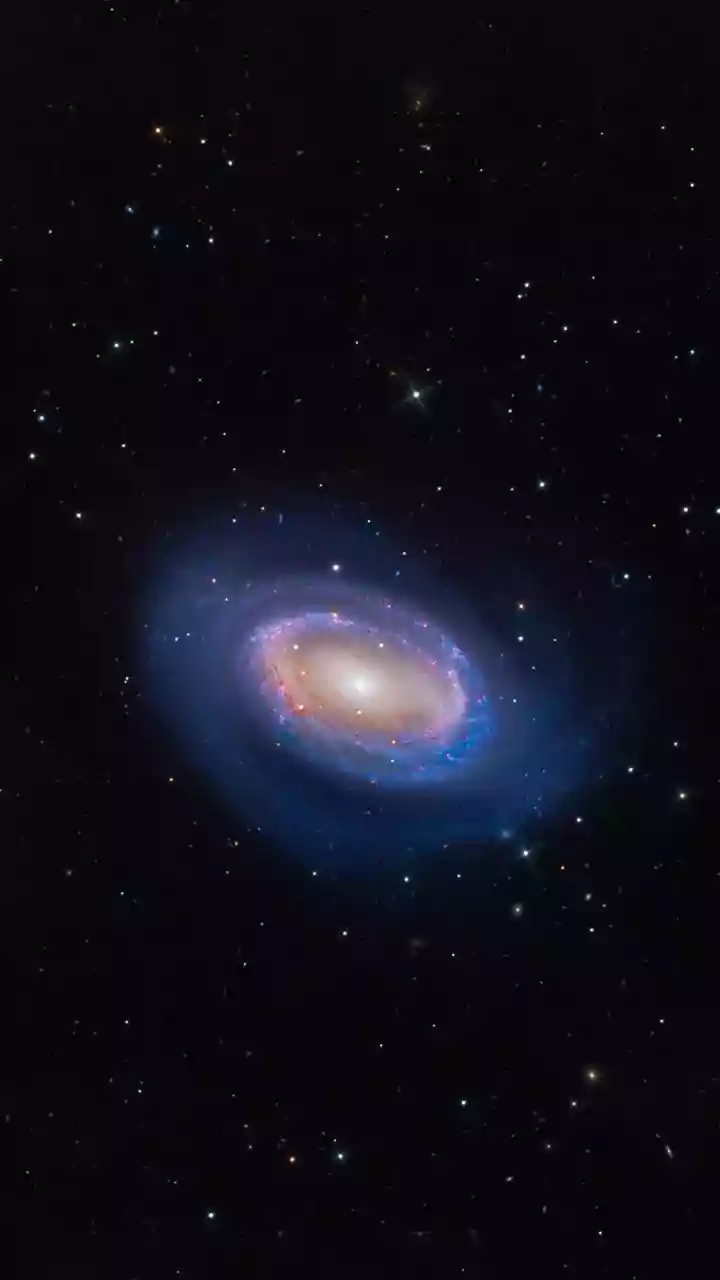
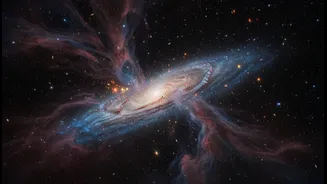
you have a time machine. The nearest large galaxy, Andromeda, is 2.5 million light-years away, so we see it as it was 2.5 million years ago. The James Webb Space Telescope is engineered to capture light from galaxies that is over 13 billion years old, giving us a direct view of the universe as it was in its infancy, just a few hundred million years after the Big Bang.
Seeing Red to Look Back
Webb's superpower is its ability to see in infrared light. As the universe has expanded since the Big Bang, the space between galaxies has stretched. This stretching effect also applies to light, lengthening its wavelength in a phenomenon called 'redshift'. Visible light emitted by the very first stars and galaxies has been stretched so much over its 13-billion-year journey that by the time it reaches us, it arrives as infrared light. The Hubble Space Telescope could see into the near-infrared, but Webb’s massive, gold-coated mirror and advanced instruments are specifically designed to capture this faint, ancient, and deeply redshifted light, which is invisible to the human eye.
Glimpses of the Cosmic Dawn
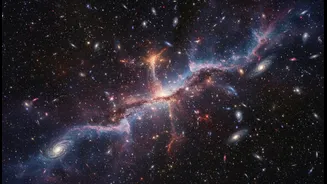
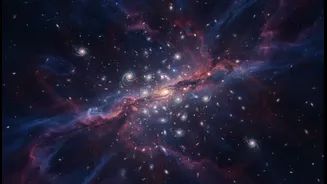
The results have been nothing short of revolutionary. Since 2022, the JWST has been breaking its own records for finding the most distant—and therefore earliest—galaxies ever seen. One such discovery is a galaxy named JADES-GS-z14-0, which astronomers observed as it was just 290 million years after the Big Bang. This is a snapshot of the universe when it was only two percent of its current age. Shockingly, these early galaxies are not just faint smudges; some, like JADES-GS-z14-0, are surprisingly bright and large, challenging existing theories that predicted early galaxies would be small, dim, and slow-forming. They are the 'little red dots' that are forcing scientists to rethink how quickly the first stars ignited and how the first cosmic structures grew.
More Than Just Old Photographs
These images are not just cosmic postcards. By analysing the light from these ancient galaxies with instruments like the Near-Infrared Spectrograph (NIRSpec), scientists can determine their composition. The recent discovery of elements like oxygen and carbon in these primeval galaxies is a monumental finding. Since the Big Bang only created hydrogen and helium, heavier elements must have been forged inside the very first generations of stars. Seeing these elements so early in the universe's history tells us that cycles of star birth and death began incredibly quickly. Each image is a piece of evidence helping us build a timeline of cosmic evolution, from a hot soup of basic elements to the complex, star-filled universe we see today.
A Connection Across Billions of Years
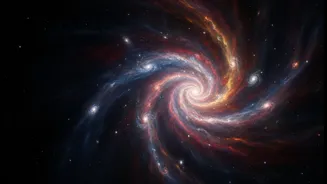
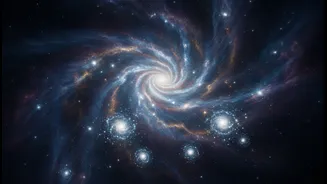
Ultimately, the power of Webb's images lies in their ability to connect us to our own origins. We are, as the saying goes, made of stardust. The carbon in our bodies and the oxygen we breathe were all created inside stars that lived and died long ago. By looking at galaxies from the dawn of time, we are witnessing the very first factories that produced these elements. We are seeing the ancestors of our own Milky Way galaxy take shape. The telescope doesn't just show us distant objects; it makes an abstract timeline tangible. For the first time, we can truly see the beginning of the story that led to us, making 13.5 billion years feel graspable.