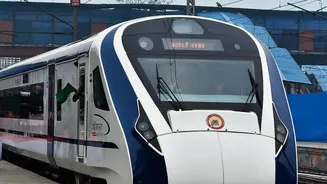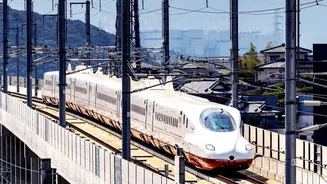

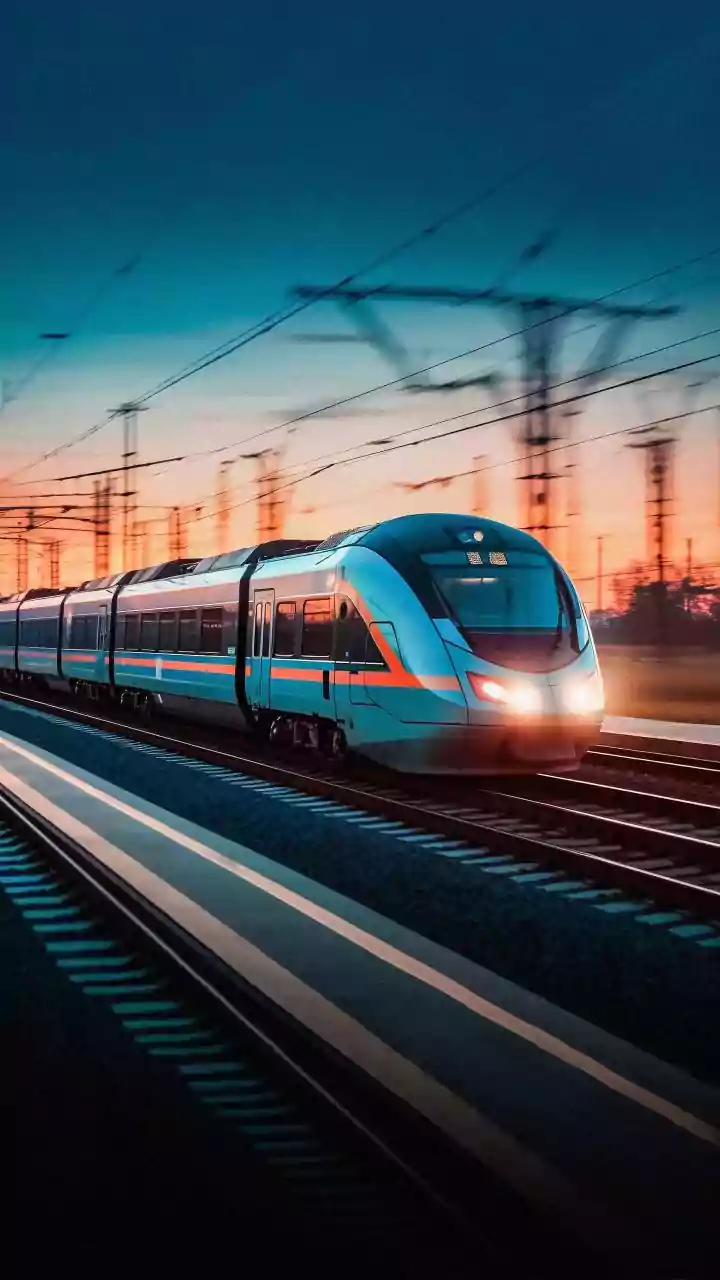
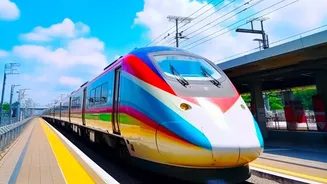
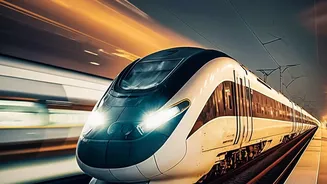
India's dream of high-speed rail is rapidly turning into reality, with construction moving at a brisk pace. The Surat-Vapi section of the Mumbai-Ahmedabad corridor is emerging as the pioneer, set to be the first to open and redefine travel in India.
The Ambitious Mumbai-Ahmedabad Corridor
At
the heart of India's high-speed ambition is the Mumbai-Ahmedabad High-Speed Rail (MAHSR) project. Spanning approximately 508 kilometres, this corridor is designed to connect India's financial capital, Mumbai, with the major commercial hub of Ahmedabad. The project, developed with technological and financial assistance from Japan, will feature trains operating at speeds up to 320 kilometres per hour, based on the renowned Shinkansen system. Once fully operational, it promises to slash the travel time between the two cities to just under two hours, a significant reduction from the current eight to nine hours by road. The corridor will pass through Maharashtra, Gujarat, and Dadra and Nagar Haveli, serving 12 stations and creating a powerful economic artery.
Why Surat-Vapi is the First Step
While the entire 508-km line is a monumental undertaking, the project is being rolled out in phases. The stretch in Gujarat has seen faster progress, making the section between Surat and Vapi the frontrunner for the launch. Railway Minister Ashwini Vaishnaw has confirmed that the first bullet train service is expected to begin on this section in the last quarter of 2027. This phased approach allows the National High Speed Rail Corporation Limited (NHSRCL) to operationalise completed sections and begin testing and service, providing a tangible outcome after years of complex construction. The focus on this segment showcases a strategic decision to deliver results on the most advanced parts of the project first.
Major Milestones Achieved
The path to 2027 is being paved with significant construction achievements. A major milestone was reached in November 2026 when the overhead electrical equipment on the 50-kilometre Surat-Bilimora stretch was successfully 'energised', making it the first live section of the corridor. This sophisticated 2 × 25 kV traction system is crucial for powering the high-speed trains. As of late 2026, substantial progress has been made across the corridor, with hundreds of kilometres of viaducts and support piers erected. Civil work at eight stations has been completed, with architectural finishing underway, and significant tunnelling work, including for India's first undersea rail tunnel near Thane Creek, is also advancing.
The Dawn of a New Travel Experience
The introduction of high-speed rail will be transformative. For context, the trial runs planned for May 2027 on the Surat-Bilimora section are expected to cover the 50 km distance in about six minutes, a journey that currently takes up to an hour and a half by conventional trains. This leap in speed and efficiency will dramatically improve connectivity between key industrial and commercial hubs like Surat and Vapi. It will facilitate same-day business travel, broaden access to jobs, and strengthen supply chains. The stations themselves are being designed to resemble modern airports, with amenities like business-class lounges, retail centres, and seamless integration with other modes of transport, promising a world-class passenger experience.
Looking Beyond Surat-Vapi
The launch of the Surat-Vapi section is just the beginning. It will serve as a proof of concept and a catalyst for the rest of the Mumbai-Ahmedabad corridor and future high-speed projects across India. The government has already identified several other potential corridors, including Delhi-Varanasi and Delhi-Ahmedabad, signalling a broader vision for a national high-speed network. While the project has faced challenges, including significant cost escalations and delays, the steady progress in Gujarat is a powerful indicator that the era of bullet trains is approaching. The successful operation of this first section will be a critical test, paving the way for extending the line to Thane by 2029 and eventually completing the full connection to Mumbai.