




The Golden Age of Cosmic Photography
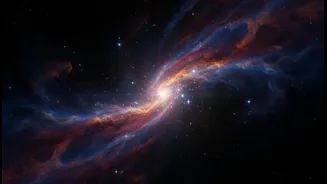
Since the Apollo 8 crew captured the iconic 'Earthrise' photo in 1968, space photography has had a profound cultural impact. Telescopes like the Hubble and the James Webb Space Telescope (JWST) have acted as our remote eyes, beaming back images of distant
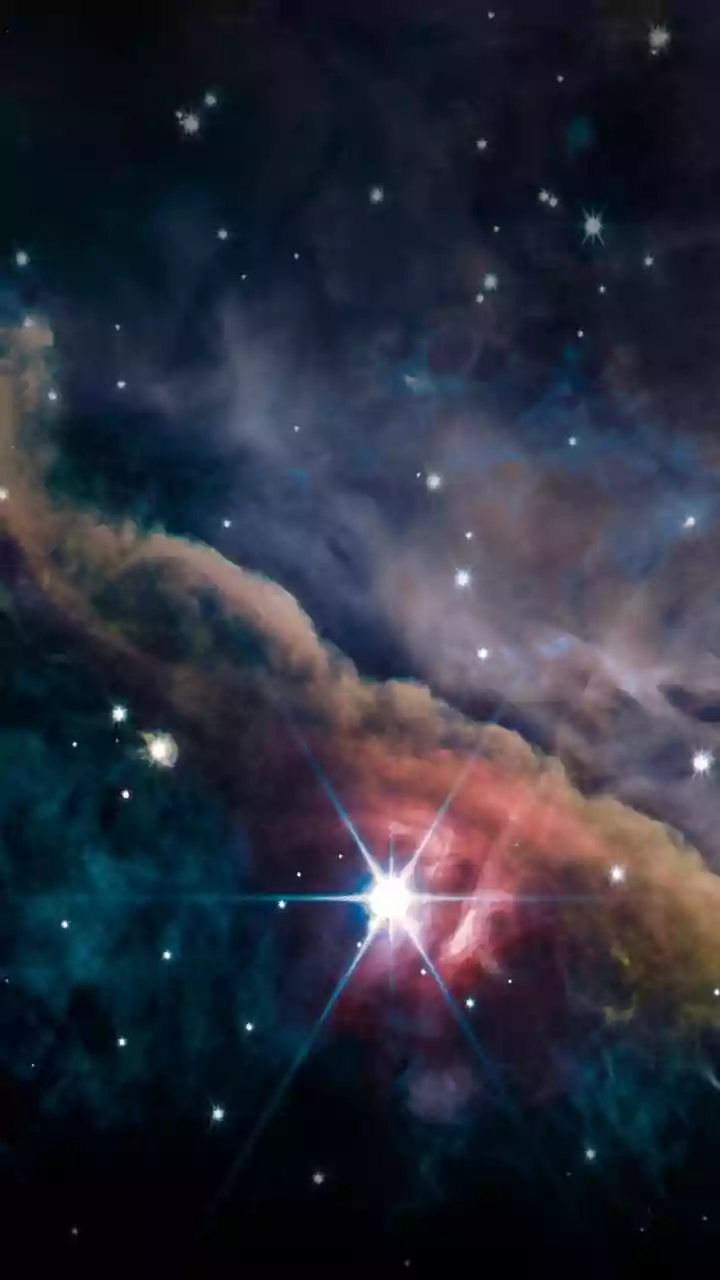
galaxies, nebulae, and star-forming regions that are both scientifically valuable and deeply beautiful. These images, often featuring vibrant, assigned colours to represent non-visible light, have become staples of modern culture, adorning everything from classroom walls to designer prints. Their primary role has been to inspire awe and make the public feel connected to the grand scale of the universe, successfully raising awareness and interest in space exploration.
Why a Picture Is No Longer Enough
While the power of a stunning image is undeniable, static pictures have their limits. They present a single, frozen moment of a dynamic universe. Furthermore, this visual-first approach has historically excluded people with blindness or low vision from directly experiencing astronomical discoveries. Recognizing these limitations, and driven by a desire for deeper, more inclusive public engagement, science communicators and astronomers are now exploring new ways to represent cosmic data. The goal is to transform the public from passive spectators into active explorers, allowing them to interact with the data in more meaningful ways.
Hearing the Universe: The Rise of Sonification
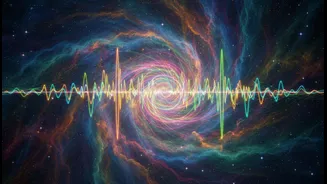
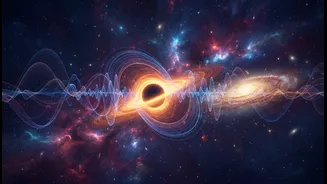
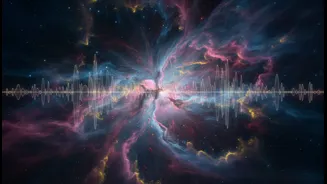
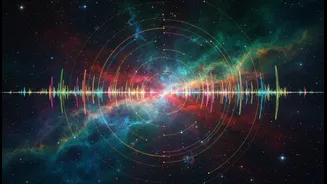
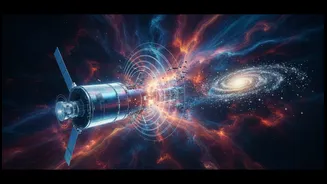
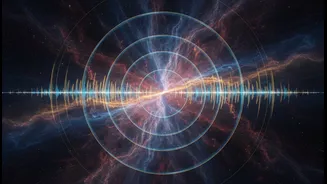
One of the most innovative new frontiers is data sonification—the process of translating data into sound. NASA and other institutions are now converting the digital data from telescopes into audio. In this process, elements like the brightness, colour, and position of objects in an image are mapped to different auditory characteristics, such as pitch, volume, and tone. For example, a bright star might become a loud, clear note, while the faint gas of a nebula might be represented by a softer, sustained hum. This not only provides a powerful new way for sighted people to perceive data patterns but also makes astronomy accessible to the blind and visually impaired community in a way that was never before possible.
Stepping Inside the Cosmos with VR
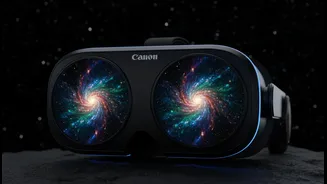
Virtual reality (VR) is offering another leap beyond the flat screen. Immersive experiences are now being created that allow people to feel as if they are truly in space. Projects like 'Space Explorers: THE INFINITE' use real 360-degree footage filmed aboard the International Space Station (ISS) to let users virtually float in zero gravity and see Earth from orbit. These aren't just pre-rendered videos; they are often interactive environments where users can move around freely, explore the ISS, or even 'stand' on a distant planet based on real astronomical data. These social VR experiences allow friends and family to explore together, fostering a shared sense of wonder and discovery that a static image cannot replicate.
From Data Points to Dynamic Stories
The wealth of data from modern telescopes like JWST is so rich that it enables storytelling on a new level. Instead of just releasing a single processed image, scientists can now show how a celestial object evolves. By using spectroscopy to analyse how light and gas move, they can reveal the complex dynamics of a galaxy or the influence of a black hole. Interactive tools and citizen science projects invite the public to become part of the discovery process itself. Websites and open-source software like OpenSpace allow users to fly through a scientifically accurate 3D model of the known universe, using real data to power the journey. This approach transforms raw data into a narrative, helping people understand the science behind the beauty.