
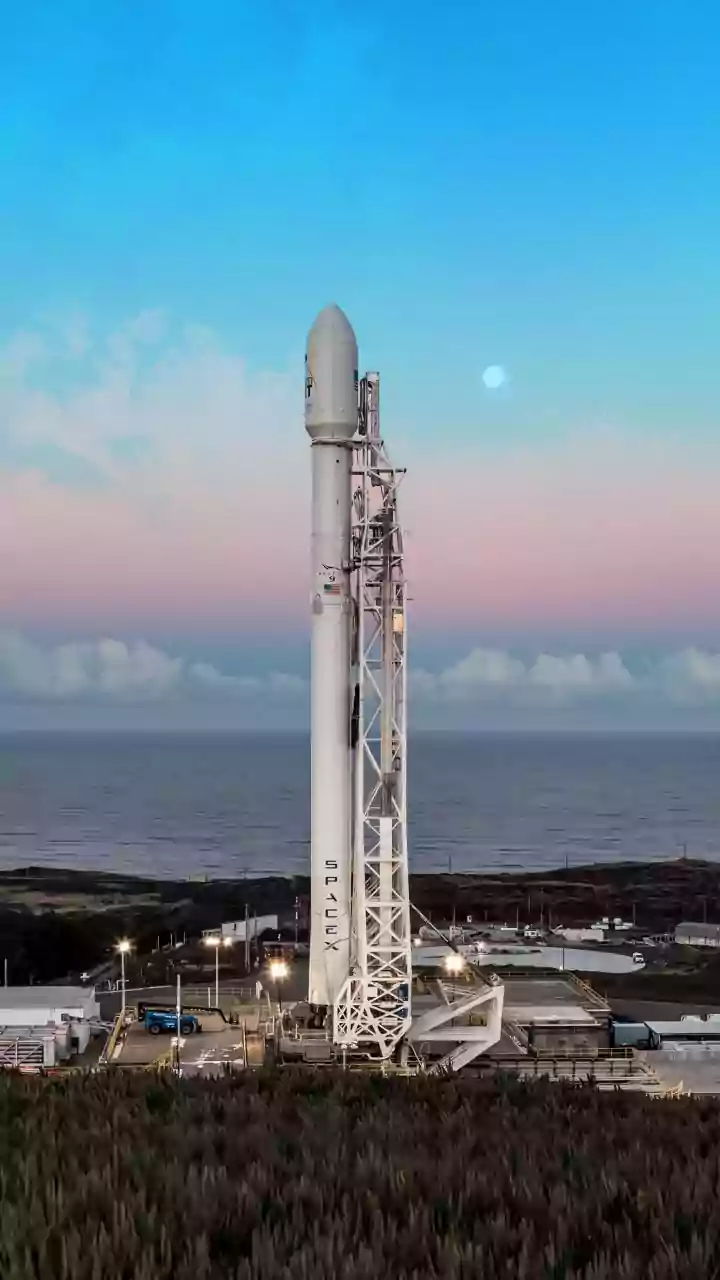



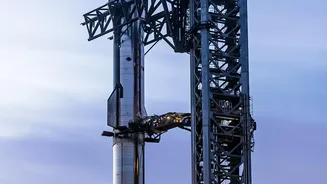
The world’s largest rocket, SpaceX's Starship, is preparing for a landmark test flight that will bring it soaring over Indian skies. Here’s what you need to know about this upcoming spectacle and why its path has generated so much excitement.
A Monumental Leap in Spaceflight
SpaceX’s
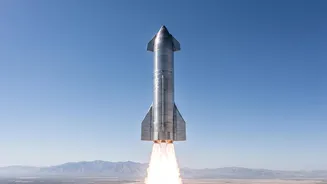
Starship is not just another rocket. Standing taller than the Qutub Minar, it is the most powerful launch vehicle ever built, designed to be fully and rapidly reusable. This innovation is at the heart of CEO Elon Musk’s ambitious plans to make humanity multi-planetary, with goals of colonising Mars. But before it reaches the Red Planet, Starship aims to revolutionise access to Earth's orbit. Unlike traditional rockets that are discarded after a single use, every part of Starship is engineered to fly again, drastically cutting the cost of launching satellites, cargo, and eventually, people into space. Previous test flights have demonstrated increasing success, with the spacecraft surviving the intense heat of atmospheric re-entry and achieving controlled splashdowns in the ocean.
The Upcoming Flight 15 Mission
The upcoming mission, designated Starship Flight 15, is one of the most ambitious yet. Targeted for as early as mid-November 2026, the flight plan involves the spacecraft circling the Earth multiple times. An India Today report indicates the craft will pass over parts of India multiple times during its more than 22-hour journey, during which it is expected to complete about 14 orbits. While earlier missions concluded with a splashdown in the Indian Ocean, Flight 15 aims for a much more challenging feat: returning both the Super Heavy booster and the Starship upper stage to the launch site in Texas for a landing. This complex manoeuvre, if successful, would mark the first full recovery of an orbital rocket system in history.
Why the Path Over India?
The trajectory is not a deliberate choice to fly over India but a consequence of orbital mechanics. A spacecraft's ground track—the path it traces over the Earth's surface—is determined by its orbital inclination and altitude. For missions launched from Texas, orbital paths that allow for safe re-entry and contingency splashdowns often cross over the Indian subcontinent. For previous test flights, the Indian Ocean was the designated target for a safe, controlled splashdown, far from populated areas. Even with the new goal of returning to the launch site, contingency plans still include potential splashdown zones in the Indian Ocean, making a flight path over the region a necessary part of the mission profile.
Can You See It from India?
Yes, there is a real possibility of spotting Starship. As the spacecraft orbits the Earth, its path will repeatedly take it over the country. Visibility will depend on several factors: the time of the pass (dusk and dawn are optimal), clear skies, and your location. The vehicle will be at a very high altitude, appearing as a fast moving bright point of light, similar to the International Space Station but likely moving at a different speed. During the re_entry phase of previous flights, the vehicle created a visible plasma trail as it descended through the upper atmosphere. While Flight 15 aims to land in Texas, any deviation could lead to a re_entry visible from the region, offering a potentially spectacular light show for observers on the ground.
What This Means for India's Space Ambitions
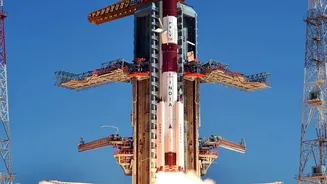
Starship’s flights highlight the rapid advancements in the global commercial space industry. This serves as both an inspiration and a challenge to India's own space program. The Indian Space Research Organisation (ISRO) is actively developing its own Reusable Launch Vehicle (RLV) technology, with its 'Pushpak' vehicle serving as a key demonstrator. However, the scale and approach are different; ISRO's RLV is a winged spaceplane, while Starship uses retro_propulsive vertical landing. ISRO's chairman has stated that they do not view SpaceX as a direct competitor, as India's program is focused on national self_reliance and development. Nonetheless, the presence of Starship in the skies above underscores the accelerating pace of innovation and the importance of India's continued investment in cost_effective, reusable launch technology to remain a key player in the global space economy.