


The Sturgeon Moon and a Deep Lunar Eclipse
The main event for late August is undoubtedly the full moon on August 28, known as the Sturgeon Moon. This name comes from Native American traditions, as August was the prime time for catching sturgeon in North America's Great Lakes. This year, the Sturgeon Moon is extra
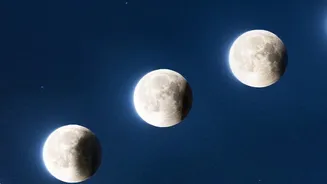
special because it coincides with a deep partial lunar eclipse. On the night of August 27-28, Earth will pass between the sun and the moon, casting its shadow on the lunar surface. The eclipse will be so deep that it will cover about 96% of the moon in Earth's dark inner shadow, the umbra, which will likely give the moon a reddish, coppery glow often called a 'Blood Moon'. For observers in India, this event is a fantastic opportunity, weather permitting, as the eclipse will be visible across much of Asia. The peak occurs just after midnight for those on the East Coast of the US and in the pre-dawn hours across the Atlantic, meaning the best time to watch will be late on Thursday, August 27, into the early morning of Friday, August 28.
A Parade of Planets Graces the Sky
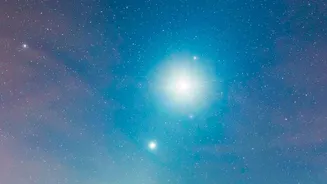
August is a brilliant month for planet-spotting, with several worlds making prominent appearances. Throughout the month, you can find yellowish Saturn rising in the east in the evening, climbing high in the sky before dawn. While its stunning opposition—when it's at its brightest and closest to Earth for the year—is technically on October 4, late August still offers excellent telescopic views of its rings. Reddish Mars is also a key player in the pre-dawn sky, marching eastward through the constellation Gemini. In the latter half of the month, very bright Jupiter joins the morning lineup, rising low in the east shortly before the sun. For those up for a challenge around mid-month, Jupiter and Mercury appear very close together, but they will be low to the horizon in the morning twilight. Meanwhile, super-bright Venus has been dominating the western evening sky all month long.
Catch the Fading Perseid Meteors
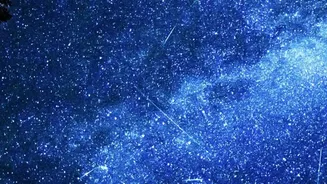
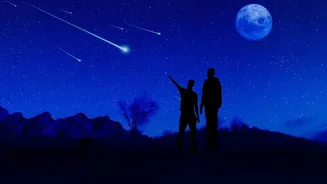
While the peak of the spectacular Perseid meteor shower was on the night of August 12-13, you still have a chance to see some shooting stars. The shower remains active until around August 24. The Perseids are known for producing bright, fast meteors that often leave persistent trails of light behind them. These meteors are tiny pieces of debris from Comet Swift-Tuttle, which burn up as they hit Earth's atmosphere. Although the rate will have dropped off significantly from the peak's 50-100 meteors per hour, you can still spot some stragglers in the late-night hours. For the best chance, find a dark location away from city lights, let your eyes adjust for about 20-30 minutes, and look towards the northeast. In India, the main challenge is often monsoon cloud cover, but a clear night after a rainstorm can offer exceptional viewing conditions.
Saying Farewell to Summer Constellations
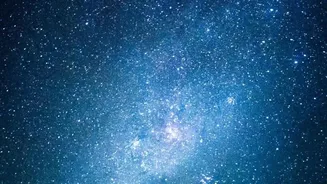
As August draws to a close, it’s your last best chance to enjoy the prominent constellations of summer in their prime position. The most famous pattern is the Summer Triangle, an asterism—not an official constellation—formed by three brilliant stars: Vega in the constellation Lyra (the Lyre), Deneb in Cygnus (the Swan), and Altair in Aquila (the Eagle). This giant triangle hangs high overhead in the evening sky during late summer and is bright enough to be seen even from light-polluted areas. Cygnus, with its cross-like shape known as the Northern Cross, is particularly easy to spot flying along the Milky Way. Look south to find the zodiac constellations of Scorpius and Sagittarius. On a dark, moonless night, the area around Sagittarius is where the Milky Way appears its brightest, as you are looking toward the dense core of our galaxy.
Essential Tips for the Best Viewing
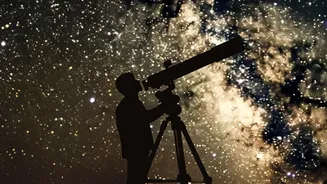
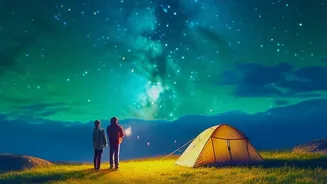
To make the most of these celestial events, a little preparation goes a long way. First, get away from city lights. The darker your location, the more you will see, especially when it comes to fainter meteors and the Milky Way. Second, give your eyes time to adjust. It takes about 20 to 30 minutes for your eyes to become fully dark-adapted, which makes a huge difference in what you can perceive. Third, be patient. Stargazing is a waiting game. Get comfortable in a reclining chair or on a blanket and simply look up. You don't need a telescope for most of these sights, especially meteor showers and constellations, though binoculars can enhance the view of star clusters and the moon. Finally, check the weather forecast. In many parts of India, August is monsoon season, so a clear night is a precious opportunity not to be missed.