



A Himalayan Paradise in Full Bloom
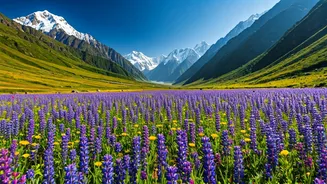
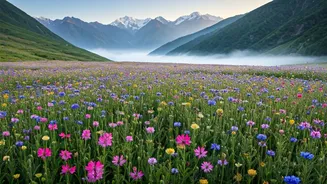
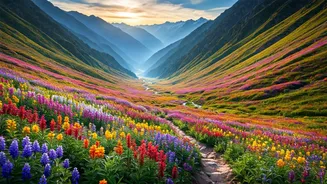
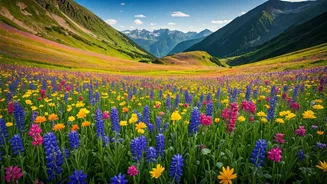
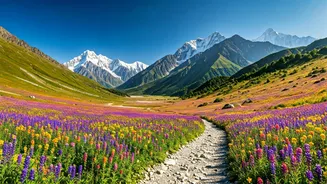
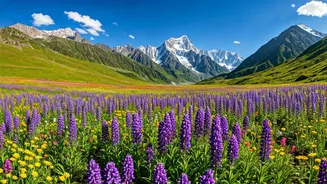
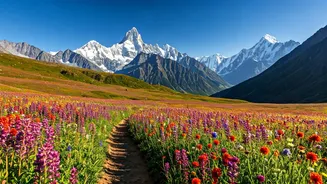
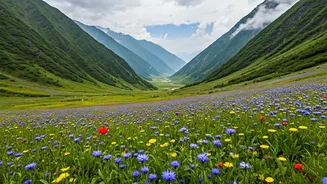
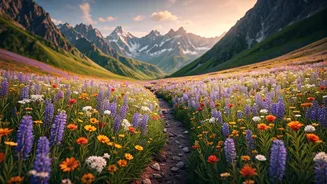
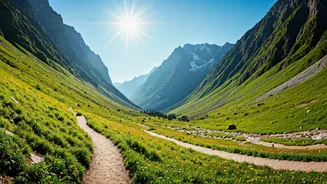
Tucked away in the Chamoli district of Uttarakhand, the Valley of Flowers National Park is a place of legend and breathtaking beauty. This high-altitude valley, part of the Nanda Devi Biosphere Reserve, becomes a vibrant carpet of over 600 species of alpine
flowers during the monsoon. Declared a UNESCO World Heritage Site, it was discovered by British mountaineers in 1931 who stumbled upon its otherworldly meadows. For centuries, it was known to locals as a mythical land, associated with the epic Ramayana, where Hanuman was said to have found the life-saving Sanjeevani herb. Today, it's a trekker's paradise, offering a rare glimpse into a unique Himalayan ecosystem.
Why July Is the Peak Moment
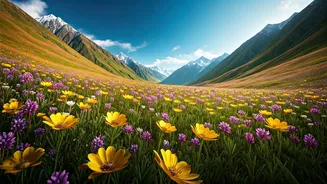
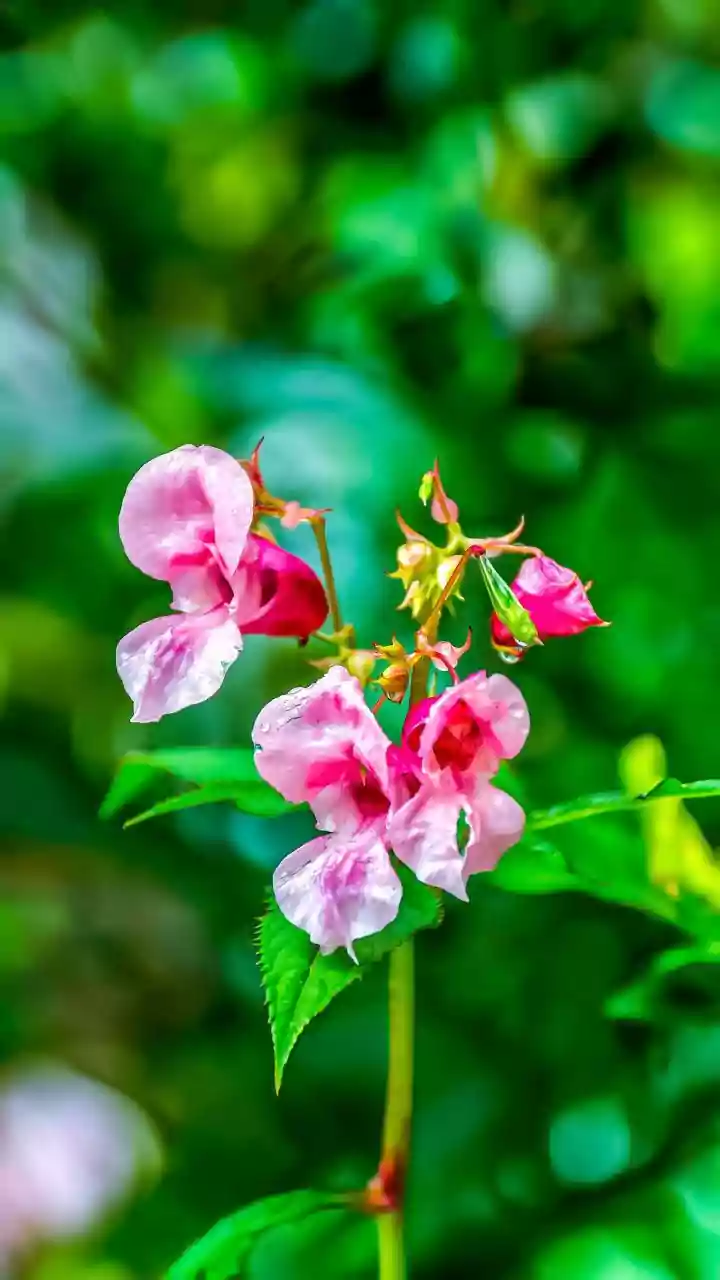
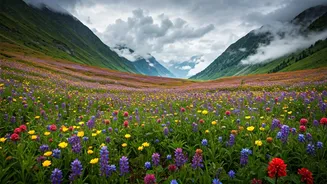
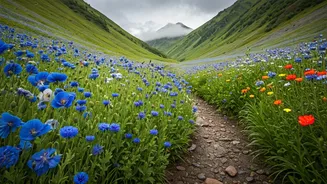
While the park opens in June, July is when the magic truly begins. The monsoon rains, which start to intensify this month, trigger a mass blooming event that transforms the landscape. The first half of the month sees the valley in its greenest, with early flowers beginning to emerge, while the second half, extending into mid-August, is considered the absolute peak season. This is when you'll find the highest density and variety of flowers, with entire meadows turning pink, yellow, and blue. Species like the elusive Blue Poppy, Brahma Kamal, Geraniums, and Himalayan Orchids are in their full glory, creating a spectacle that changes almost daily. The rain also feeds countless waterfalls, adding to the misty, ethereal atmosphere of the valley.
The Journey to the Valley
Reaching the Valley of Flowers is an adventure in itself. The journey typically begins from the town of Govindghat. From there, a short drive takes you to Pulna, the starting point of the trek. A well-paved but steady uphill trek of about 9-10 km leads to Ghangaria, a small hamlet that serves as the base camp for the trek. Situated at an altitude of around 3,050 metres, Ghangaria is the last human settlement on this route and where all trekkers stay, as camping inside the valley is not permitted. The final leg of the journey is a 4 km trek from Ghangaria into the Valley of Flowers itself, an easy to moderate trail that opens up into the stunning floral meadows.
Planning Your Trip for 2026
For the 2026 season, the Valley of Flowers is open from June 1st to October 31st. A crucial update for visitors is the new online permit system. It's highly recommended to book your entry permit in advance via the official website (valleyofflower.uk.gov.in), especially during the peak weeks of July and August, as there is a daily cap of 300 visitors to protect the fragile ecosystem. The entry fee for 2026 is ₹200 for Indian citizens and ₹800 for foreign nationals, valid for three days. Packing is key for a July trek; waterproof gear, sturdy trekking shoes, and layered clothing are essential due to the monsoon weather and altitude. Acclimatizing at Ghangaria for a night before entering the valley is also advised.
Beyond the Flowers: Hemkund Sahib
Many travellers who make the journey to Ghangaria also undertake the trek to Hemkund Sahib, a revered Sikh pilgrimage site. Located at a breathtaking altitude of 4,329 metres, the gurudwara sits beside a glacial lake and offers stunning panoramic views. The trek from Ghangaria to Hemkund Sahib is a challenging 6 km steep climb, but it is highly rewarding. This spiritual site is also a hotspot for high-altitude flora, with some flowers like the famous Brahma Kamal being even more abundant here than in the valley itself. Combining both treks offers a complete experience of the region's natural beauty and deep-rooted spirituality.