





What Exactly Is In-Space Servicing?
In-space servicing is exactly what it sounds like: performing maintenance, repairs, and upgrades on a spacecraft after it has been launched. The most famous example is the Hubble Space Telescope. It was the first observatory designed specifically to be serviced
by astronauts in orbit. Over five separate Space Shuttle missions, astronauts visited Hubble to fix a critical mirror flaw, replace gyroscopes, install more advanced scientific instruments, and swap out aging solar panels. These missions are the reason Hubble has remained a world-class science facility for over three decades, far exceeding its original lifespan. Without servicing, its mission would have ended in failure shortly after it began.
Why Did Servicing Go Out of Style?
If servicing worked so well for Hubble, why wasn't the James Webb Space Telescope (JWST) designed for it? The answer is location, location, location. Hubble is in a relatively convenient low-Earth orbit, about 540 kilometres up, which was reachable by the Space Shuttle. JWST, however, operates 1.5 million kilometres away at a gravitationally stable point known as Lagrange point 2 (L2). Sending astronauts on a repair mission to L2 is not possible with current technology. Given the complexity and cost, a single-lifecycle design was chosen for Webb. This strategy relied on getting everything right the first time, a high-stakes gamble that ultimately paid off but left no room for future improvements or repairs.
A Return to Upgradable Telescopes
Now, the pendulum is swinging back. NASA's next flagship mission, the Habitable Worlds Observatory (HWO), is being designed with servicing as a mandatory feature. Recommended by the influential Astro2020 Decadal Survey, which sets priorities for astronomy, HWO is an $11 billion telescope slated for the late 2040s with a monumental goal: to directly image and analyze Earth-like planets around other stars, searching for signs of life. Given the decades-long mission and the rapid pace of technological change, building HWO as a fixed, one-off instrument is seen as strategically unwise. Instead, making it serviceable ensures it can evolve, incorporating new cameras and sensors developed years after its launch.
Robots: The Future of Space Mechanics
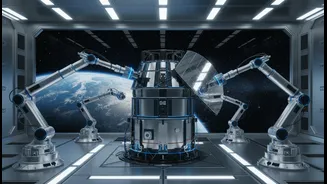
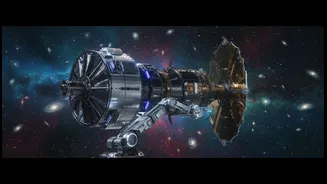
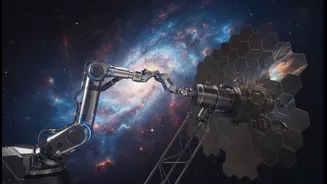
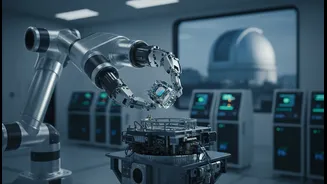
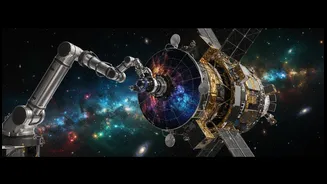
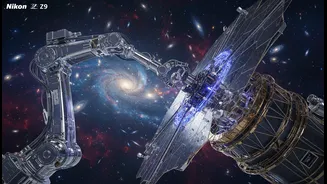
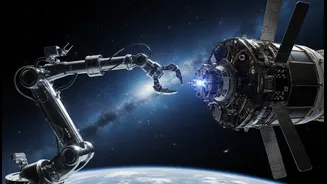
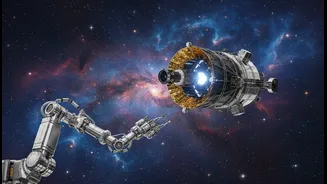
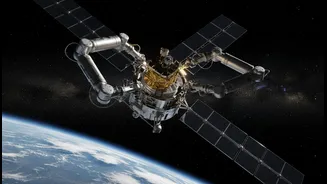
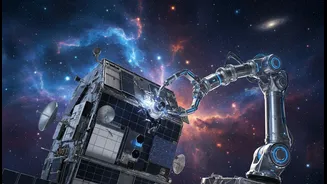
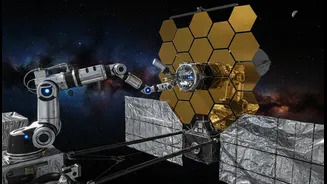
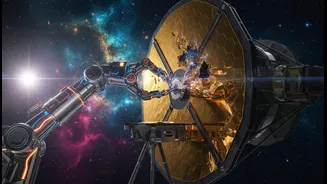
Servicing HWO won't involve astronauts in space shuttles. The plan is to rely entirely on robotic missions. NASA is mandating that HWO be built with a modular design, featuring standardized parts called line-replaceable units (LRUs) that a robotic spacecraft can easily grab, remove, and replace. These robotic servicers would be launched as needed to rendezvous with the observatory at its L2 location. They could perform tasks ranging from swapping scientific instruments to refueling the spacecraft or even assembling parts of the telescope in orbit if it's too large to launch in one piece. This burgeoning field, known as in-space servicing, assembly, and manufacturing (ISAM), is seen as a critical future capability.
The Great Debate: Pros and Cons
The decision to embrace servicing is a calculated trade-off. The primary advantage is longevity and adaptability. A serviceable telescope can have its life extended indefinitely and be equipped with next-generation technology, maximizing the return on a massive public investment. It also lowers the risk of a single point of failure ending the entire mission. The downside is increased upfront complexity and cost. Designing a telescope with modular, robot-compatible parts is more challenging than building a static observatory. However, NASA believes the long-term benefits—avoiding the need to launch an entirely new flagship telescope every couple of decades—far outweigh the initial engineering hurdles.