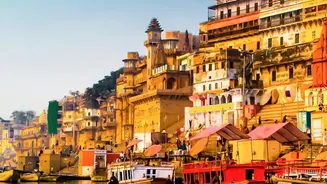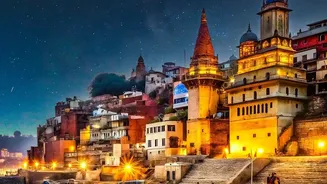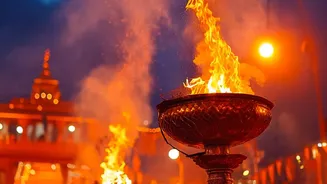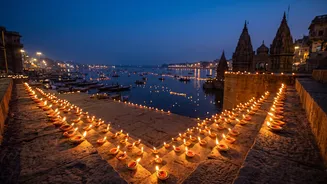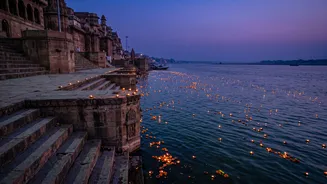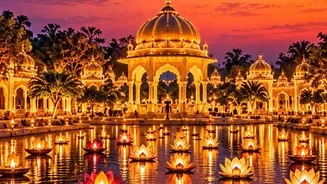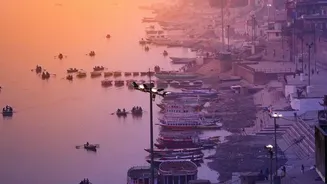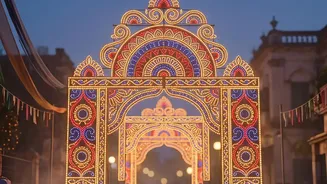

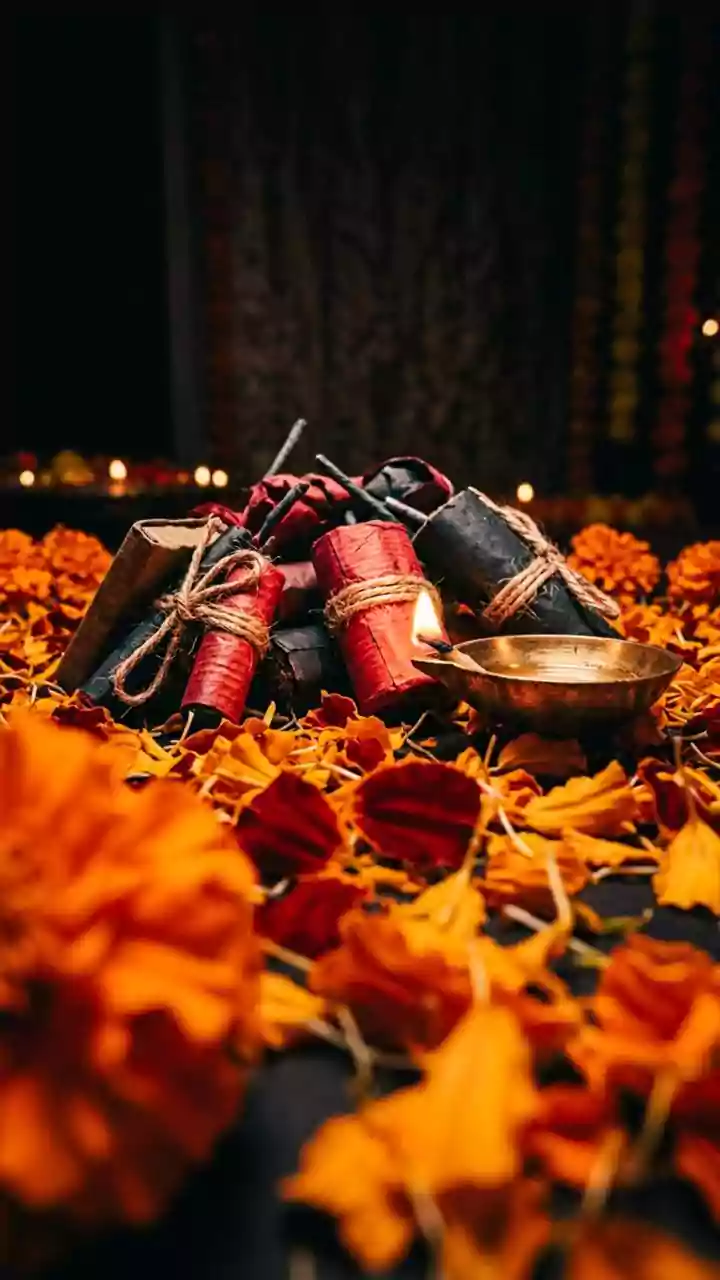




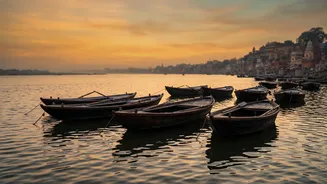
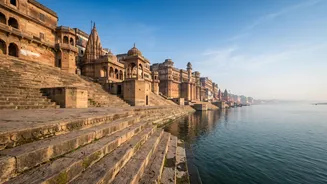
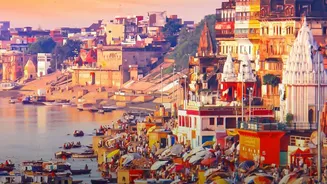
Every year on Kartik Purnima, the ancient city of Kashi transforms. Its riverfront, a long crescent of stone steps, becomes a river of light. This is Dev Deepawali, but its breathtaking beauty tells a deeper story of mythology and meaning.
A Celestial River on Earth
Fifteen days
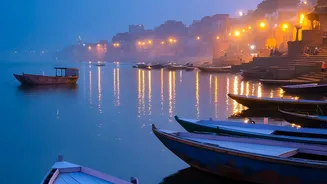
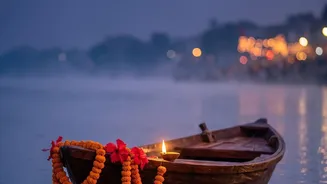
after the nationwide celebrations of Diwali, Varanasi hosts a festival uniquely its own. Known as Dev Deepawali, or the 'Diwali of the Gods', it is an event where divinity is believed to descend upon the city. To welcome them, more than a million earthen lamps, or diyas, are lit across the eighty-plus ghats that line the Ganga. From Ravidas Ghat to Rajghat, every step, temple, and palace facade flickers with golden light, their reflections dancing on the sacred waters. For a few hours, the riverfront becomes an ethereal pathway of light, a spectacle that draws hundreds of thousands of pilgrims and travellers who come to witness this mesmerising union of faith and fire. The air fills with the sound of temple bells, rhythmic chanting, and the scent of incense, creating an atmosphere that feels both grand and deeply personal.
The Legend of a Cosmic Victory
At its heart, Dev Deepawali is a celebration of the triumph of good over evil, rooted in Shaivite mythology. The festival commemorates the day Lord Shiva defeated the demon trio known as Tripurasura. According to ancient texts, three demon brothers—Tarakaksha, Kamalaksha, and Vidyunmali—performed intense penance to gain a boon from Lord Brahma, which granted them three magnificent, unconquerable flying cities of gold, silver, and iron. As their power grew, so did their arrogance, and they began to torment the heavens and earth. When the gods found themselves powerless, they turned to Lord Shiva for help. In a display of divine power, Shiva destroyed all three cities with a single arrow, earning him the name Tripurantaka, the destroyer of Tripura. It is believed that the gods celebrated this cosmic victory by illuminating Kashi with lamps, a tradition that continues to this day.
A Modern Tribute to Martyrs
While its roots are ancient, Dev Deepawali has evolved to embrace a powerful modern significance. The festival is also a solemn occasion to honour the nation's fallen soldiers. A key part of the evening's proceedings is a tribute to India's martyrs, organised by social committees and involving the Indian armed forces. At Dashashwamedh Ghat, a replica of the Amar Jawan Jyoti (the flame of the immortal soldier) is established, where senior officers from the Army, Navy, and Air Force lay wreaths. The ceremony includes a guard-of-honour salute and the singing of patriotic songs, blending spiritual devotion with national pride. This poignant ritual adds a layer of profound gratitude to the festivities, reminding all present of the sacrifices made to protect the nation.
Kashi's Sacred Stage
Dev Deepawali is inseparable from the spiritual geography of Varanasi itself. The city, also known as Kashi, is one of the oldest living cities in the world and a paramount centre of Hindu pilgrimage. The festival is not just celebrated in Kashi; it is an expression of Kashi's very soul. The ghats are more than just riverbanks; they are a sacred stage where life and death, ritual and daily life, coexist. During Dev Deepawali, this stage comes alive. Each diya lit by a volunteer, a priest, or a family is an act of deepdaan—an offering of light. The grand Ganga Aarti performed at Dashashwamedh Ghat, with its synchronised lamps and powerful chants, becomes the centrepiece of this divine performance. It is a collective act of faith that reaffirms the city's identity as a place where the divine is always present.