







The Robot Reading Your CV
For decades, job seekers were told to make their resumes visually appealing to catch a recruiter's eye. Today, the first "recruiter" to see your application is often not a person at all. It is an Applicant Tracking System (ATS), a software designed to scan,
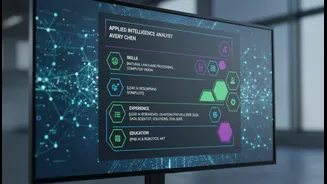
parse, and rank resumes based on keywords, skills, and experience. Machine-readable resumes are built for these systems. They prioritize clean, simple layouts, standard fonts, and clear headings over fancy graphics, columns, or unconventional formats. The goal is no longer just to impress a human, but to be successfully understood by an algorithm. The launch of AI-powered platforms like EzRecruit.ai, which specifically targets the Indian recruitment market, accelerates this trend. These tools move beyond simple keyword matching to more sophisticated analysis, making the underlying data structure of a resume more important than ever.
Why Companies Are Outsourcing the First Look
The move toward automated screening is driven by pure necessity. In a competitive market like India, a single corporate job posting can attract thousands of applications, a volume that is impossible to review manually. HR departments are turning to technology to manage this deluge of data. AI-driven recruitment tools promise efficiency, speed, and a more objective initial screening process. They can process thousands of CVs in minutes, identifying a shortlist of candidates who meet the basic job criteria. For large enterprises and recruitment agencies alike, this means a significant reduction in hiring time and costs. This efficiency gain is the primary driver behind the rapid adoption of ATS and AI platforms across various sectors in India, from IT and finance to manufacturing and retail.
The Great Un-Designing of the Resume
This technological shift poses a direct challenge to the cottage industry of "creative" and "designer" resumes. While a visually stunning CV might be effective in a creative field or a small company, it can be a liability when applying online to the vast majority of companies. Complex layouts with tables, text boxes, images, and non-standard fonts can confuse an ATS, leading to parsing errors. The system might misread your experience, jumble your contact information, or fail to identify key skills altogether. Consequently, a perfectly qualified candidate with a poorly formatted resume could be filtered out before a human ever sees their application. Research has shown that a high percentage of employers believe they lose qualified candidates simply because their resumes couldn't be parsed by the ATS. The new wisdom is to favour clarity and structure over visual flair.
Adapting to the New Rules
So, how can a job seeker in India create a resume that pleases both the machine and the eventual human reader? The key is a hybrid approach that prioritizes a clean, machine-friendly foundation. Use a single-column layout, standard fonts like Arial or Calibri, and clear, conventional headings like "Work Experience," "Education," and "Skills." Instead of embedding contact information in the header or footer, place it in the main body of the document, as some systems skip headers. Crucially, tailor your resume for each application by incorporating keywords from the job description, as this is a primary way the systems rank candidates. Once the machine-friendly structure is in place, focus on crafting compelling, achievement-oriented bullet points that will impress the human recruiter who reads the shortlisted version. Think of it as a two-stage process: first, pass the robot's test; then, win over the human.