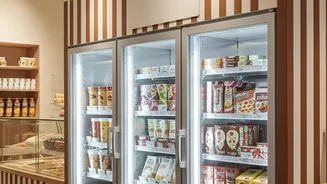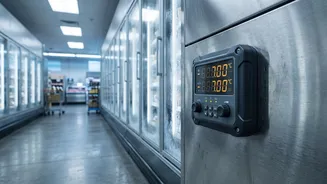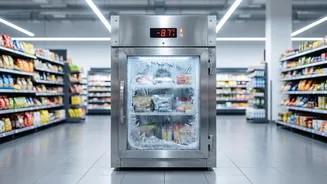





The spectre of empty supermarket shelves usually conjures images of supply chain disruption or panic buying. But a new, invisible threat is emerging from the digital realm, leaving European retailers with a very physical problem: tonnes of spoiled food.
A Coordinated Digital Assault
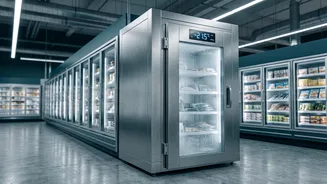
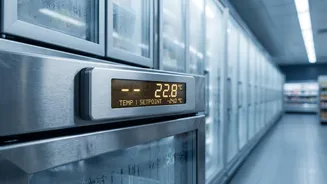
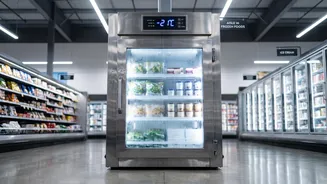
In a series of alarming incidents in October and November 2026, supermarkets across at least seven European nations, including Sweden, Belgium, Ireland, and Italy, were hit by a coordinated cyberattack. Unlike typical data breaches, the hackers targeted the stores' operational systems. Specifically, they seized control of internet-connected refrigeration and freezer units, remotely raising temperatures to as high as 50 degrees Celsius. The attacks, which often occurred overnight, went unnoticed until staff arrived to find aisles of dairy, meat, and frozen goods completely ruined. Retailers like Coop, ICA, Carrefour, and Ahold Delhaize were among those affected, reporting significant financial losses from the discarded stock.
From IT to OT: A New Threat Vector
This wave of attacks highlights a critical shift in cybersecurity threats against the food and beverage industry. For years, the primary concern was the protection of Information Technology (IT)—customer data, payment systems, and corporate networks. However, these incidents targeted Operational Technology (OT), the hardware and software that monitor and control physical processes like manufacturing lines and, crucially, refrigeration. Many of these OT systems, some of which are older and no longer receive security updates, are now connected to the internet to allow for remote maintenance. This connectivity, intended for efficiency, created a backdoor for hackers, who exploited vulnerabilities like weak or default passwords to gain access and wreak havoc.
Why Supermarkets Are a Prime Target
Cybercriminals are increasingly targeting critical infrastructure, and the food supply chain is a highly attractive mark. Supermarkets operate on high volume and relatively thin margins, meaning any disruption to their ability to trade is incredibly costly. The physical nature of this attack creates immense pressure; while stolen data can be recovered, spoiled food is a total loss, creating immediate financial damage and reputational harm. The attacks in Europe, which caused losses estimated in the tens of millions of euros, demonstrate that hackers have recognised the immense leverage they gain by threatening the integrity of the food supply itself. The EU's food and agriculture commissioner called the events a 'deliberate attempt to disrupt our food supply chain'.
A Global Wake-Up Call
While these attacks were centred in Europe, they serve as a stark warning for the global food industry, including retailers in India. Modern supply chains are deeply interconnected, and a vulnerability in a single piece of widely-used software or hardware can have cascading effects. The attacks on European supermarkets exploited vulnerabilities in refrigeration controllers made by specific manufacturers, affecting hundreds of stores that relied on that same technology. This underscores how a single point of failure can be exploited on a massive scale. As Indian retailers continue to adopt 'smart' technologies and IoT devices to manage inventory and operations, these incidents prove that digital resilience is no longer an optional extra.
Fortifying the Food Supply Chain
In response, European cybersecurity agencies have issued urgent guidance. Retailers are being urged to segment their networks to create a firewall between their corporate IT systems and their physical OT systems. This prevents hackers who breach one system from moving laterally into the other. Other critical measures include strengthening remote access protocols with multi_factor authentication, replacing outdated devices that no longer receive security support, and moving away from default passwords. For businesses, the key takeaway is that cybersecurity must now encompass every connected device, from the checkout counter to the freezer compressor, to prevent digital intrusions from becoming a food safety crisis.