





The Challenge of Space
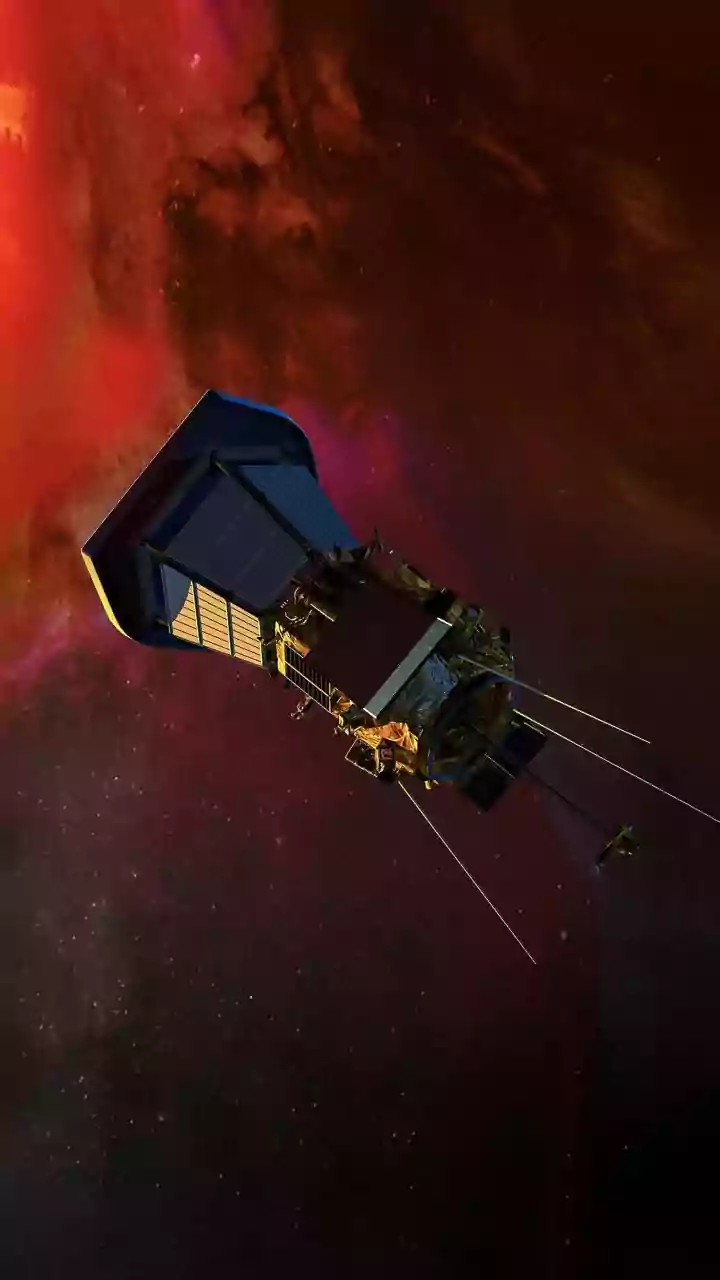
The primary challenge of temperature control in space is the extreme environment itself. Without an atmosphere to distribute heat, a spacecraft's sun-facing side can soar to over 120°C, while the side in shadow plummets to below -150°C. This wild swing
can happen rapidly, especially for satellites in low Earth orbit which pass in and out of Earth's shadow every 90 minutes. Heat transfer in the vacuum of space happens almost exclusively through radiation, not conduction or convection as on Earth. This means engineers need a clever toolkit to protect the billion-dollar investments that are our eyes and ears in the cosmos.
The Golden Blanket Solution
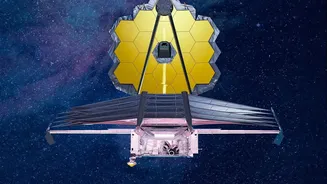
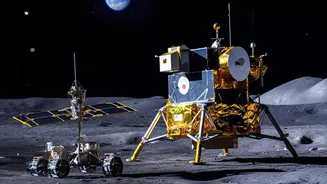
The most iconic and visible part of a spacecraft's thermal control system is Multi-Layer Insulation, or MLI. These are the famous gold or silver foil blankets wrapped around satellites and probes. An MLI blanket consists of multiple, paper-thin layers of a reflective material like Mylar or Kapton, often with an amber hue from a Kapton coating over silvery aluminum. These layers are separated by a spacer material, creating a near-vacuum between them. This setup is incredibly effective at preventing heat transfer via radiation. It works both ways: it reflects intense solar heat away to keep the spacecraft from overheating, and it traps the warmth generated by internal electronics to prevent them from freezing in the cold.
An Active Circulatory System
While MLI blankets provide passive protection, many spacecraft also need active systems to move heat around. This is where heat pipes and pumped fluid loops come in, acting like a spacecraft's circulatory system. A heat pipe is a sealed tube containing a fluid, such as ammonia, that vaporizes when it absorbs heat from a hot component, like a computer processor. This vapor travels to a cooler part of the pipe, often attached to a radiator, where it condenses back into a liquid, releasing its heat. The liquid then flows back via a wick structure to start the cycle again. This passive process is highly efficient at transferring heat over distances with very little temperature difference. For missions with very high power, pumped fluid loops are used to circulate coolant and manage even larger heat loads.
Radiators: Venting Heat into the Void
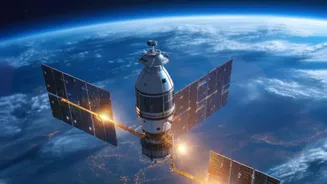
Once heat is collected from sensitive areas, it needs to be dumped overboard. Since there is no air to carry it away, spacecraft use radiators to release this excess energy into deep space in the form of infrared radiation. These radiators are often large, flat panels, sometimes coated with special white paint that is excellent at emitting heat but poor at absorbing sunlight. On the International Space Station, massive radiator arrays are a key feature, circulating ammonia to shed the heat generated by the station and its crew. Some spacecraft even use louvers—think of them as high-tech venetian blinds—that automatically open and close over the radiators to regulate how much heat is released, adapting to changing conditions.
Staying Warm and Putting It All Together
Sometimes, the problem isn't too much heat, but too little. During long eclipses or for missions traveling far from the Sun, critical components can get too cold to function. To combat this, engineers use small, thermostatically controlled electric heaters to provide warmth precisely where it's needed. For missions to the outer planets where solar power is weak, Radioisotope Heater Units (RHUs) are used. These small units use the natural decay of a radioactive material to provide a constant source of heat for decades. Ultimately, a spacecraft's thermal control system is a complex, integrated design. It combines passive elements like insulation and coatings with active ones like heat pipes and heaters, all working in concert to keep every part of the machine within its happy temperature range, ensuring the mission's success.