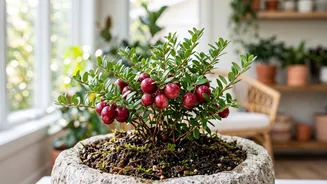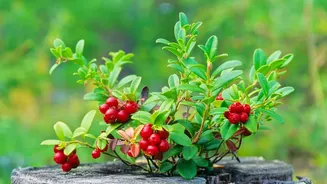







Dreaming of harvesting your own tart, ruby-red cranberries? While they're known for growing in bogs, you can successfully cultivate these unique fruits indoors. The key is to replicate their native environment, especially when it comes to moisture.
Choose the Right Container
Success
with indoor cranberries begins with the right pot. These plants have shallow, spreading roots, so a wide container is more important than a deep one. Look for a pot that is at least 30-40 cm in diameter to give the runners space to expand. While depth is less critical, a minimum of 20-30 cm is still recommended. Drainage is absolutely essential to prevent root rot, so ensure your chosen container has plenty of holes. Trough-style planters or large window boxes are excellent choices that accommodate their natural spreading habit. Self-watering containers can also be very effective, as they provide a consistent level of moisture from a reservoir without waterlogging the soil.
Create the Perfect Acidic Soil
Cranberries are not just acid-loving; they are acid-demanding. They require a soil pH between 4.0 and 5.5. Standard potting soil will not work. The best approach is to create your own mix or use a pre-made one specifically for acid-loving plants like azaleas or blueberries. A highly effective homemade mixture consists of three parts peat moss to one part sand. Peat moss provides the necessary acidity and helps retain moisture, while sand ensures the mix remains well-aerated and drains properly. Before planting, it's a good idea to soak the peat moss for 24 hours, as it can initially absorb a lot of water that would otherwise be meant for the plant's roots. You can monitor the soil's pH level annually with a simple testing kit and amend as needed.
Mastering Moisture: The Golden Rule
The headline says it all: keeping cranberry plants moist is the most critical part of their indoor care. They are bog plants, after all, and cannot tolerate drying out. The soil should feel consistently damp to the touch, but never waterlogged or soggy. Overwatering can suffocate the roots and lead to rot. Check the soil daily, especially in warmer weather, as container plants dry out much faster than those in the ground. Water the plant thoroughly whenever the top inch of soil begins to feel dry. One of the best practices is to use rainwater whenever possible. Tap water is often alkaline and can gradually raise the soil's pH over time, harming the plant. Setting up a small rainwater collection system can make a significant difference. Cranberries also appreciate a humid environment, which can be a challenge indoors, so misting the plant or placing it near a humidifier can be beneficial.
Light, Temperature, and Feeding
To produce fruit, cranberry plants need full sun—at least six hours of direct sunlight per day. A spot near a south_facing window is ideal. If you don't have enough natural light, you can supplement with a grow light. Cranberries are cool_temperate plants and require a period of winter chill to set fruit. When it comes to fertilizer, less is more. Cranberries have low nutrient requirements. An excess of nitrogen will encourage lots of leafy runner growth at the expense of the upright shoots that produce flowers and fruit. Feed the plant every few weeks during the growing season with a balanced liquid fertilizer, or apply a slow_release acidic fertilizer in the spring.
Pollination and Potential Pests
Cranberry flowers are hermaphroditic, meaning they have both male and female parts and can self_pollinate. However, fruit set and berry size are significantly improved by cross_pollination. In their natural environment, this is done by bees. Indoors, you may need to lend a hand. Gently shaking the plant when it's in bloom can help distribute pollen. For more certainty, you can use a small, soft brush to transfer pollen from one flower to another. While indoor plants face fewer threats, keep an eye out for common pests like spider mites, aphids, and mealybugs. These can often be managed by wiping them off or with a strong spray of water. Ensure good air circulation around the plant to prevent fungal issues like leaf spot or fruit rot.