


A Divine Connection to Purity
In Hinduism, milk holds a profound spiritual significance. It is considered a 'sattvik' food, meaning it embodies qualities of purity, harmony, and goodness. Coming from the cow, a revered animal often called 'Gau Mata' (the sacred mother), milk symbolizes
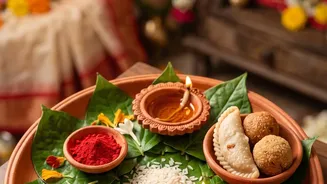
selfless nourishment and life itself. Offering milk or milk-based products to a deity is an act of presenting the purest essence of nature, free from impurities. During Durga Puja, this symbolism is particularly potent. The offering is a gesture of surrendering one's ego and devotion to the divine feminine energy represented by Goddess Durga, who is seen as the mother of the universe. Sweets, in general, are an integral part of the 'bhog' or food offerings made to the goddess, symbolizing gratitude and the sweetness of devotion.
Chhena: The Heart of Bengali Sweets
The foundation of most iconic Bengali sweets is 'chhena', a fresh, unpressed cottage cheese. It's made by curdling hot milk with a mild acid like lemon juice, then draining the whey. This technique gives Bengali sweets their signature light, spongy, and melt-in-the-mouth texture, which is distinct from the heavier, 'khoya'-based sweets common in other parts of India. Interestingly, the use of chhena in sacred offerings was not always common. Historically, curdling milk was considered taboo in many Hindu traditions as it involved 'breaking' a pure substance. However, many food historians believe that the Portuguese, who settled in Bengal in the 17th century and were skilled at cheesemaking, influenced local confectioners, known as 'moiras'. This cultural exchange led to the creation of chhena-based sweets, which eventually became a celebrated part of Bengali culinary identity and even acceptable as offerings.
Sandesh: An Emblem of Devotion
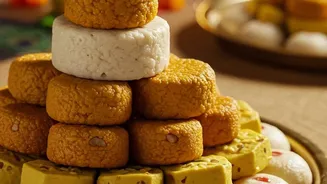
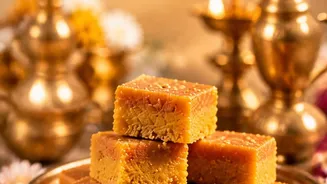
Perhaps no sweet is more representative of Bengali culture than the Sandesh. Made by delicately kneading chhena with sugar or jaggery over low heat, Sandesh is known for its subtle sweetness and refined texture. The name 'Sandesh' translates to 'message', reflecting the tradition of sending these sweets to convey good news. During Durga Puja, different types of Sandesh are prepared as 'naivedya' (sacred food for the deity). These are not just simple sweets; they are crafted with artistry. Confectioners mould them into shapes like conch shells, fish, or elephants, which hold auspicious and religious symbolism. The most basic form, 'makha sandesh' (kneaded sandesh), is prized for its simplicity, while more complex varieties are flavoured with saffron, cardamom, or seasonal nolen gur (date palm jaggery).
Rasgulla and Payesh: Sweet Surrender
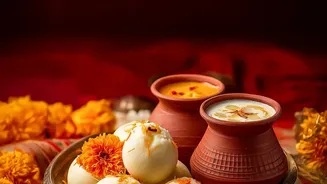
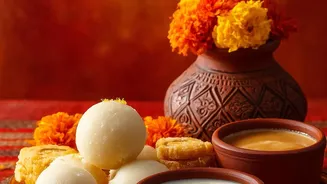
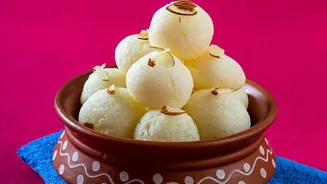
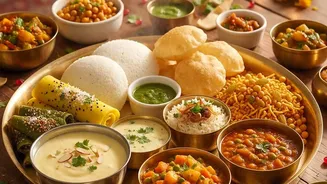
Alongside Sandesh, other milk-based sweets adorn the Puja platter. The Rosogolla (or Rasgulla), a spongy chhena ball soaked in light sugar syrup, is considered a pure and sattvik offering, making it a popular choice for bhog. Its pristine white colour further enhances its association with purity. Another indispensable offering is Payesh, the Bengali version of kheer or rice pudding. Made by slow-cooking rice in milk until it becomes rich and creamy, Payesh is one of the most ancient and revered offerings, mentioned even in early scriptures as 'paramanna' (the ultimate rice dish). It symbolizes abundance and prosperity, and its comforting sweetness is a staple during the festive meals of Maha Ashtami and Dashami. Other milk-based delights like Mishti Doi (sweet yogurt) and Rabri (thickened sweet milk) also play a significant role, reinforcing the theme of divine nourishment.