


The Twin Crises in Indian Farming
Indian agriculture, the backbone of the nation's economy, relies heavily on irrigation. However, traditional methods are often inefficient. Flood irrigation, used by a majority of farmers, can waste enormous amounts of water through evaporation and runoff.
This puts immense pressure on already depleting groundwater resources. Compounding this issue is the energy dilemma. Farmers depend on electricity to run water pumps, but rural power supply is often erratic and unreliable. The alternative, diesel-powered pumps, offers more control but comes with high and fluctuating fuel costs that eat into profits, alongside significant carbon emissions.
How Solar Drip Irrigation Works
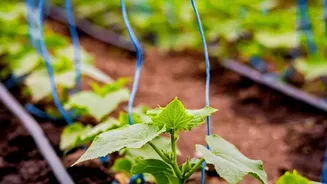
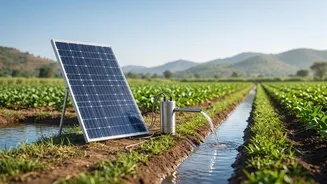
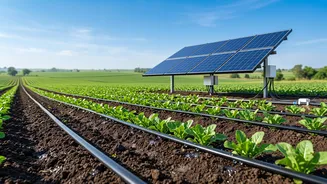
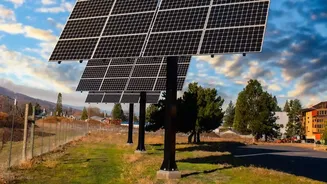
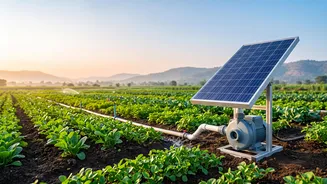
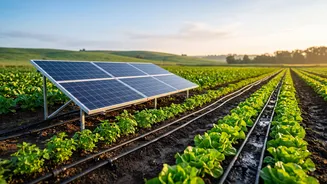
A solar drip irrigation system tackles both water and energy challenges simultaneously. The setup is elegantly simple. Photovoltaic (PV) solar panels capture sunlight and convert it into electricity. This power runs a water pump, which draws water from a source like a well, pond, or canal. Instead of flooding the field, the pump feeds the water into a network of pipes known as a drip irrigation system. This network delivers water slowly and directly to the base of each plant, right at the root zone, ensuring almost no water is lost to evaporation or runoff.
More Crop Per Drop
The most immediate benefit is a dramatic improvement in water efficiency. Drip irrigation can reduce water consumption by up to 70% compared to conventional flood methods. This precision watering not only conserves a precious resource but also leads to healthier plants and better crop yields. Studies have shown that the combination of reliable water supply and targeted delivery can increase agricultural productivity by as much as 50%. By using water more effectively, farmers can often cultivate more land or grow additional crop cycles throughout the year, turning seasonal farms into year-round enterprises.
Freedom from the Grid and Diesel Costs
By harnessing free and abundant solar energy, farmers gain independence from the unreliable power grid and volatile diesel prices. Once the system is installed, the operational costs drop sharply, as sunlight is free. This transition to clean energy not only makes farming more profitable by cutting recurring expenses but also makes it more sustainable. Switching from a diesel pump to a solar-powered one can reduce a farm's carbon dioxide emissions by a significant amount annually. This provides farmers with predictable, daytime power for irrigation, allowing them to water their crops exactly when needed.
The Economic and Government Support
While the benefits are clear, the high initial investment for a solar pump and drip system can be a major hurdle for small and marginal farmers. However, the long-term savings on electricity and diesel, coupled with increased income from higher yields, often result in a viable return on investment. To make this technology more accessible, the Indian government has launched the Pradhan Mantri Kisan Urja Suraksha evam Utthaan Mahabhiyan (PM-KUSUM) scheme. Under this program, farmers can receive significant subsidies—often up to 60% of the cost—to install standalone solar pumps, drastically reducing the upfront financial burden.
Challenges on the Ground
Despite the promise, widespread adoption faces challenges. A lack of awareness about the long-term benefits is a key issue. Furthermore, access to credit for the initial investment remains a barrier for many. Another significant concern is the availability of timely maintenance and technical support in remote rural areas. Ensuring that farmers have access to trained mechanics and spare parts is crucial for the long-term success and reliability of these systems.