






Plan Like a Pro
The first step to a waste-free Sadhya happens before any vegetables are chopped. Get a firm headcount of your guests to avoid cooking for a phantom crowd. While a traditional Sadhya can have over two dozen dishes, you don't have to make them all. Curate
a menu featuring the absolute must-haves for your family. Planning the menu allows you to create a precise shopping list, preventing over-buying of perishable ingredients that might go unused. You can even delegate dishes among family and friends, a traditional practice that reduces the burden on one household and ensures just the right amount is prepared. This collaborative approach not only saves time but also inherently controls portion sizes.
Shop Smart and Local
Onam is a harvest festival, making it the perfect occasion to celebrate local and seasonal produce. Sourcing your vegetables from local farmers not only guarantees freshness and flavour but also reduces the carbon footprint associated with long-distance transportation. Buy only what your pre-planned menu requires. Resist the temptation of bulk offers unless you are certain you will use the ingredients. For items like coconut, which is central to most Sadhya dishes, plan its use across different preparations—grated for thoran, ground into a paste for avial, and pressed for milk in olan or payasam. This multi-use strategy ensures no part of the ingredient is wasted.
Mindful Cooking Techniques
The kitchen is where sustainability truly comes to life. Many vegetable peels and stems that are typically discarded can be used. For instance, peels from vegetables like ash gourd can be used to make chutneys, and stems from greens can be added to stir-fries. Prepping vegetables can be the most time-consuming part, so chop everything you need for all dishes at once. Grinding a bulk batch of the common coconut-cumin-chilli paste can save time and energy, as it forms the base for multiple dishes like avial and thoran. Also, be mindful of oil and coconut usage; reducing excess not only makes the meal healthier but also conserves resources.
The Art of Serving
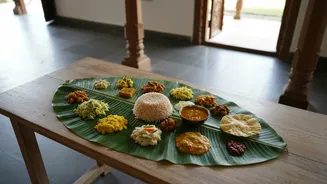
The traditional practice of serving on a banana leaf is inherently eco-friendly, as the leaf can be composted. When serving, remember that it is considered poor manners to waste food at a Sadhya. Encourage a culture of mindful eating by serving smaller portions of each dish initially. This allows guests to sample everything without overwhelming their leaf (and stomach). It is always better to go for a second helping of a favourite dish than to leave a large portion of something untouched. This simple act of serving less to start with is one of the most effective ways to reduce plate waste.
Love Your Leftovers
Despite the best planning, leftovers can happen. Instead of seeing them as a burden, view them as an opportunity for creative new meals. Leftover rice can be turned into a delicious curd rice or a savoury fried rice the next day. A mix of leftover curries like avial and thoran can be mashed together, formed into patties, and pan-fried as tasty cutlets. Sambar can be enjoyed with idlis or dosas for breakfast. However, it's advisable to have a light dinner after a heavy Sadhya, so plan to use the leftovers for the following day's lunch rather than for dinner on Onam itself. You can also make a light vegetable soup by combining and thinning out remaining vegetable dishes.
Complete the Cycle with Composting
A truly sustainable Sadhya ends by returning to the earth. The banana leaves used for serving are fully biodegradable and make for excellent compost. Along with the leaves, all your uncooked vegetable scraps—peels, stems, and seeds—can go into a compost bin. Even the flowers from your pookalam can be composted, enriching the soil for future harvests. This final step closes the loop, turning potential waste into a valuable resource and perfectly embodying the spirit of a festival that celebrates nature's bounty.