






Introducing Shukrayaan-1
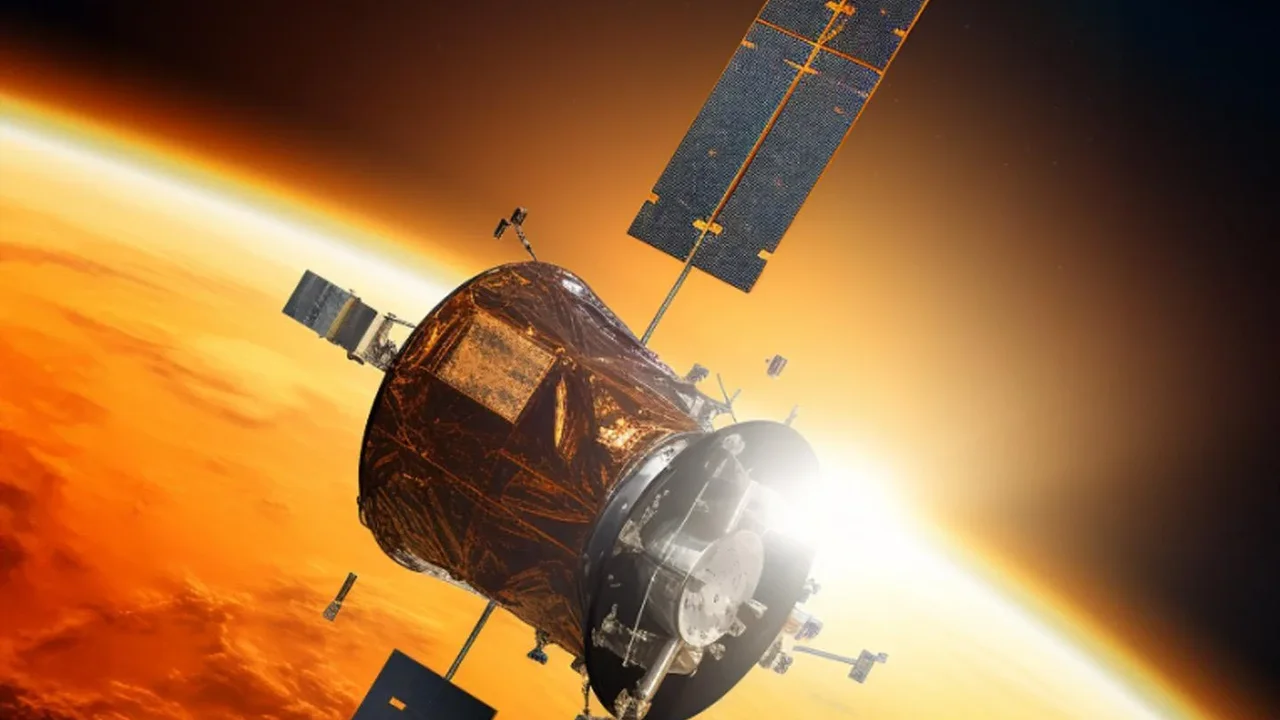
Shukrayaan-1, or the Venus Orbiter Mission (VOM), is India's first dedicated mission to our planetary neighbour. Formally approved by the government in September 2024, the mission is scheduled to launch aboard a powerful LVM-3 rocket on March 29, 2028.
After a journey of just over 100 days, the spacecraft is expected to enter a highly elliptical orbit around Venus. From there, it will perform a series of complex aerobraking maneuvers—a first for ISRO—to lower its orbit and begin its scientific operations. The orbiter carries a suite of about 19 instruments, including significant international collaboration with Russia, Sweden, and Germany, designed to study the planet from its mysterious surface to the top of its toxic atmosphere.
Why Study the 'Evil Twin'?
Venus presents a profound scientific puzzle. It is similar to Earth in size, mass, and density, and scientists believe it may have once hosted oceans. Yet today, it is the hottest planet in the solar system, with a runaway greenhouse effect and an atmospheric pressure 90 times that of Earth's. Understanding why and how Venus turned into this inhospitable world is a key objective for planetary scientists. By studying its geology, volcanic activity, and dense, carbon-dioxide-rich atmosphere, ISRO hopes to gain insights that could help model Earth's own climate dynamics and serve as a cautionary tale for our planet's future. Shukrayaan-1 will carry a high-resolution Synthetic Aperture Radar (SAR) to map the surface through the thick clouds and a ground-penetrating radar to study the shallow subsurface for the first time.
A Crucial Step for Future Missions
The Venus mission is far more than a single scientific expedition; it's a critical technology demonstrator for ISRO's future ambitions. The extreme environment of Venus, with its high temperatures and corrosive atmosphere, demands robust new technologies. Developing high-temperature electronics and advanced aerobraking techniques for Shukrayaan-1 will build invaluable expertise. These capabilities are essential for more complex future missions, such as landing a probe on Mars or exploring other challenging destinations in the outer solar system. The mission's success will validate ISRO's ability to undertake long-duration interplanetary journeys with heavier scientific payloads, moving beyond the technology demonstration of the Mars Orbiter Mission (Mangalyaan) to full-scale scientific exploration.
Positioning India on the Global Stage
In recent years, there has been a renewed global interest in Venus. NASA is planning its VERITAS and DAVINCI missions, while the European Space Agency (ESA) is developing its EnVision orbiter. Shukrayaan-1 is timed to be part of this international wave of Venus exploration, positioning India as a key player and collaborator. While NASA and ESA's missions focus heavily on geological history, ISRO's mission will provide unique, complementary data on the Venusian atmosphere and its interaction with the solar wind. By successfully executing this ambitious mission, India demonstrates its growing capabilities in planetary science, solidifying its place among the elite group of nations capable of exploring the solar system and contributing vital knowledge to humanity's understanding of the cosmos.