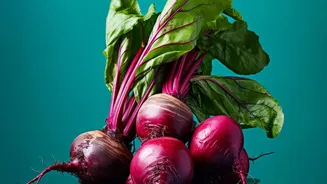








The Unassuming Power of Beetroot
At the heart of beetroot's performance-enhancing reputation is its high concentration of dietary nitrates (NO3-). While found in other leafy greens, beetroot is considered a particularly potent and bioavailable source. For years, its benefits were primarily
associated with endurance sports, helping athletes go longer by improving oxygen efficiency. However, recent research has shifted focus to its impact on short, explosive efforts, revealing significant gains for sprinters and power-based athletes in sports like football and basketball. The International Olympic Committee has even recognized dietary nitrate as a legitimate and effective sports food.
The Science: From Nitrate to Nitric Oxide
The magic happens through a simple biological conversion. When you consume beetroot, bacteria in your saliva convert the nitrate (NO3-) into nitrite (NO2-). This nitrite then circulates in your blood and is converted into nitric oxide (NO) in areas of the body with low oxygen availability, such as hard-working muscles. Nitric oxide is a powerful vasodilator, meaning it relaxes and widens blood vessels. This process increases blood flow, allowing more oxygen and nutrients to reach your muscles during intense exercise. The result is improved efficiency; your muscles can produce more force with less energy and less oxygen.
How This Boosts Sprint Performance
Sprinting is an anaerobic activity that demands immense power in seconds. The benefits of increased nitric oxide are especially relevant here. Studies show that nitrate supplementation can enhance muscle contractility, particularly in the fast-twitch (Type II) muscle fibers crucial for explosive movements. Research has demonstrated tangible improvements in sprint performance, with athletes achieving faster split times and reaching their peak power output more quickly after supplementing with beetroot juice. One study noted a 1.2% improvement in 20-meter sprint times and a nearly 4% increase in performance during a high-intensity intermittent running test. These small margins can be the difference between winning and losing in competitive sport.
Rethinking Dosage: The Micro-Dosing Approach
Traditionally, athletes would take a large, single dose of beetroot juice a couple of hours before competition. While effective, the concept of "micro-dosing" or "nitrate loading" is gaining traction for its potential to provide more stable and sustained benefits. In this context, micro-dosing refers to consuming smaller, consistent amounts of nitrate daily over several days leading up to an event, rather than a single large shot. Studies suggest that this chronic loading strategy, typically involving 3-7 days of supplementation, may be more effective than an acute, one-off dose, especially for well-trained athletes. This approach helps maintain elevated levels of plasma nitrite, ensuring nitric oxide is readily available when your body needs it most.
Practical Application and What to Expect
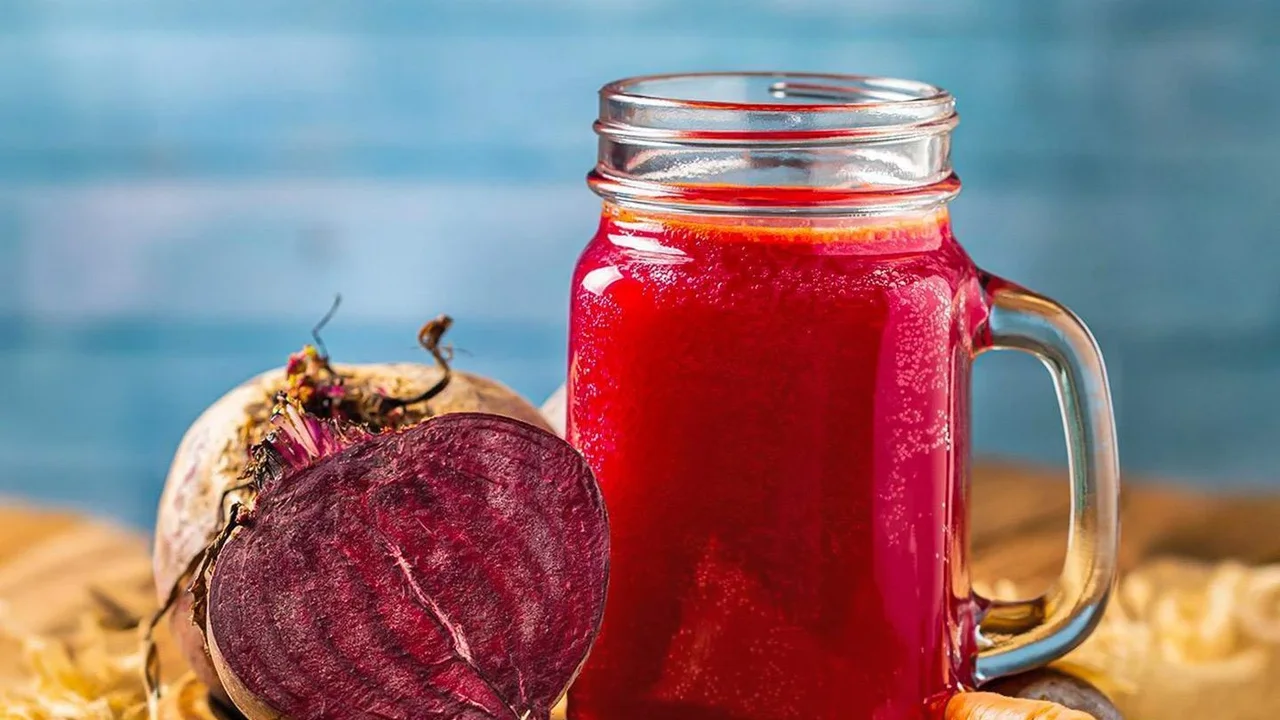
For athletes looking to incorporate this strategy, most research uses a daily nitrate dose between 300-600 mg. This can be achieved through concentrated beetroot shots or powders, which offer a more reliable dosage than whole beets. A typical protocol might involve taking one dose daily for 5-7 days before a competition, with a final dose taken 2-3 hours before the event begins, as this is when plasma nitrite levels peak. While the performance gains are real, they are typically modest, often in the range of 1-4%. It's also worth noting that some individuals may experience harmless side effects like beeturia (pink or red urine and stools) or minor gastrointestinal upset.