

Your First Look: A Jewel in the Eyepiece
Finding Saturn is easier than you might think. It appears to the naked eye as a steady, yellowish-white point of light that doesn’t twinkle like a star. When you point even a very small telescope with a low-power eyepiece (around 25x to 50x magnification)
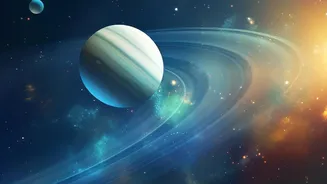
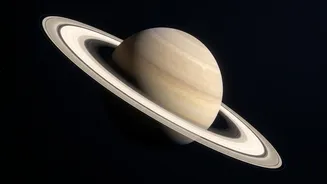
at it, Saturn transforms. What was a dot becomes a distinct, glowing oval. You won't see a high-definition image, but you will clearly make out the planet itself and the rings that make it famous, appearing as a single structure encircling the golden disk. This first sight is often the one that hooks people on astronomy for life.
Resolving the Famous Rings
With a quality beginner telescope, such as a 70-90mm refractor or a 4-inch reflector, the view becomes more refined. At magnifications of 75x to 150x, the rings clearly separate from the planet. Instead of a single oval, you'll see a distinct ball with a beautiful, flat ring system around it, creating a stunning three-dimensional effect. You may even notice the shadow of the planet cast upon the rings, which adds to the depth. The visibility of the rings changes over Saturn's 29.5-year orbit. After being nearly edge-on and invisible in 2025, the rings are now opening back up, offering an increasingly dramatic view each year on their way to a maximum tilt in 2032.
Hunting for a Gap: The Cassini Division
The next challenge for a small telescope user is spotting the Cassini Division, a dark gap between Saturn’s two brightest rings (the A and B rings). This feature is a fantastic test of your telescope's quality and the stability of the atmosphere, known as "seeing." On a night with good seeing, a telescope with an aperture of 3 to 4 inches may reveal the division as a fine, dark line, especially at the outer edges of the rings where it appears wider. For a more consistent view, a 4- to 6-inch telescope and magnification over 100x are recommended. Spotting it for the first time is a rewarding milestone for any amateur astronomer.
Spotting the Moons: Titan and Friends
Saturn isn't alone; it's accompanied by a large family of moons. The easiest to see by far is Titan, Saturn's largest moon. It's so bright it can be spotted with high-powered binoculars or any small telescope as a nearby star-like point of light. With a 4- to 6-inch telescope under dark skies, you can hunt for several other moons. Look for Rhea, Dione, and Tethys, which appear as fainter pinpricks of light. The variable moon Iapetus is also a possible target. Spotting these tiny companions requires patience and often a guide or app to know where to look, but it turns your view of Saturn into a glimpse of a miniature solar system.
Tips for the Best View
To get the most out of your time with Saturn, a few simple tips can make a huge difference. First, observe when the planet is high in the sky, not near the horizon, to look through less of Earth's turbulent atmosphere. Second, let your telescope cool down to the outside temperature for at least 30 minutes to prevent distorted views. Finally, be patient. The air above us is constantly moving, and moments of perfect stillness will come and go. Wait for these brief moments of clarity, when the details suddenly snap into sharp focus. The best views of Saturn are reserved for those who take the time to truly look.