








From Blank Page to Working Prototype in Minutes
The traditional process of creating a digital prototype involved slow, manual work. A designer would sketch a wireframe, a developer would code it, and any changes could take days. Today, AI is revolutionizing rapid prototyping. Instead of starting from
scratch, a creator or a small team can now use natural language—simply describing what they want to see. Tools powered by large language models (LLMs) can interpret prompts like “create a login screen for a mobile fitness app” and instantly generate a visual, often interactive, mockup. This dramatically shortens the innovation cycle, allowing for quick testing and validation of ideas. For small teams, this means being able to experiment with more concepts at a fraction of the cost and time, turning an idea into a tangible design in minutes, not weeks.
Intelligent Dashboards That Reveal Insights
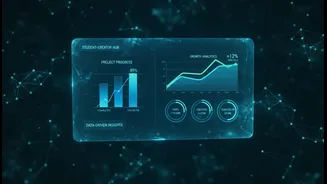
Dashboards are crucial for tracking business performance, but building an effective one requires understanding data visualization principles. AI is making this process more intuitive. New tools can automatically analyze a dataset and suggest the most relevant charts and key performance indicators (KPIs). Instead of manually wrestling with data, a small business owner can ask a question in plain English, like “Why did our sales dip last quarter?” and the AI assistant can generate visualizations to answer that specific query. These AI-driven dashboards can also incorporate predictive analytics to forecast future trends based on historical data. This transforms the dashboard from a static report into a dynamic, conversational tool that helps users make proactive, data-informed decisions without needing a background in data science.
Empowering Students to Build and Learn
For students, the barrier to entry for creating web applications or complex projects has always been high. AI-powered platforms are leveling the playing field. Many universities and educational programs are incorporating AI tools to help students learn modern development workflows. With AI portal builders, a student can describe the features they need for a school project—like a student portal with grade tracking and course schedules—and the AI will generate a functional application. This not only helps them complete assignments but also gives them hands-on experience with the kind of no-code and AI-assisted tools that are becoming prevalent in the tech industry. It shifts the focus from writing boilerplate code to understanding user experience and project logic, preparing them for future careers.
The Rise of Conversational Design
One of the most significant shifts is the move toward conversational design and development. Instead of clicking through menus, users can now “talk” to their design tools. Platforms are integrating AI assistants that allow creators to refine their work with simple text commands. For example, a designer could ask the AI to “change the color of all the buttons to blue” or “add a section for customer testimonials.” This makes the creative process more fluid and less technical. It removes the friction of finding the right tool or setting, allowing creators to stay focused on their vision. This approach also enhances accessibility, as users who are not experts in design software can still create and modify professional-looking portals and prototypes.
Keeping the Human in the Loop
Despite the power of automation, these AI tools are designed to be assistants, not replacements for human creativity and oversight. AI excels at automating repetitive tasks, generating initial drafts, and analyzing data, which frees up creators and teams to focus on higher-level strategic thinking, user empathy, and innovation. The most effective workflows involve human-AI collaboration, where the AI provides a solid starting point and the human refines it based on their unique insights and goals. Experts emphasize that while AI can build the structure, the vision, storytelling, and nuanced understanding of user needs remain firmly in the hands of the designer, student, or entrepreneur. The goal is to make creation more efficient, not to remove the creator from the equation.