



The Real Cost of Our Clothes
Before we dive into the creative possibilities, it’s important to understand what’s at stake. The fashion and textile industry is one of the world's largest polluters. In India alone, an estimated 7.8 million tonnes of textile waste are generated every
year. A significant portion of this, especially post-consumer waste from our homes, ends up in overflowing landfills. Unlike organic matter, many modern fabrics are made of synthetic fibres like polyester that can take up to 200 years to decompose. As they break down, they release harmful chemicals and microplastics into the soil and groundwater. The production of a single cotton T-shirt requires a staggering 2,700 litres of water. By choosing to upcycle, you are not just decorating; you are actively conserving resources, reducing pollution, and giving valuable materials a second life.
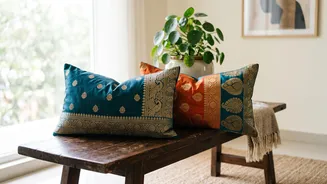
The No-Sew Saree Cushion Cover
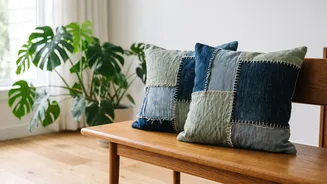
One of the easiest yet most impactful transformations involves turning a vibrant old saree into a set of stunning cushion covers. You don't even need a sewing machine. The rich colours and intricate zari borders of silk sarees are perfect for this. Simply cut the saree into panels large enough to wrap around your existing cushions like a gift box. Fold the edges neatly and secure them at the back with safety pins or a strong fabric glue. For a more permanent solution, iron-on hemming tape is a fantastic no-sew option. In minutes, you can have a set of designer-looking cushions that add a touch of ethnic elegance to your sofa.
From Dupatta to Dreamy Curtains
Lightweight and sheer fabrics, like those from old chiffon or cotton dupattas and sarees, make for beautiful and airy window treatments. Their natural length is often perfect for a standard window. To create a simple no-sew curtain, fold over the top edge by a few inches to create a pocket for the curtain rod. Use fabric glue or hemming tape to secure the fold. You can then simply slide the rod through the pocket and hang your new, colourful curtains. They will filter the sunlight, casting a warm, colourful glow into your room while adding a touch of bohemian grace.
Create a Colourful Rag Rug
A rag rug is a fantastic way to use up a variety of old textiles, from cotton t-shirts and kurtas to bedsheets. This project requires no sewing and is wonderfully therapeutic. Start by cutting your fabric into long, even strips. You can then either braid three strips together at a time, continuously adding new strips as you go, or use a simple weaving technique on a cardboard loom. For a braided rug, simply coil the long braid into a circle or oval, stitching or hot-gluing the coils together as you go. The result is a durable, comfortable, and completely unique rug that adds a pop of colour and texture to your floor.
Art That Tells a Story
Some textiles are too beautiful to cut up but too damaged to wear. This is especially true for heirloom sarees with intricate pallus or brocade work. Preserve these precious pieces by turning them into wall art. Simply stretch a striking section of the fabric over a plain artist’s canvas or inside an empty picture frame and secure it at the back. This creates a stunning focal point for any wall, preserving the craftsmanship and the memories associated with the fabric. It’s an effortless way to turn a piece of your family's history into a celebrated work of art for your living room.