
A New Space Race: The Commercial Frontier
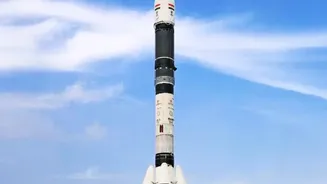
For decades, space exploration was a race between nations, funded by massive government budgets. Today, the landscape is radically different. A new, vibrant space race is underway, but this time it is driven by private companies. From launch vehicles
to satellites, the global space economy is booming, and the Moon is its most coveted prize. With renewed interest in lunar science, resource mining, and establishing a human presence, the demand for reliable and affordable ways to get payloads to the lunar surface has skyrocketed. This commercial shift has opened a window for a new kind of player—agile, innovative, and cost-conscious startups—to make their mark on a trillion-dollar industry. India, already a world leader in frugal engineering, is uniquely positioned to thrive in this new era. The number of Indian space-tech startups has surged from just a handful a decade ago to over 400 by 2026.
India's Startup Brigade Takes Aim at the Moon
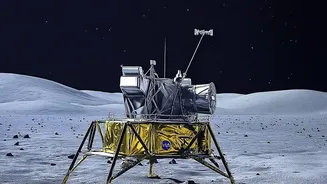
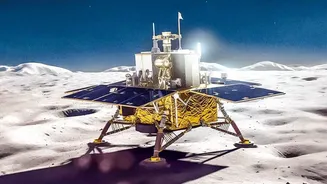
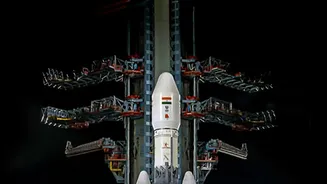
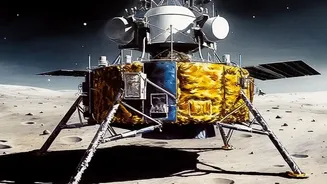
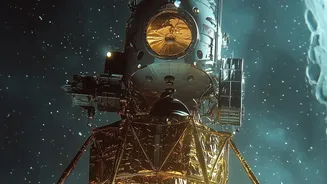
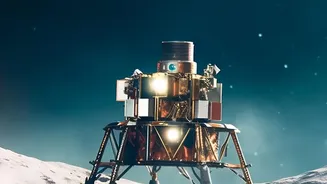
While ISRO’s historic Chandrayaan missions cemented India's place in lunar exploration, a parallel ecosystem of private enterprise has been quietly growing. This movement gained early visibility with pioneers like TeamIndus, which competed for the Google Lunar XPRIZE and, despite not launching, inspired a generation of engineers and investors. Its journey demonstrated that private Indian teams could design complex space systems and attract significant funding. Today, that legacy is being carried forward by a new wave of companies. One such notable venture is ORBITBeyond, which is establishing a major space systems centre in India to design and manufacture lunar landers and rovers for the global market. The company is explicitly building on the expertise of engineers from the ISRO Chandrayaan missions, combining it with international experience to create a global production hub for lunar hardware right here in India. These companies aren't just dreaming; they're building the hardware that will form the backbone of a commercial lunar supply chain.
The Secret Sauce: Frugal Innovation Goes Interplanetary
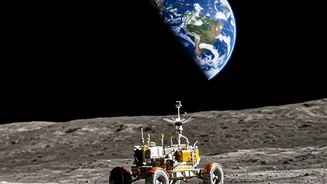
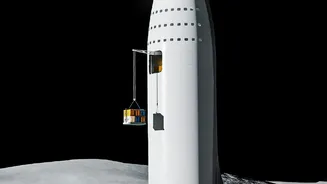
How can a startup possibly compete with a national space agency? The answer lies in a philosophy India has perfected: frugal innovation, or 'jugaad'. Startups are leveraging this mindset to drastically cut costs. Instead of designing every component from scratch, they use proven, off-the-shelf industrial parts where possible. They employ advanced simulation software to test thousands of scenarios virtually, reducing the need for expensive physical prototypes. By focusing on smaller, lighter rovers, they also reduce the mass that needs to be launched, which is the single biggest cost factor in any space mission. This approach mirrors the strategy ISRO has used for its own famously low-cost missions, which often rely on longer, but more fuel-efficient, trajectories to the Moon. The goal for these startups is to offer a ride to the Moon for scientific instruments or other small payloads for a fraction of what it would cost to mount a full national mission, selling payload space much like a cargo airline sells space in its hold.
Navigating the Challenges Beyond Earth's Orbit
The path to the Moon is far from easy. The technical challenges are immense, from surviving the vacuum of space and extreme temperature swings to navigating the treacherous, dust-covered lunar surface. One case in point was GalaxEye Space's private satellite, which lost communication after a solar storm in 2026, highlighting the harsh realities of operating in space. Funding remains the single greatest hurdle. While the Indian space sector has seen a significant rise in investment, deep-tech hardware development is a long and capital-intensive process. Startups must compete for a limited pool of venture capital willing to bet on long-term, high-risk projects. Furthermore, while the Indian government has opened up the sector to private participation, a clear and stable regulatory framework is crucial for these companies to operate, secure international contracts, and thrive. Overcoming these hurdles will be the true test of this burgeoning industry's resilience and long-term viability.