






A Neighbor in the Cosmic Scheme
When astronomers say a planet is “close,” it’s not exactly a weekend trip. GJ 3378b is about 25 light-years away. While that’s over 230 trillion kilometres, in the context of our Milky Way galaxy—which is 100,000 light-years across—it’s like hearing about a new
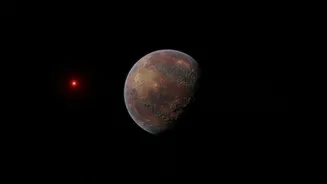
restaurant in the next town over. This relative proximity is a huge deal. The closer a planet is, the more easily our most powerful telescopes can gather light from its star and, hopefully, the planet itself. GJ 3378b orbits a red dwarf star, the most common type of star in our galaxy. Its discovery, led by a team from the University of California, Irvine, adds it to a very exclusive list of nearby worlds that we can realistically study in greater detail.
The Makings of a Rocky World
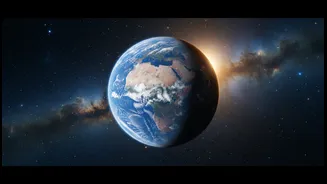
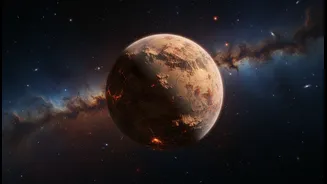
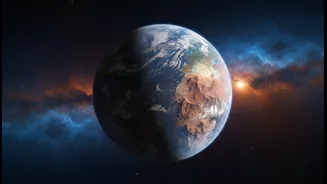
The term “super-Earth” might conjure images of our own planet on a grander scale, and that’s not far off. These are planets more massive than Earth but smaller than ice giants like Neptune. Based on new measurements, GJ 3378b has a mass about 2.3 times that of Earth. This detail is crucial. Planets below a certain mass threshold are more likely to be rocky, or terrestrial, like Earth and Mars. Had it been much more massive, it would likely have held onto a thick, crushing gas envelope, making it a mini-Neptune and far less interesting in the search for surface life. The planet was discovered using the radial velocity method, where astronomers detect the tiny wobble of a star caused by the gravitational pull of an orbiting planet. This tells them its mass and orbit, which for GJ 3378b is a brisk 21.5 days.
The Allure of Uncertainty
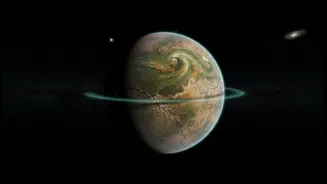
Here’s where the story gets really interesting. While we know its mass and orbit, there’s a lot we don’t know. The biggest question is whether GJ 3378b has an atmosphere. It orbits in its star's “habitable zone”—the 'Goldilocks' region where temperatures could allow liquid water to exist on the surface. In fact, it receives about 90% of the radiation that Earth gets from the Sun. But without an atmosphere to create pressure, liquid water can’t persist. The planet lies on what scientists call the “cosmic shoreline,” a dangerous edge where stellar radiation could have stripped its atmosphere away, much like what is thought to have happened to Mars. This uncertainty is what makes GJ 3378b so compelling. It’s a perfect test case for understanding how planets around red dwarfs hold onto their atmospheres.
Why This Discovery Matters
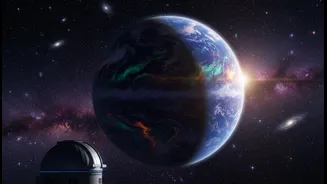
Every exoplanet discovery helps us piece together the puzzle of planetary formation and our own place in the universe. GJ 3378b is especially significant. Its location, its potentially rocky nature, and its position in the habitable zone make it a prime target for future study. Unfortunately, scientists cannot use the popular transit method—watching for a dip in starlight as the planet passes in front of its star—because GJ 3378b doesn't transit from our point of view. This means studying its atmosphere is incredibly challenging with current technology. However, it serves as a tantalizing objective for the next generation of observatories, like NASA's planned Habitable Worlds Observatory, which is slated for launch in the 2040s and may be able to image the planet directly to search for an atmosphere and potential biosignatures. Discoveries like this remind us that science is often a long game of patience, with each finding laying the groundwork for future breakthroughs.