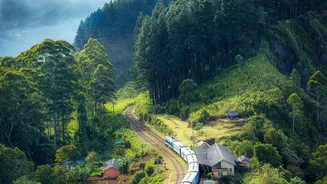




What Exactly Are Special Trains?
Festive special trains are temporary services introduced by Indian Railways to manage the massive surge in passenger traffic during peak holiday seasons. Unlike regular scheduled services, these trains are announced to clear the extra rush on high-demand
routes, connecting major cities like Mumbai, Delhi, and Bengaluru with destinations across states such as Uttar Pradesh, Bihar, West Bengal, and Kerala. These trains are identifiable by their number, which typically starts with a '0'. It’s important to note that fares on these services often include a 'special charge', making them slightly more expensive than regular trains on the same route. The primary goal is to increase capacity and provide more travel options, ensuring more people can get home for the holidays.
When Do These Trains Run?
Indian Railways operates these special services during all major festive and holiday periods that see a spike in travel. The most significant rushes occur during Diwali and Chhath Puja in October and November. Other key periods include Durga Puja, Holi, and the summer vacation months. For instance, in late September 2026, various railway zones, including Northern, Southern, and Central Railways, announced hundreds of special train trips for the upcoming Diwali and Chhath Puja season. These announcements often come a few weeks before the festival, so it is crucial to stay alert in the lead-up to your planned travel dates.
Where to Find Announcements and Book Tickets
The most reliable sources for information are official Indian Railways channels. Announcements are posted on the social media handles of zonal railways (like @GMSRailway on X/Twitter), through press releases, and updated on the IRCTC official website (irctc.co.in) and mobile app. For real-time information on train schedules, routes, and seat availability, the National Train Enquiry System (NTES) app is an indispensable tool. Bookings for these trains can be made via the IRCTC website and app, or at computerised reservation counters at railway stations. It is strongly advised to only use these official platforms for booking to avoid potential fraud.
A Step-By-Step Guide to Booking
Booking a special train ticket follows the same process as a regular one, but speed is of the essence. First, log in to your IRCTC account on the website or app. Enter your departure and destination stations, and select your travel date. On the results page, look for trains with numbers starting with '0'. Select your preferred train and travel class (Sleeper, 3A, 2A, etc.) and check for availability. If seats are available, proceed to the passenger details page. This is where preparation pays off. Fill in the required details for all passengers. Finally, move to the payment page. Using a fast payment method like UPI or the IRCTC e-wallet is recommended, as bank pages can time out during peak rush. After a successful transaction, you will receive a PNR and ticket confirmation.
Pro Tips for a Confirmed Ticket
Getting a confirmed ticket requires strategy. First, use the 'Master List' feature on your IRCTC profile to save passenger details in advance. This saves precious seconds during booking. Second, be flexible. If a train from a major station like Mumbai CSMT is full, check for availability from subsequent stations like Thane or Kalyan, or from an alternative terminal like Lokmanya Tilak Terminus (LTT). If you don't get a confirmed ticket initially, don't give up. A waitlisted ticket can get confirmed as others cancel. Use the NTES app to track your PNR status regularly. As a last resort, you can try the Tatkal quota, which opens one day before the journey at 10 AM for AC classes and 11 AM for non-AC classes.
Understanding 'Clone' Trains
On extremely high-demand routes, Indian Railways sometimes operates 'Clone' trains. These are duplicate trains that run shortly before the original, scheduled train, using the same train number, to accommodate waitlisted passengers. If a train has a very long waiting list after its chart is prepared, waitlisted passengers may be informed via SMS that they have been allocated a berth on the clone train. These trains often have fewer stops to ensure a faster journey. While not as common as regular special trains, they represent another effort by the railways to manage festive demand.