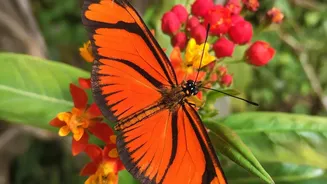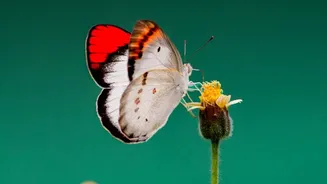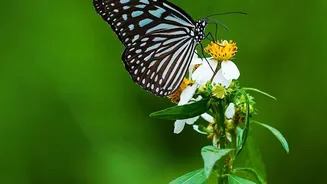







The flash of a colourful wing in a city park is a small moment of wild beauty. But for urban butterflies, the rhythm of life is changing. Seasonal shifts are confusing their internal clocks, creating new challenges for their survival and reproduction.
The Butterfly's Natural Calendar
Butterflies live by a strict, ancient schedule tied to the seasons. Their entire life cycle—from egg to caterpillar, chrysalis, and finally, winged adult—is synchronised with environmental cues like temperature, rainfall, and daylight hours. For many species across India, the pre-monsoon and monsoon seasons are crucial. Rising temperatures and the first rains trigger the growth of new leaves on 'host plants', which caterpillars feed on, and the blooming of flowers that provide nectar for adult butterflies. This abundance is the green signal for breeding, leading to a peak in butterfly populations. Different species are adapted to different seasonal peaks; some thrive in the wet monsoon, while others prefer the post-monsoon period. This delicate timing ensures that when butterflies emerge and are ready to mate and lay eggs, the exact resources they need are available.
When Seasons Lose Their Rhythm
Today, that reliable natural calendar is becoming scrambled. Climate change is causing seasonal cycles to shift. Springs may arrive earlier, winters are often warmer, and monsoon rains can be erratic—arriving early one year and late the next, or falling in sudden, intense bursts. This disruption is amplified in cities by the 'urban heat island' effect. Concrete buildings and asphalt roads absorb and radiate more heat than natural landscapes, making cities significantly warmer than surrounding rural areas. This artificial warmth can trick butterflies into thinking it's time to emerge and breed, even if the season hasn't truly turned. Studies have shown that urban environments can extend the flight periods of butterflies, causing them to be active later into the year than their rural counterparts.
A Dangerous Mismatch in Timing
The most significant danger from these shifting seasons is a phenomenon known as 'phenological mismatch'. This happens when interacting species fall out of sync with each other. A butterfly might emerge from its chrysalis early due to a warm spell, only to find that its specific host plant has not sprouted leaves yet, or the flowers it relies on for nectar have not bloomed. This mismatch between the butterfly's life cycle and its food source can be devastating. If a female butterfly cannot find the right plant to lay her eggs on, an entire generation can be lost. For example, the Lime butterfly depends on citrus or curry leaves, while Monarch caterpillars feed exclusively on milkweed. If those plants aren't ready, the butterfly’s early arrival becomes a fatal error. This is a critical threat that is pushing some butterfly populations towards decline.
India's Urban Butterflies at Risk
In India, home to over 1,500 butterfly species, this mismatch is a growing concern. From the Common Mormon fluttering through a Kolkata garden to the Tailed Jay in a Bangalore park, urban butterflies face a combination of habitat loss and climate disruption. Their traditional breeding seasons, timed with the monsoons, are becoming less predictable. For instance, an early and intense monsoon might force a migration before the butterflies' offspring are ready, as seen in migrations between the Western and Eastern Ghats. Some species might adapt by shifting their range to higher, cooler elevations, but many are not so flexible. The combination of urban heat, habitat fragmentation, and unpredictable weather puts immense pressure on these beautiful pollinators, whose presence is a key indicator of a healthy ecosystem.
How You Can Create a Butterfly Haven
While the problem is large, the solutions can start small—right on your balcony or in your neighbourhood park. Supporting urban butterflies is one of the most rewarding ways to engage with city nature. The first step is to provide food. Plant native flowering plants that are rich in nectar. Species like Hibiscus, Ixora, and Marigold are excellent choices for Indian city gardens. Equally important are 'larval host plants' where butterflies can lay their eggs. For example, the curry leaf plant is a host for the Common Mormon butterfly, and passion flower vines attract the Tawny Coster. Creating a garden with a mix of both nectar and host plants provides a complete habitat. Providing a shallow dish of water with pebbles can also give them a place to drink safely. Crucially, avoid all chemical pesticides, which are lethal to butterflies and caterpillars.