




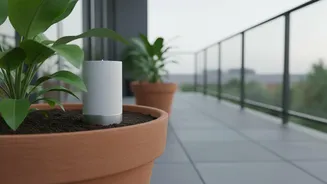
What Are Smart Soil Probes?
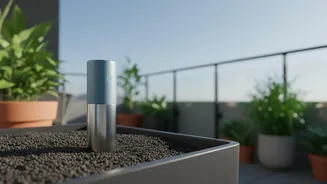
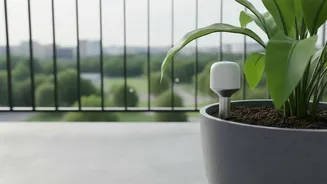
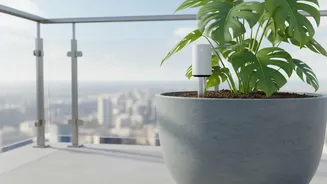
A smart soil moisture probe is a small, typically battery-powered device that you insert into the soil of a potted plant. It continuously measures the amount of water in the soil and sends that information directly to your smartphone via an app. Think
of it as a dedicated health monitor for your plant's hydration. Unlike traditional, non-connected meters that you have to check manually, smart probes provide real-time data and alerts, taking the guesswork out of your watering routine. This technology is part of a growing trend in smart gardening, designed to make plant care easier and more efficient for busy urbanites.
The Science Behind the Sensor
So, how does it actually know when your plant is thirsty? Most smart probes work by measuring the soil's electrical properties. One common method uses two metal probes to measure electrical resistance. Dry soil resists electricity more than wet soil. Another advanced type, a capacitive sensor, measures how the soil affects an electric field. In either case, the device translates this electrical data into a simple, easy-to-understand moisture percentage. This is far more accurate than the traditional 'finger test', which only checks the surface and can be misleading, as the soil at the root level might still be wet.
The Benefits of Smarter Watering
The most obvious benefit is preventing both overwatering and underwatering, two of the most common reasons container plants fail. By knowing the precise moisture level, you water only when necessary, which conserves water—a crucial benefit in many Indian cities. It also helps prevent root rot, a fatal condition caused by excess water suffocating the roots. Beyond just survival, this technology helps your plants thrive. Consistent, optimal hydration leads to healthier growth, more vibrant leaves, and better flowering or fruiting. For busy individuals, the peace of mind that comes from receiving a simple notification like, "Your hibiscus needs water," is invaluable.
Choosing the Right Probe for Your Balcony
When shopping for a smart probe, the main feature to consider is connectivity. Bluetooth sensors are common and connect directly to your phone when you are within range, which is perfect for a balcony. Wi-Fi enabled sensors connect to your home network, allowing you to check on your plants from anywhere, even when you're away from home. Some sensors also measure other important factors like soil fertility (nutrients), light levels, and temperature, offering a more complete picture of your plant's environment. For a typical balcony with several pots, starting with one or two probes for your most sensitive or precious plants is a great way to get started without a huge investment.
Getting Started Is Simple
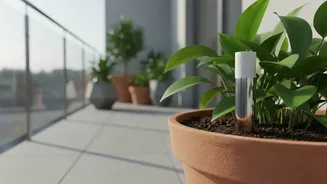
Setting up a smart probe is usually straightforward. After unboxing and installing the battery, you'll download the companion app and pair the device with your phone. Then, you simply insert the probe into the pot's soil. For the most accurate readings, the probe should be placed about two-thirds of the way down into the root zone, not just at the surface or the very bottom of the pot. Avoid pushing it right up against the plant's main stem. Once it's in place, the app will typically guide you through a quick calibration process, and within minutes, you'll start receiving data about your plant's hydration needs.