






Why Planks Are Superior to Crunches
The core's primary job isn't to crunch your torso; it's to stabilise your spine as you move. That's why isometric exercises like the plank are so effective. Unlike crunches, which repeatedly flex the spine and can lead to lower back strain, planks teach
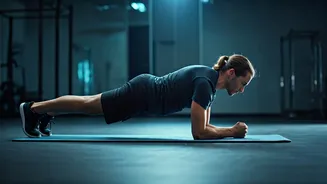
your core muscles—including the deep transverse abdominis, obliques, and lower back—to work together to hold your body steady. This builds functional strength that protects your spine, improves your posture, and enhances your performance in other lifts and daily activities. The forearm plank, in particular, is excellent because it takes pressure off the wrists, a common complaint with the high plank variation, and its lower position forces the core to work harder.
The Blueprint for a Perfect Forearm Plank
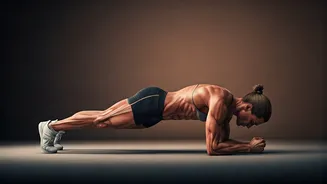
Proper form is everything. A sloppy plank is ineffective and risky. To get it right, start by lying facedown. Place your forearms on the floor with your elbows directly under your shoulders. You can keep your palms flat on the floor or clasp your hands. Extend your legs straight behind you, tucking your toes under. Now, lift your hips off the floor, engaging your core muscles. Your body should form a single, straight line from the crown of your head to your heels. Avoid letting your hips sag or hiking them up toward the ceiling. Your gaze should be on the floor just ahead of your hands to keep your neck in a neutral position.
Achieving High Stability Form
The secret to a 'high stability' plank is total body tension. It’s not just about your abs. Actively squeeze your glutes and quadriceps. This helps to lock your pelvis in place and prevents your lower back from arching. Imagine you are trying to pull your elbows towards your toes and your toes towards your elbows without actually moving; this will create immense tension in your core. Also, press your forearms firmly into the ground and think about spreading your shoulder blades apart to stabilise your upper back. Breathing is key—take steady, even breaths. Holding your breath will only cause your form to break down faster.
Common Mistakes and How to Fix Them
Even experienced gym-goers make planking errors. The most common is sagging hips, which indicates your core has disengaged and is putting stress on your lower back. The fix is to re-engage your abs and squeeze your glutes. If you can't hold the position, it's better to rest than to continue with poor form. Another mistake is raising the hips too high, which turns the exercise into a variation of downward dog and takes the load off your core. To correct this, lower your hips until they are in line with your shoulders. Finally, avoid looking up or forward, as this strains the neck. Keep your gaze down to maintain a neutral spine.
Progressions for All Fitness Levels
The plank is wonderfully adaptable. If you're a beginner, master the form by starting with a kneeling plank. Rest your knees on the floor but keep the straight line from your head to your knees. You can also perform an incline plank by placing your forearms on a sturdy bench or box. Once you can comfortably hold a perfect standard plank for 60 seconds, you can increase the challenge. Try lifting one leg off the floor for a few seconds while keeping your hips level. Another advanced variation is to add a dynamic component, like 'stirring the pot' on a stability ball or performing plank hip dips, where you slowly rotate to dip each hip towards the floor.