


The Foundation: A Proper Warm-Up
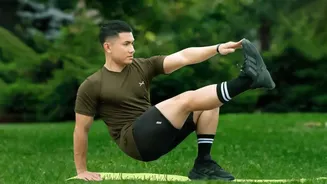
Every workout, regardless of intensity, should begin with a warm-up. This prepares your body for exercise by gradually increasing your heart rate and improving blood flow to your muscles. In a small space, you can perform simple dynamic stretches. Try
jogging in place, doing arm circles, leg swings, and torso twists for about five to ten minutes. These movements don't require much room but are highly effective at getting your muscles ready for action and reducing the risk of injury.
Upper Body Power Without Weights
You don't need weights to build a strong upper body; your own bodyweight provides plenty of resistance. The classic push-up is a fantastic exercise for the chest, shoulders, and triceps. If a floor push-up is too challenging, start with wall push-ups. For triceps, use a sturdy chair or even the floor for tricep dips. Another great option is the pike push-up, which places more emphasis on the shoulders. These exercises can all be done in the space it takes to lie down.
Build a Strong Lower Body
Bodyweight squats are a fundamental movement for lower body strength, targeting your quadriceps, hamstrings, and glutes. Ensure your feet are shoulder-width apart and lower your hips as if sitting in a chair, keeping your chest up. Lunges are another excellent choice for small spaces, as they can be done in place. You can do forward, reverse, or static lunges. For targeting your glutes and hamstrings specifically, the glute bridge is perfect. Simply lie on your back, bend your knees, and lift your hips toward the ceiling.
Core Stability for Total Fitness
A strong core is crucial for overall stability, posture, and preventing lower back pain. The plank is a king among core exercises. You can hold a forearm plank for time, or increase the difficulty with variations like plank shoulder taps. Leg raises, performed while lying on your back, are great for the lower abdominals. The bird-dog exercise, where you extend an opposite arm and leg while on all fours, improves balance and core control without requiring any space to move around.
Quiet Cardio to Get Your Heart Pumping
Getting your heart rate up in an apartment without disturbing the neighbors can be a challenge, but it's not impossible. Instead of high-impact jumping, focus on controlled, powerful movements. 'Quiet burpees' involve stepping back instead of jumping and removing the final jump at the end. Mountain climbers, curtsy lunges, and bear crawls are other fantastic, low-noise options that elevate your heart rate effectively. The key is to move with intensity and control rather than relying on impact.
Essential Cool-Down and Flexibility
After your workout, a cool-down is just as important as the warm-up. It helps your heart rate return to normal gradually and can improve flexibility. Spend five to ten minutes doing static stretches, holding each stretch for 20-30 seconds. Focus on the major muscle groups you've worked, such as your chest, quads, hamstrings, and glutes. This simple practice not only aids in recovery but also enhances your long-term mobility, ensuring you can continue to perform exercises with proper form and a full range of motion.